
Table of content
Lymphedema sucks. The swelling, discomfort, tightness — it’s just a lot. If surgery feels too extreme or far off, natural remedies might give some much-needed relief. Supplements, especially, can be a game-changer. They’re easy to add to your routine, and some even come from foods you probably already love (pineapple, anyone?)
Here are 5 best supplements for lymphedema that can help — out of which 1 has shown promising effects when tested on animals, and the rest, although they bring relief but may not be considered as a standalone treatment.
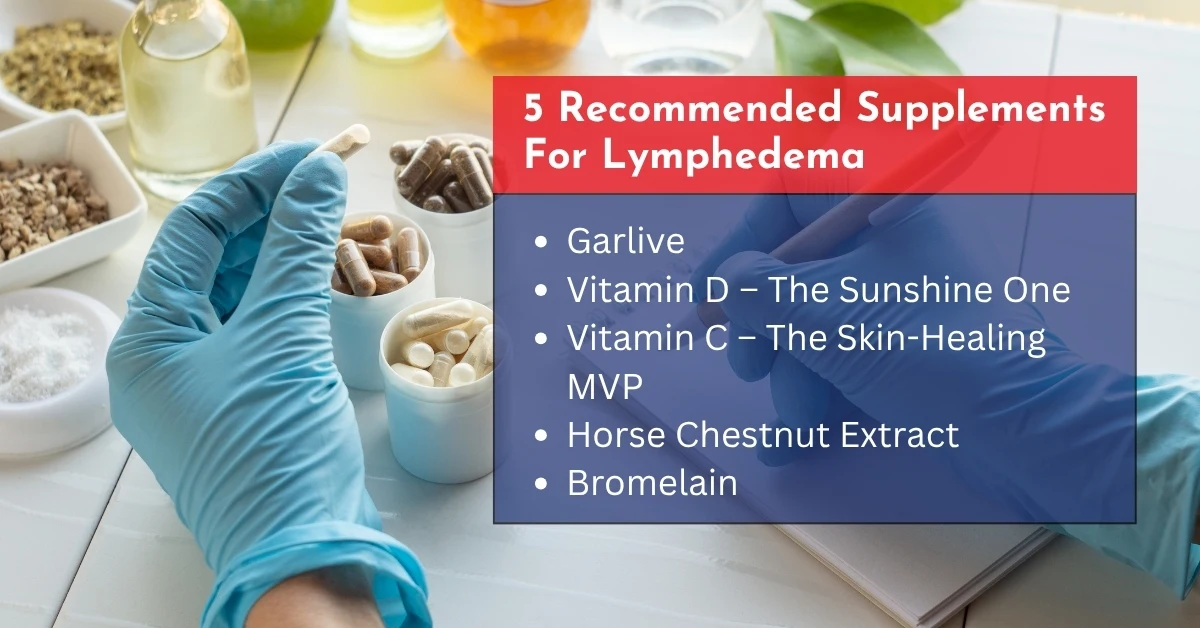
5 Recommended Supplements For Lymphedema
1. Garlive:
Based on Hydroxytyrosol from olive trees and vitamins. A report shared by PubMed confirms that Garlive was promising when tested on animals. You may buy this supplement from Amazon.
2. Vitamin D – The Sunshine One
- Why it helps: It keeps your immune system strong and calms inflammation (aka the puffiness).
- Did you know? People in chilly states like Alaska, Minnesota, and Michigan often lack it — not enough sun!
- Where to get it: Sunlight, salmon, fortified milk, or good ol’ vitamin D capsules.
- How much?
– Ages 14–70: 15 mcg (600 IU)
– Over 70: 20 mcg (800 IU) - Heads up: Too much can mess with your kidneys. Get tested before mega-dosing.
3. Vitamin C – The Skin-Healing MVP
- Why it helps: Helps your body make collagen (that healing protein) and reduces inflammation. Great for skin that’s been through a lot.
- Where to find it: Oranges, grapefruits, strawberries, bell peppers, and leafy greens.
- Real talk: Many folks take it more during winter when fresh stuff is hard to find.
- Caution: Too much might mess up your stomach. Balance is key (yep, we said it).
Did you know?
Pneumatic compression pumps like Bio Compression are FDA-cleared for lymphatic compression. Based on the affected area, users can select compression garments. The best part – these pumps come in various chamber options for more personalized and granular therapy.
4. Horse Chestnut Extract – For Better Blood Flow
- Why it helps: Contains a cool compound called aescin — improves circulation and lowers swelling.
- Best for: People in hot places like Texas or Florida, where the heat makes swelling worse.
- How to take it: Pills, tablets, or creams. Found in most health stores.
- BUT WAIT: Got kidney or liver probs? Skip it (unless doc says okay). Raw/untreated versions can be toxic. No joke.
5. Bromelain – From Pineapple With Love
- Why it helps: This enzyme breaks down proteins, reduces swelling, and improves fluid drainage.
- Real stories: People in Hawaii swear by it — and hey, they’ve got the pineapples to back it up!
- Sources: Pineapple (especially the core) or supplements.
- Watch out: Taking blood thinners? Double-check with your doc before starting this.
Extra value for folks living in Arizona, Nevada, or anywhere it gets super sweaty.
Magnesium – The Cramp Killer
- Why it helps: Helps with muscle function, prevents cramps, and supports relaxation. (Yes, please.)
- Sweaty states like Arizona/Nevada: You lose magnesium through sweat — this one’s a must.
- Where to find it: Almonds, spinach, pumpkin seeds, or supplements.
- TMI alert: Too much magnesium = bathroom troubles. Start low and go slow.
Quick Look: Supplement Comparison Table
| Supplement | What It Does | Sources | Watch Out For |
| Vitamin D | Boosts immunity, cuts inflammation | Sun, milk, supplements | Kidney issues if overdosed |
| Vitamin C | Heals skin, supports collagen (protein for tissue repair and growth) | Citrus, chilli peppers, greens | Stomach upset with high doses |
| Horse Chestnut | Improves blood flow, reduces swelling. May relieve menstrual, arthritis, and joint pains. | Capsules, creams. Oral use may be unsafe |
Liver/kidney problems; can be toxic |
| Bromelain | Eases swelling, helps drainage, and may relieve rheumatoid and osteoarthritis as well. | Pineapple, supplements | Don’t mix with blood thinners |
| Magnesium | Stops cramps, supports nerves | Greens, nuts, supplements | Too much? Hello diarrhea |
Should You Pick Based on Lymphedema Type?
Short answer: Yep.
- Primary lymphedema (some individuals are born with this): Go for exercises, bandage, better diet, manual compression from trained personnel, nurse, doctor, or physician.
- Secondary lymphedema (caused by surgery, injury, or infection): You may need more targeted supplements, physical therapy like CDT, or, depending on the severity, you may even be required to undergo surgery. Always chat with your doctor first!
Can Everyone with Lymphedema Take These?
Generally yes… But if you’ve got liver or kidney concerns (especially if you’re eyeing horse chestnut), take a pause and talk to your provider first. If you want to know the best lymphatic drainage massage machine in the USA, read our expert’s guide with full confidence.
Natural Foods That Work Like Supplements
Skip the pills if you want — these foods do double-duty:
- Citrus fruits – Vitamin C party for your skin
- Leafy greens – Magnesium magic for your muscles
- Pineapple – Natural anti-swelling enzyme (yep, bromelain again)
- Nuts & seeds – Crunchy, yummy magnesium sources
- Bell peppers – Another vitamin C superstar
Add these to your meals and your body will thank you.
Supplements vs. Surgery: What’s the Deal?
Supplements are awesome… but they’re not a fix-all. When things get worse, medical options like lymph node transfer or liposuction for lymphedema might be needed. So, think of supplements as your sidekick, not the superhero. Always follow up with your healthcare team.
Real People, Real Feedback
“I’ve been using horse chestnut for a few months. Swelling’s down, not gone, but definitely better!” — Reddit user
“Magnesium helped with the annoying cramps. Can finally sleep better!” — Cgm user shares this on the BioCompression Products.
Final Thoughts
Relief is possible. With a mix of smart supplements, tasty foods, and medical advice, managing lymphedema gets easier. Start small. Stay consistent.
Talk to your doc. And don’t be afraid to nibble on some pineapple while you’re at it.
Disclaimer: This is only for informational purposes and does not substitute your doctor’s advice.
Frequently Asked Questions
How do supplements for lymphedema work to improve lymphatic flow?
Supplements like selenium and diosmin work by reducing inflammation and oxidative stress. They help restore lymphatic vessel function and promote fluid drainage. These supplements also support proteolysis, breaking down excess proteins that block lymph flow and improving overall circulation.
What are the best supplements for lymphedema management?
Top supplements include selenium for reducing limb volume and enhancing therapy outcomes, and diosmin–hesperidin blends for improving lymphatic drainage and capillary strength. Omega-3 fatty acids and vitamin A are also beneficial due to their anti-inflammatory effects on swelling.
What specific supplements are commonly recommended for reducing lymphedema swelling?
Common recommendations include bromelain for its anti-inflammatory and fibrinolytic properties, selenium to lower oxidative stress, and herbal coumarin for edema reduction. Diosmin and hesperidin are widely used to strengthen vessels and promote fluid reabsorption.
When is it appropriate to use natural remedies as a primary treatment for lymphedema?
Natural remedies may be used as a primary approach in mild or early-stage lymphedema when combined with medical monitoring. However, they are not suitable as the sole treatment for moderate or advanced cases, where complete decongestive therapy is essential.
How does lymphatic drainage massage work as a natural lymphedema treatment?
Lymphatic drainage massage uses gentle, rhythmic strokes to guide excess lymph fluid from swollen areas toward healthy lymph nodes. This technique stimulates lymph flow without deep pressure, reducing swelling and preventing fluid buildup.
What essential oils are recommended for lymphedema and how should they be used?
Essential oils such as geranium, thyme, clove, and eucalyptus may help reduce swelling. They should be diluted in a carrier oil like jojoba or almond oil and applied during gentle massage. Avoid broken skin and consult a professional for proper use.
When should I expect to see results from taking lymphedema supplements?
Many individuals notice improvements such as reduced swelling within 4–6 weeks of consistent supplement use. Results vary based on dosage, adherence, and individual response, and are often faster when combined with standard therapies.
Why are some supplements more effective for lymphedema than others?
Supplements like benzopyrones and bromelain are more effective because they directly reduce protein accumulation and inflammation in tissues. Others may lack targeted lymphatic benefits or sufficient evidence, making proven options like selenium more effective.
What vitamins help with lymphedema, and which one is best?
Vitamins A, C, and B12 support tissue repair and reduce inflammation in lymphedema. Vitamin A is often considered the most beneficial for lymphatic tissue regeneration. Selenium, though a mineral, is commonly paired with these vitamins for better results.
Does bromelain help lymphedema?
Yes. Bromelain helps reduce inflammation, breaks down fibrin, and supports fluid reabsorption. It is often included in combination therapies for edema control, but dosage and interactions should be reviewed with a healthcare provider.
What are the most effective natural remedies for lymphedema?
Effective natural remedies include lymphatic drainage massage, regular low-impact exercise such as walking or yoga, and anti-inflammatory diets rich in omega-3 fatty acids. Certain herbs, like coumarin, may also help reduce swelling.
Why should someone with lymphedema consider taking supplements?
Supplements can help reduce inflammation, support lymphatic vessel health, and complement standard treatments. They provide a non-invasive way to manage swelling, discomfort, and improve quality of life when used appropriately.
Are there any herbal supplements that can reduce swelling in lymphedema?
Yes. Herbal supplements such as coumarin, cleavers, and dandelion support lymphatic drainage and act as mild diuretics. Burdock root is also used to help reduce congestion and support detoxification.
How can I incorporate lymphedema supplements safely into my daily routine?
Begin with low doses after consulting a healthcare professional, take supplements with meals for better absorption, and monitor symptoms regularly. Maintain hydration, follow a balanced diet, and review all medications to avoid interactions.





Write a comment
Your email address will not be published. All fields are required