

Table of content
- ADA General Device Principles
- ADA CGM Guidelines: 2025 vs 2026 with Key Changes
- ADA Guidelines on CGM Eligibility & Meter Standards
- ADA Diabetes Care Standards for CGMs
- Factors That Can Affect CGM Accuracy
- Mistakes Made by Most CGM Users
- ADA Emphasis on Education & Access
- CGM Coverage Under Insurance
- Conclusion
- Frequently Asked Questions
Continuous glucose monitor, usually known as a CGM does not only provide blood glucose values, these small sensors have brought ease to the lives of diabetics. To make your journey even better CGM Monitors has summarized the ADA Guidelines on CGM 2026 that includes some Standards of Care as well. Let’s dive in.
ADA General Device Principles
Following are some of the general usage guidelines for CGMs from ADA. While CGMs are approved for both type 1 and type 2 diabetics, you may notice more on type 1. This is because they are insulin dependent, thus requiring close care:
- CGM can be a part of standard diabetes care: ADA states that access to diabetes technology should be available to all people with diabetes, as it significantly improves outcomes.
- Early CGM use matters: Offer CGM at or near diagnosis of type 1 diabetes to support early engagement and reduce risk of hypoglycemia.
- Individualized device selection: Device choice (rtCGM vs isCGM, pump integration, etc.) should match the person’s needs, preferences, skills, and caregiving context.
- Comprehensive education: Initiation and continued use require training for patients and caregivers — to interpret glucose data, alarms, and time-in-range.
- Ongoing access and support: ADA emphasizes maintaining access to technology across insurance, age, or A1C level — ensuring long-term success.
Did you know?
Diabetics on insulin may be able to claim a CGM device, even an automatic insulin delivery (AID) system, such as Omnipod 5 using their insurance.
ADA CGM Guidelines: 2025 vs 2026 with Key Changes
CGM Recommended Earlier
In the 2026 ADA Standards of Care, CGM is recommended from the onset of diabetes diagnosis, especially for people using insulin or those at risk of hypoglycemia. This shift encourages healthcare providers to introduce CGM (sensor and insulin pumps)earlier in diabetes management.
In comparison, the 2025 ADA guidelines recommended CGM primarily after insulin therapy had already been established or when patients experienced challenges with blood glucose control. While early adoption was possible in 2025, it was not emphasized as strongly as it is in the 2026 update.
CGM Expanded to More Type 2 Diabetes Patients
In 2026, ADA guidelines significantly broaden CGM eligibility for people with Type 2 diabetes, including those who are not using insulin therapy. CGM can now be recommended if it helps patients better understand glucose patterns, improve lifestyle decisions, or manage medications more effectively.
In contrast, the 2025 ADA standards mainly focused on Type 1 diabetes and Type 2 diabetes patients who use insulin. CGM use for non-insulin Type 2 patients was only suggested as a possible option rather than a strong recommendation.
Fewer Barriers to Diabetes Technology
The 2026 update reduces several barriers that previously limited access to diabetes technology. Requirements such as C-peptide testing, autoantibody confirmation, or a minimum duration of insulin therapy have been minimized or removed. These changes make it easier for patients to access CGM devices, like Libre 2 Plus or the 10-day Standard Dexcom G7 sensor.
Under the 2025 ADA guidelines, some healthcare systems and insurers still relied on these criteria before approving CGM technology. As a result, many patients had to meet specific clinical conditions before they could start using advanced glucose monitoring tools.
Real-Time CGM Becoming the Standard
The 2026 ADA recommendations place a stronger emphasis on real-time Continuous Glucose Monitoring (rtCGM) as a key technology for modern diabetes management. Real-time data sharing, alerts for high and low glucose levels, and integration with insulin delivery systems make rtCGM a central part of diabetes care.
In the 2025 guidelines, both real-time CGM and intermittently scanned CGM systems were recognised as effective monitoring options. However, the guidelines did not highlight real-time CGM as strongly as the 2026 standards now do.
ADA Guidelines on CGM Eligibility & Meter Standards
The following are some of the CGM standards and user eligibility criteria:
Diabetics Eligible for a CGM Device
- All insulin-treated patients, especially those with type 1 diabetes, should use CGM.
- ADA also recognizes growing evidence for CGM use in adults with type 2 diabetes on glucose-lowering agents other than insulin.
ADA Diabetes Care Standards for CGMs
Blood Glucose Monitoring (BGM) remains essential, especially for calibration, backup, or verification when CGM results appear inaccurate.
CGM for Type 1 and Type 2 Diabetes
- CGM is recommended early and used continuously — often starting at the time of diagnosis for individuals using insulin — to improve glycemic control and reduce the risk of hypoglycemia.
- The 2026 ADA guidelines further reinforce the use of CGM for people treated with insulin and highlight that many individuals with type 2 diabetes not using insulin may also benefit from CGM when it helps improve glucose awareness, treatment adherence, and overall glycemic outcomes.
- The ADA continues to highlight Time in Range (TIR) — the percentage of time glucose levels remain between 70–180 mg/dL — as an important CGM metric. TIR provides a more detailed picture of daily glucose control than HbA1c alone because it captures glucose variability, episodes of hypoglycemia, and periods of hyperglycemia..
According to the U.S. Food and Drug Administration, CGM accuracy is commonly evaluated using MARD (Mean Absolute Relative Difference). A CGM system is generally considered highly accurate when the MARD value is 10% or lower. In general, the lower the MARD value, the more accurate the glucose readings are likely to be.
CGM Use in Pregnancy
Real-time Continuous Glucose Monitoring (rtCGM) during pregnancy can improve maternal glycemic control and support better neonatal outcomes. The American Diabetes Association 2026 Standards of Care support the use of rtCGM for pregnant women with type 1 diabetes and note that it may also be beneficial for individuals with insulin-treated type 2 diabetes or gestational diabetes when appropriate.
Professional CGM Use
Professional CGM systems are often used for short-term diagnostic evaluation or therapy adjustment, particularly when a patient has not yet started using a personal CGM device. This approach allows clinicians to review detailed glucose patterns over several days and identify glycemic trends before recommending long-term CGM therapy.
CGM in Inpatient Care
The American Diabetes Association 2026 guidelines recognise that CGM use in hospital settings is increasingly acceptable. However, the ADA recommends careful implementation, including appropriate clinical protocols and trained healthcare staff to interpret CGM data safely. In many cases, CGM readings may still be confirmed with point-of-care glucose testing when making critical treatment decisions.
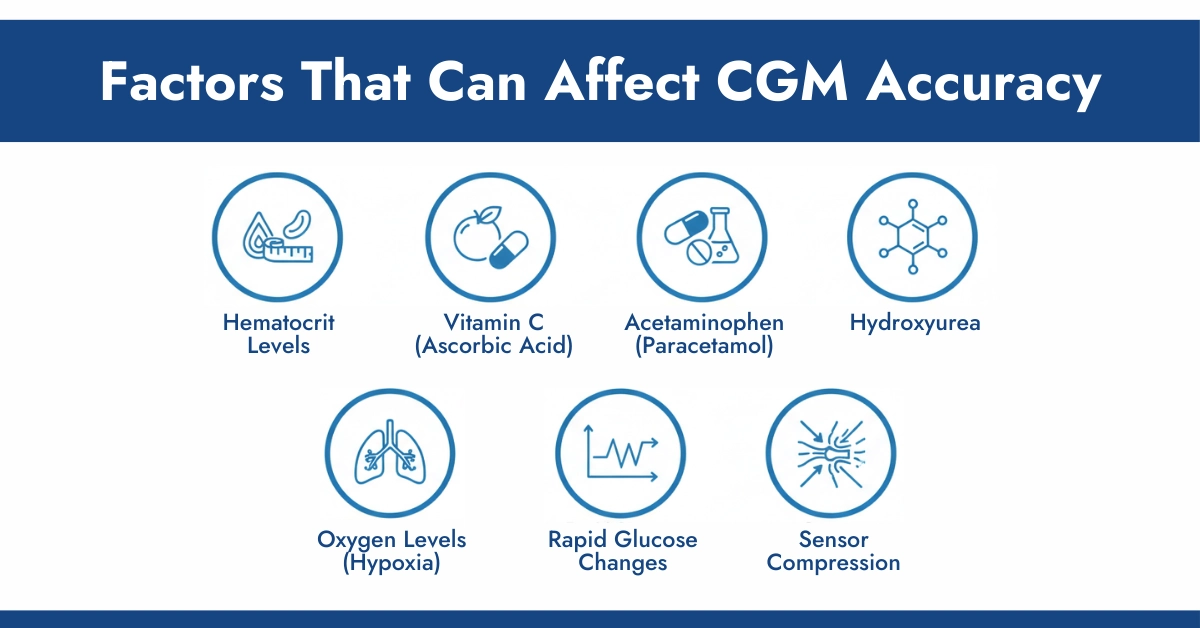
Factors That Can Affect CGM Accuracy
From ADA Standards of Care, Table 7.2 (BGM interference factors) and device-specific manufacturer guidance.
| Interfering Factor | Effect on Readings | ADA / Device Insight |
| High hematocrit (↑ red blood cells) | May show falsely low readings. | ADA Table 7.2 — affects glucose-oxidase sensors. |
| Low hematocrit (↓ red blood cells) | May show falsely high readings. | ADA Table 7.2. |
| Hypoxia (low oxygen) | May affect readings in oxygen-dependent glucose-oxidase systems. | Seen with oxygen therapy or lung disease. |
| High-dose Vitamin C (ascorbic acid) | May cause falsely elevated CGM readings in some old models like Libre 2 and Libre 3 Sensor (discontinued since late 2025). | Confirm with BGM if readings seem off. |
| Acetaminophen (paracetamol) | Some sensors show false highs at high doses. | Check device compatibility. |
| Hydroxyurea | Can distort glucose readings. | Discuss with your provider if on therapy. |
| Rapid glucose changes | Temporary lag between blood and interstitial readings. | Not an error — physiological delay. |
| Sensor compression (lying on sensor) | Can show falsely low glucose (“compression lows”). | Avoid tight clothing or pressure on sensor. |
(Meaning of hematocrit: the proportion of red blood cells in blood.)
Mistakes Made by Most CGM Users
Following are some of the common mistakes to avoid when using a CGM sensor:
- Not calibrating when prompted (for older CGMs).
- Ignoring trend arrows or alarms.
- Forgetting sensor warm-up times.
- Placing sensors on scarred or irritated skin.
- Over-relying on CGM without confirming when symptoms don’t match readings.
IMP: In case you feel like your symptoms are not matching your glucose readings from your CGM, use a fingerstick before taking any medical action. If ambiguities remain or condition is critical, immediately contact your doctor.
- Taking Vitamin C supplements > 500 mg/day without checking for device compatibility.
- Assuming CGMs are 100 % accurate in all conditions — confirm with the meter if unsure.

ADA Emphasis on Education & Access
CGM improves safety, quality of life, and diabetes management outcomes when paired with proper guidance. The ADA stresses education, training, and equitable access for all users, regardless of age, ethnicity, or insurance.
CGM Coverage Under Insurance
Management of diabetes has become easier than you think through Continuous Glucose Monitors (CGMs) like Dexcom G7 sensors (Monthly availability), which provide real-time insights into blood sugar levels and help prevent spikes and drops. The good news is that many insurance plans now cover CGMs, like Cgm Monitors also offer. Through insurance coverage, they are more affordable for those who need them. Coverage usually depends on your type of diabetes and your doctor’s recommendation. Most major insurers, including Medicare and Medicaid, can help pay for the device and its supplies, like sensors and transmitters. It’s always a good idea to check your eligibility through CGM Monitors directly.
When discussing the ADA Guidelines on CGM, it’s important to highlight not just which devices to use, but also how to use them effectively. Proper calibration and setup, like the steps outlined in our How to Calibrate Dexcom G7 blog, ensure accurate readings and better glucose management.
Conclusion
The ADA 2026 guidelines affirm that CGM is central to modern diabetes management. With the right device, proper education, and ongoing support, people with diabetes can manage their glucose levels more effectively. According to the updated recommendations, CGM is strongly recommended for individuals using insulin therapy and may also benefit many people with type 2 diabetes who are not using insulin but need better glucose monitoring. Individuals with prediabetes or those who simply want metabolic insights may choose over-the-counter biosensors such as Dexcom Stelo or Abbott Lingo, which are designed for general wellness and glucose awareness rather than clinical diabetes management.
Source: ADA Standards of Care 2026
Frequently Asked Questions
What are the ADA guidelines for CGM use in managing diabetes?
The American Diabetes Association recommends continuous glucose monitoring (CGM) as a key tool for adults and children with type 1 diabetes, and for those with type 2 diabetes on insulin therapy, emphasizing its role in improving glycemic control through real-time data. These guidelines suggest integrating CGM with education on interpreting trends and alerts to prevent hypoglycemia and hyperglycemia, while advising regular calibration and sensor accuracy checks for optimal results in daily management.
What are the benefits of following ADA CGM guidelines for diabetes management?
Adhering to ADA CGM guidelines helps diabetic patients achieve better blood sugar stability by providing continuous insights into glucose patterns, reducing the risk of severe lows or highs that can lead to complications. This approach empowers users with actionable data for timely adjustments in diet, exercise, and medication, ultimately enhancing quality of life and long-term health outcomes through evidence-based monitoring practices tailored to individual needs.
Who should consider using a CGM according to ADA guidelines?
ADA guidelines encourage CGM use for individuals with type 1 diabetes of all ages, those with type 2 diabetes requiring multiple daily insulin injections, and pregnant women with diabetes to maintain tight control. It is also suitable for patients experiencing frequent hypoglycemia or those struggling with traditional fingerstick testing, offering a more comprehensive view of glucose fluctuations to support personalized management strategies.
Who can prescribe a CGM system according to ADA guidelines?
Healthcare professionals such as endocrinologists, primary care physicians, and certified diabetes educators with prescribing authority can order CGM systems according to ADA recommendations. They evaluate the patient’s diabetes type, treatment plan, and glucose monitoring needs before prescribing an appropriate CGM device to ensure effective integration into daily diabetes management.
How do ADA guidelines impact insurance coverage for CGM devices?
ADA guidelines often influence insurance providers by establishing CGM devices as an essential component of modern diabetes care, particularly for insulin-dependent patients. Many insurers use these recommendations as a benchmark when approving coverage, which can help reduce out-of-pocket costs and expand access to CGM technology for people managing diabetes.
How do ADA recommendations influence Medicare coverage for CGM?
ADA recommendations have contributed to Medicare policy updates that allow CGM coverage for beneficiaries with type 1 or type 2 diabetes who require insulin therapy. Recent changes have reduced earlier restrictions, enabling eligible individuals to access continuous glucose monitoring devices that help improve glucose control and reduce diabetes-related complications.
How can patients use ADA guidelines to advocate for CGM coverage?
Patients can reference ADA guidelines when requesting CGM coverage from insurance providers or Medicare. By showing how their condition meets ADA criteria, such as insulin use or hypoglycemia risk, and providing supporting documentation from healthcare providers, patients can strengthen their case for approval and demonstrate the medical necessity of CGM technology.
Who does the ADA suggest would benefit most from real-time CGM?
The ADA suggests that people with type 1 diabetes, individuals using intensive insulin therapy, and those experiencing hypoglycemia unawareness benefit the most from real-time CGM systems. These devices provide instant glucose alerts and trend insights, helping users take quick action to prevent dangerous blood sugar fluctuations and maintain better daily glucose control.
Disclaimer: This blog is for informational purposes only and does not constitute medical, legal, or professional advice. While we strive for accuracy, errors or omissions may occur.
Some images in this blog may be AI-generated or for illustrative purposes only. Device images belong to their respective manufacturers and are used here for reference. Actual products may vary.




Write a comment
Your email address will not be published. All fields are required