
Table of content
- Can Diabetics Eat Beans?
- Why Beans Are a Smart Choice for Diabetics
- Best Beans for Diabetics: Nutrition Facts
- Best Grain and Legume for Diabetes:
- How to Add Beans to Your Diabetes Meal Plan
- Choosing Between Canned and Dried Beans
- Practical Ways to Eat Beans For Diabetes
- Conclusion:
- Frequently Asked Questions
If you have diabetes, you already know the daily struggle: “Can I eat this or not?”, a question that often comes up each time you sit down to eat your favourites. If you’re managing diabetes, you’ve likely wondered how everyday foods affect your blood sugar, and that’s why so many people search for beans and diabetes every day.
You’re not alone. Millions of diabetic patients in the world search for this daily because beans show up in everyday meals like soups, salads, burritos, and rice bowls. Do the beans control diabetes or cause spikes? The answer is that when you understand how beans and diabetes work together. Do not worry, Cgm Monitors’ experts first listen to their users and then write the solution with a comprehensive study.
Can Diabetics Eat Beans?
Yes, and often they should. The real key is how and which ones. Beans don’t act like quick carbs like pancakes or something else that spikes fast. Instead, their protein and fiber slow everything down, letting sugars enter your blood gradually. That’s the steady release you want to avoid those highs.
A study presented at the NUTRITION 2025 conference, reported by MedicalXpress, found that eating a daily cup of beans (black beans specifically) lowered a marker of inflammation (interleukin-6). The next interesting fact is that the study also found that eating chickpeas daily significantly lowered total cholesterol levels.
Did You Know:
That 2025 report from Healio, presented at a nutrition conference, found people with prediabetes who ate a cup of beans daily saw less inflammation and better cholesterol after 12 weeks.
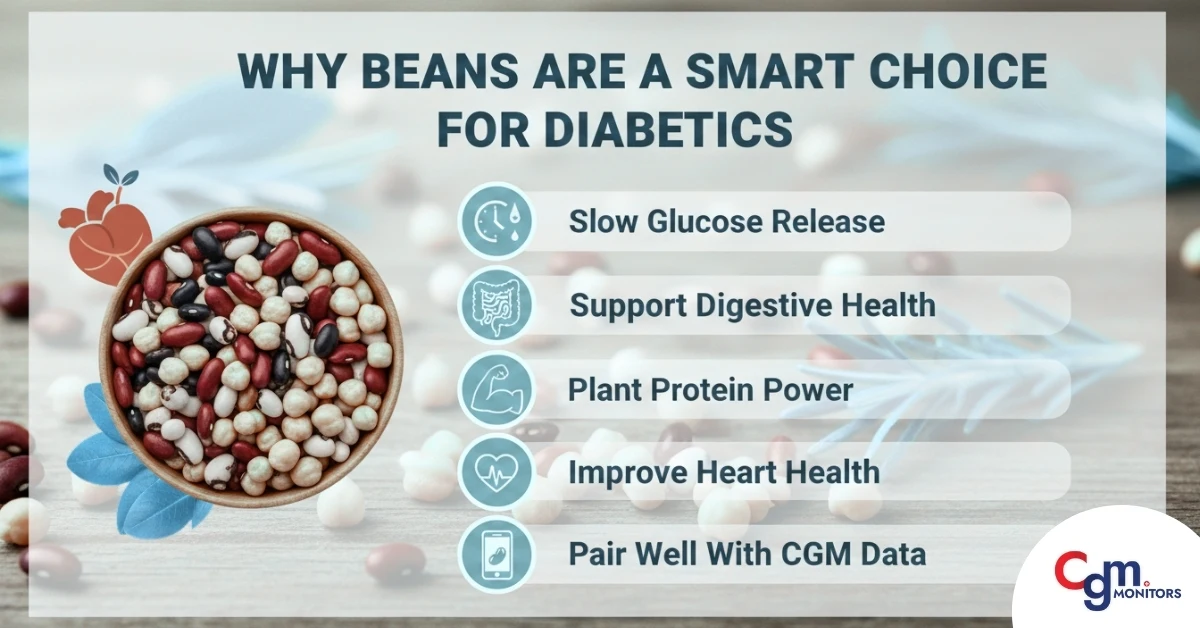
Why Beans Are a Smart Choice for Diabetics
Wondering if beans are good for diabetics? Yes, they sure are, when you handle them well. Here’s why they fit so nicely:
1. Slow Glucose Release
The soluble fibers in beans put the brakes on carbohydrate absorption, meaning they don’t raise blood sugar rapidly as compared to refined carbs
2. Support Digestive Health
Soluble fiber feeds good gut bacteria, which is now linked to improved insulin sensitivity.
3. Plant Protein Power
It keeps you full, cutting snack temptations that mess with stability
4. Improve Heart Health
People who are managing with diabetes have a high risk of heart disease. It contains magnesium, potassium, and plant compounds that support healthy blood pressure.
5. Beans Pair Well With CGM Data
Using a CGM device like the Libre 3 Plus Sensor or New Dexcom G7 15 Days Sensor, you can track how different types of beans affect your glucose levels personally.
Best Beans for Diabetics: Nutrition Facts
Here’s a breakdown of top picks, based on their nutrient profiles and low glycemic impact:
| Bean/Legume | GI | Protein | Fiber |
| Black beans | ~ 20-30 | ~ 8 g | ~ 8 g |
| Kidney beans (red) | ~ 28-30 | ~ 8 g | ~ 7-8 g (commonly ~7 g) |
| Pinto beans | ~ 39 | ~ 7-8 g | ~ 8 g |
| Lentils (green/red) | ~ 26-30 (often ~30) | ~ 8-9 g | ~ 7-8 g |
| Chickpeas (Garbanzo beans) | ~ 28-33 (commonly ~28) | ~ 7-8 g | ~ 6-7 g |
| Navy beans (haricot beans) | ~ 38-40 | ~ 8 g | ~ 9-10 g |
Important Note: According to the Clinical Diabetes found that high-fiber legumes like beans may help reduce A1C levels by about 0.5% when eaten regularly.
Best Grain and Legume for Diabetes:
If you are focusing on beans, it is worth noting that other types of legumes and whole grains can complement your diabetes meal plan:
- Lentils: Are lentils good for diabetes? Yes! all in all, because they cook too fast and are rich in fiber and protein with a low glycemic index. They are also available in green, red and brown colors and varieties. They are perfect for soups and stews.
- Split Peas: These are also an excellent legume that cooks fast and provides similar blood sugar benefits that beans provide.
- Quinoa: While technically a seed, it’s prepared like a grain and offers complete protein with a low glycemic index.
- Brown Rice: When combined with beans (as in traditional rice and beans), the slower-digesting fiber from beans helps moderate the glycemic response of the rice.
How to Add Beans to Your Diabetes Meal Plan
If you’re planning for a meal, the first thing you will remember is that 1/3 cup is equal to 1 starch exchange, like about 80 calories and 15g of carbs present in it. But ½ cup is roughly equal to 1 protein exchange it can be used as a meat replacement.
Practical Ways to Enjoy Beans Daily
For Breakfast:
- Add black beans to a veggie omelet.
- Mix navy beans into your morning breakfast burrito with whole-grain tortillas.
For Lunch:
- Toss chickpeas onto salads for extra protein and fiber.
- Enjoy a bowl of lentil or black bean soup instead of higher-carb options.
For Dinner:
- Replace half the meat in your chili with kidney beans.
- Create a bean-based taco filling with pinto beans and plenty of spices.
- Add white beans to pasta dishes to increase fiber content.
For Snacks:
- Make hummus from chickpeas and pair it with vegetable sticks.
- Create roasted chickpeas seasoned with herbs for a crunchy treat.
Choosing Between Canned and Dried Beans
Both options work well for diabetes management, but there are some differences like affordability and others:
Dried Beans:
- More economical
- Better taste and texture
- Lower sodium content
- Can be prepared by sorting to remove stones by stainer, rinsing, then soaking for a few hours or overnight to reduce cooking time.
Canned Beans:
- Convenient and time-saving.
- Look for “low sodium” or “no added salt” varieties; these are the foods that cause lymphedema.
- Rinse thoroughly before using to reduce sodium content by up to 40%.
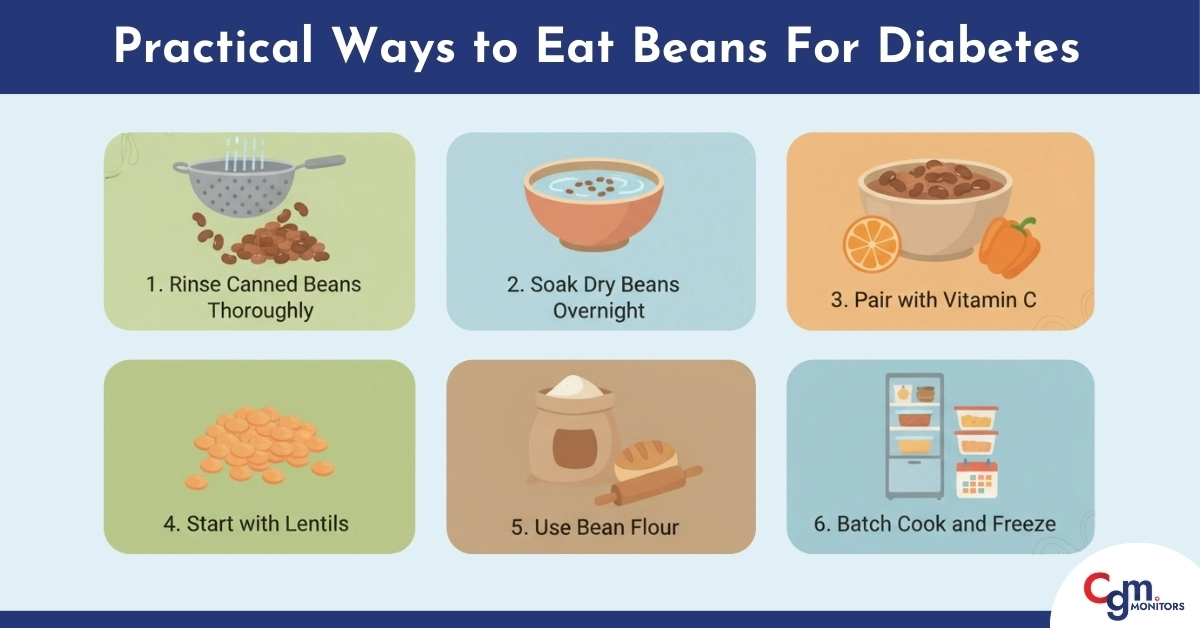
Practical Ways to Eat Beans For Diabetes
You don’t need complicated recipes. You need simple habits that fit real life.
- Rinse canned beans thoroughly to remove 40% of sodium.
- Soak dry beans overnight (7-8 hours with baking soda) to reduce cooking time and improve digestibility.
- Pair with vitamin C foods to boost iron absorption.
- Start with lentils if you’re new to beans.
- Use bean flour for low-carb baking.
- Batch cook and freeze for quick meals.
- Add white beans to smoothies for extra protein.
What the Expert of CGM Says: If you are managing diabetes, it doesn’t mean skip the delicious meal or satisfying foods. With the right knowledge and monitoring tools like FreeStyle Libre 3 Plus, which is available on CGM monitors, you can enjoy nutritious beans as part of a balanced diet that keeps your blood sugar stable and your health optimized.
Conclusion:
Beans and diabetes management create a powerful partnership when approached intelligently. The key isn’t just asking “can diabetics eat beans” but understanding which beans, how much, and how often work for your unique metabolism. With a glycemic index under 40 and packed with fiber and protein, the best beans for diabetics offer sustained energy without glucose volatility.
Your journey starts with experimentation and monitoring. CGM Monitors provides the tools and comprehensive Patient Support to turn nutritional theory into personalized success.
Disclaimer:
This content is meant to inform and educate and does not constitute professional medical advice. Make sure to get medical advice before changing your diet or health plan. Some images included are AI-generated illustrations.
Frequently Asked Questions
Can diabetics eat beans every day?
Yes. Most can safely enjoy ½ to 1 cup daily. Start small and track your glucose.
Do beans raise blood sugar?
They release sugar slowly, thanks to fiber. Most people see rises under 30 mg/dL.
Are pinto beans good for diabetics compared to rice?
Yes. They have more protein, fiber, and half the GI of white rice. Replacing rice with beans can improve glucose readings.
Are beans ok for diabetics on insulin?
Yes, but adjust insulin timing with your doctor. Slow digestion may require less mealtime insulin.
What’s the best grain and legume for diabetes?
Lentils are the top legume; barley is the best grain. But overall, beans offer excellent blood sugar stability.





Write a comment
Your email address will not be published. All fields are required