
Table of content
- What Does it Mean for Black Toenail?
- Why Diabetic People Should Never Ignore It
- Common Reasons for Black Toenail in Diabetes
- What Should You Do If You Notice a Black Toenail?
- The ABCDEF Rule for Toenail Melanoma Checklist
- When Should You Worry About Black Toenail?
- How to Prevent Black Toenails if You Are Diabetic
- Blood Sugar Control Is Your Best Foot Protection
- Conclusion
- Frequently Asked Questions
You noticed a dark spot under your toenail, and you’re wondering if your diabetes has something to do with it. You’re not overthinking it. A black toenail and diabetes are connected in more ways than most people realize. For those managing blood sugar daily, even a discolored nail can signal serious underlying issues.
This guide walks you through every possible cause, which warning signs demand urgent action, and what you can do today to protect your feet. Let’s start with why diabetes makes your toenails vulnerable in the first place.
What Does it Mean for Black Toenail?
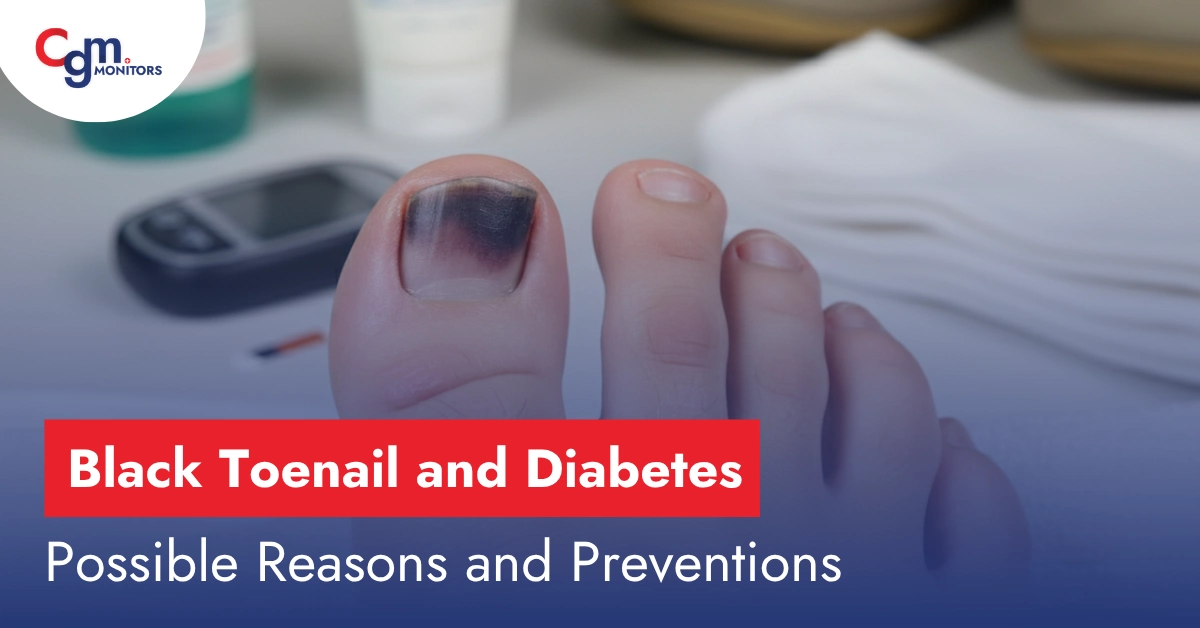
Black toenails are a condition where the nail turns dark due to injury, infection, or underlying health issues. This condition is mostly common among diabetic patients. They are often caused by bleeding under the nail, fungal infections, or repeated pressure on the toe.
In people with diabetes, black toenails should be checked early to prevent serious complications.
Why Diabetic People Should Never Ignore It
Foot health is critical for people living with diabetes. High blood sugar can damage nerves called diabetic neuropathy. This reduces sensation in the feet. You may not feel pain from cuts or injuries. Because of this, small problems can grow worse before you notice them.
Another issue is reducing blood flow. Diabetes can narrow blood vessels, limiting oxygen supply to the toes. When circulation drops, even minor injuries may heal slowly. In severe cases, untreated infections can lead to serious complications such as tissue damage.
Checking your feet daily is one of the simplest ways to prevent these issues.
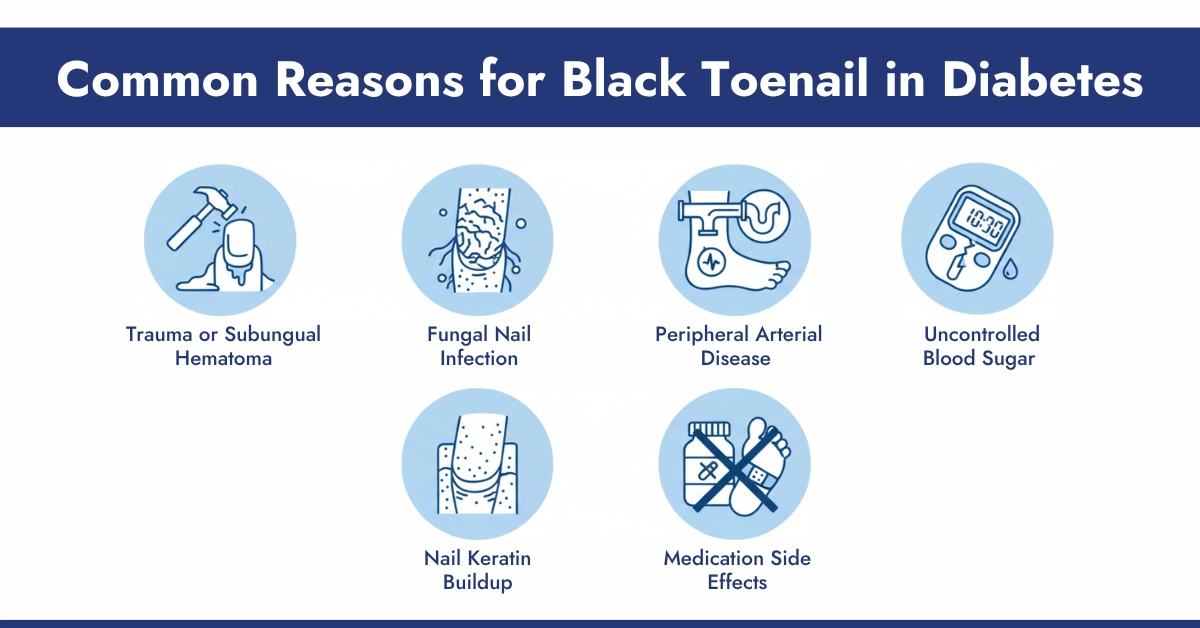
Common Reasons for Black Toenail in Diabetes
Several conditions may lead to black toenails.
Trauma or Subungual Hematoma
A common cause is trauma. Dropping something heavy or wearing tight shoes can break tiny blood vessels under the nail. This trapped blood forms a dark spot like dark red, purple and black, called a subungual hematoma. In people without diabetes, this often heals on its own. In diabetics, poor circulation slows this process significantly, raising the risk of infection.
Fungal Nail Infection
Diabetics with onychomycosis carry a threefold higher risk of foot ulcers and gangrene. The infection may cause thickened, discolored, or blackened nails. Diabetic patients with onychomycosis have significantly higher odds of minor limb amputation. Leaving a fungal toenail infection untreated is not a minor decision. Maintaining consistent blood sugar control actively reduce this risk. reduces
Peripheral Arterial Disease (PAD)
Poor circulation caused by diabetes may reduce blood supply to the toes. This ischemia can turn toenails dark or black, even without any injury. PAD-related nail discoloration is a serious warning sign. It appears on the legs, in cramps, cold feet, or slow-healing sores anywhere on the foot.
Uncontrolled Blood Sugar & Nail Keratin Buildup
Persistently high HbA1c levels (a measure of long-term blood sugar control) are linked to a process called subungual hyperkeratosis, an abnormal buildup of keratin beneath the nail that causes thickening, lifting, and dark discoloration.
This process is directly accelerated by chronic hyperglycemia. It is not trauma. It is not an infection. It is your blood sugar silently reshaping your nail structure from beneath.
Ingrown Toenails
Improper nail trimming or pressure from shoes may cause ingrown nails. These can become infected and darkened.
Medication Side Effects
Rarely, certain medications may cause nail discolouration.
What Should You Do If You Notice a Black Toenail?
Here’s what you can do:
- Check both feet daily for changes in nail color, shape, or thickness
- Wear breathable, well-fitting shoes that don’t put pressure on your toes
- Keep your feet clean and dry to reduce the risk of fungal infections
- Trim nails carefully and straight across to avoid further damage
- Avoid walking barefoot, especially if you have diabetes
- Don’t try to remove the nail yourself, as this can make the condition worse
- If your nail turns black without injury or becomes thick, painful, or swollen, schedule a visit with a podiatrist or healthcare provider
When it comes to black toenails and diabetes, early action can help prevent serious complications like infections or foot ulcers. And remember, noticing early signs is your chance to build strong foot care habits and protect your long-term health.
The ABCDEF Rule for Toenail Melanoma Checklist
Clinicians use this checklist to assess high-risk nail discolouration. It helps you know what to watch:
- Age: Most common in people aged 50 to 70.
- Band: A dark band wider than 3mm is concerning.
- Color: Multiple shades of brown or black within the same band.
- Digit: The big toe is the most frequently affected.
- Extension: Pigment spreading to the surrounding skin, Hutchinson’s sign.
- Family history of melanoma or nail conditions.
Your doctor uses this framework every day. Now you do too.
When Should You Worry About Black Toenail?
Seek a healthcare professional if you notice any of the following signs:
- Darkening that spreads beyond the nail
- Foul smell or discharge from under the nail
- The nail loosening or separating from the nail bed
- Swelling or redness extending to the toe or foot
- Dark discoloration that doesn’t move as the nail grows
You can monitor mild discoloration at home if there’s a clear cause, no swelling, and no odor. However, if you notice any of the signs above, or if there’s no obvious reason for the change, seek medical attention immediately.
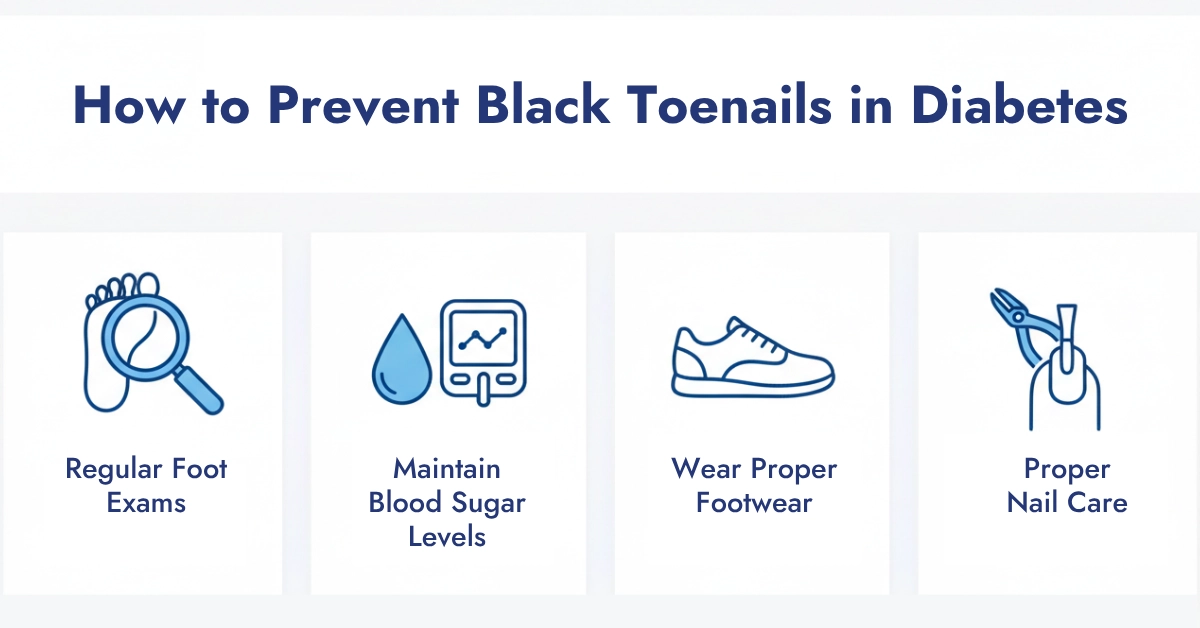
How to Prevent Black Toenails if You Are Diabetic
Prevention is the most powerful tool you have.
- Wash your feet daily with mild soap and dry thoroughly, especially between the toes
- Trim nails straight across, never curved at the edges.
- Wear well-fitting, diabetic-friendly shoes with room for all five toes.
- Change socks daily and never go barefoot indoors or outdoors.
- Use a hand mirror to check the underside of your nails regularly
- Stable glucose levels reduce nerve and blood vessel damage.
Blood Sugar Control Is Your Best Foot Protection
Nail health in diabetics is directly linked to glycemic control. Chronic hyperglycemia causes small-vessel atherosclerosis in the toes, which reduces blood flow and oxygen to the nail unit, creating exactly the conditions that allow fungal infections and ischemic nail changes to develop.
Many people use modern monitoring tools to track their glucose levels in real time. Maintaining consistent blood sugar levels slows neuropathy progression, improves circulation to your extremities, and strengthens your immune response against fungal pathogens. This is where continuous glucose monitoring becomes a genuine preventive tool.
The FreeStyle Libre 3 Plus Sensor, available at CGM Monitors, provides real-time glucose readings without finger sticks, helping you stay within your target range every hour of the day. For more CGM sensors, explore our CGM devices for proper insights.
Conclusion
A black toenail and diabetes connection should never be ignored. In many cases, the cause is simple trauma or a fungal infection. However, diabetes increases the risk of complications because of nerve damage and poor circulation.
Early detection makes a huge difference. Checking your feet daily and managing blood sugar levels can prevent serious problems. Using modern monitoring solutions and following proper foot-care habits helps people with diabetes stay healthy and active.
If you notice persistent discoloration, swelling, or pain, consult a healthcare professional promptly. Taking small preventive steps today can protect your foot health for years to come.
References
- CDC – Your Feet And Diabetes
- National Library of Science – Diabetic Foot Care
Frequently Asked Questions
Can high blood sugar directly cause toenail discoloration without any injury or infection?
Yes, chronically elevated HbA1c levels trigger subungual hyperkeratosis, an abnormal keratin buildup beneath the nail. This process occurs independently of trauma or fungal infection and is directly driven by uncontrolled blood glucose over time.
Is a black toenail a sign of diabetes?
A black toenail is not exclusively a sign of diabetes, but it is more common and more serious in people who have it. If you’re diabetic, a black toenail with no clear cause, prompt medical evaluation is essential.
How do I know if my black toenail is serious?
Look for pigment spreading onto the skin around the nail (Hutchinson’s sign), nail thickening or crumbling, foul odor, pus, or swelling. These signs require immediate medical attention.
What is Hutchinson's sign in toenails?
Hutchinson’s sign is dark pigmentation spreading from under the nail to the surrounding skin, a sign of potential subungual melanoma. This should be evaluated by a dermatologist.
How do I prevent black toenails with diabetes?
Inspect your feet daily, wear properly fitting shoes, trim nails straight across, keep blood sugar consistently controlled, and use a CGM device to monitor glucose in real time. Early detection of any nail change is your strongest defense.
What is the difference between a bruised toenail and a fungal infection?
A bruised toenail typically follows a clear injury and grows out as the nail does. A fungal infection causes the nail to thicken, crumble, and turn yellowish black, often without any injury. A nail culture from your doctor confirms the diagnosis.
Does blood sugar control affect toenail health?
Yes, chronic high blood sugar causes small-vessel damage in the toes, reducing blood flow to the nail unit. This directly increases the risk of fungal infection and ischemic nail changes. Consistent glucose management, supported by a real-time CGM sensor, is one of the most effective ways to protect your nail and foot health.
What are Terry's nails & subungual hyperkeratosis, & how are they related to diabetes?
Terry’s nails are white with a dark band and are linked to conditions like diabetes. Subungual hyperkeratosis is thickened nail bed tissue, common in diabetics due to poor circulation and inflammation. Both can occur alongside fungal infections and should be addressed at a medical appointment if noticed.
Disclaimer:
This blog is written for general information only and not medical advice. Always talk to your doctor if you have any health concerns. We’re not responsible for any actions you take based on this information. Images in this blog are AI-generated for informational purposes.





Write a comment
Your email address will not be published. All fields are required