

Table of content
Although there isn’t a permanent cure for Type 2 diabetes, research shows that some people can successfully put it into remission. With healthy changes in eating habits and gradual weight loss, many individuals are able to bring their blood sugar levels back into a normal range—sometimes without the need for medication.
It’s important to understand that remission doesn’t mean diabetes is completely gone. Type 2 diabetes is a long-term condition, and even when blood sugar stays stable without medication, there’s always a possibility it can return. However, the encouraging news is that many people maintain healthy glucose levels for years, avoiding complications and living full, active lives.
So, what makes remission possible? For most people, weight loss plays a key role. Losing excess weight helps the body use insulin more effectively, which improves blood sugar control. In some cases—especially for those diagnosed in the early stages and not yet using insulin—losing enough weight can make diabetes much easier to manage or even allow people to live medication-free.
The goal isn’t perfection. It’s about making small, sustainable lifestyle changes that support long-term health and give you more control over your diabetes journey.
Can You Reverse Type 2 Diabetes? Understanding the Real Concern
Before answering whether Type 2 diabetes can be reversed, it’s important to understand why diabetes people are asking:
- Fear of long-term insulin dependence
- Anxiety about heart disease, kidney failure, or nerve damage
- Frustration with temporary diet fixes that don’t last
- Confusion caused by contradictory medical advice
- Desire to regain control, energy, and normal blood sugar levels
This isn’t just a medical question—it’s a quality-of-life question.
Diabetes Etiology and Possibility of Reversal
The development of T2D involves a combination of genetic and environmental factors. Obesity, physical inactivity, and poor diet are significant contributors to the onset of the disease. Recent studies have shown that T2D can be reversed, particularly when diagnosed early and managed aggressively. Reversal often refers to the normalization of blood glucose levels without the need for diabetes medication. However, this does not imply a permanent cure, as the risk of relapse remains if lifestyle changes are not maintained.
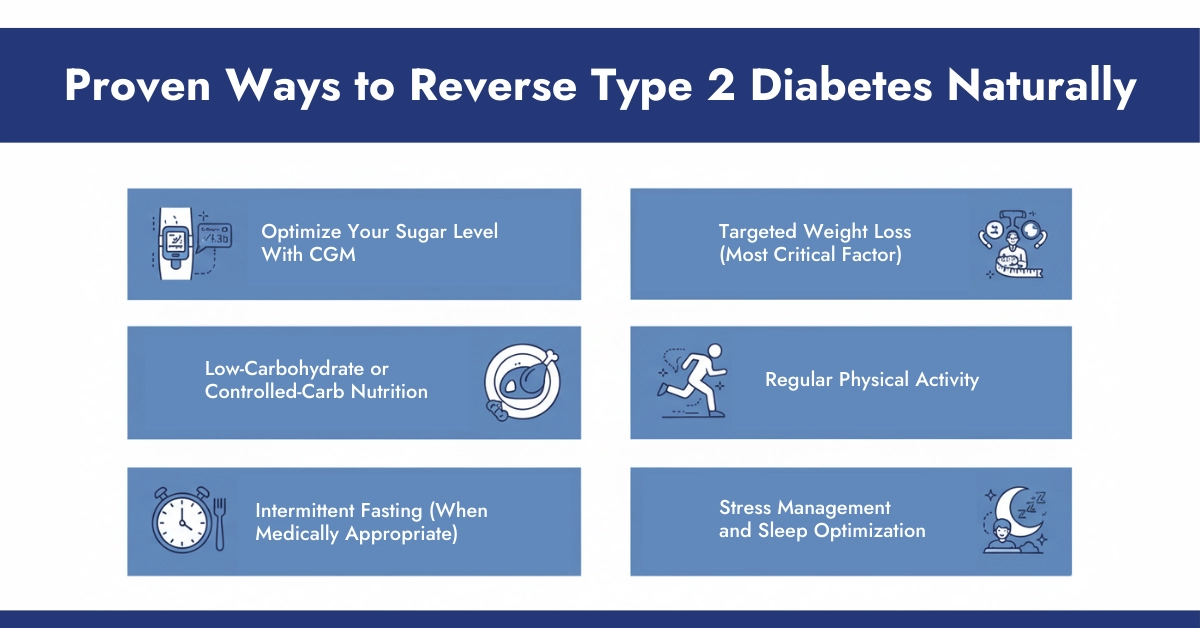
Proven Ways to Reverse Type 2 Diabetes Naturally
These are some recommendations we have arrived at after thorough research, listening to diabetes patients on different forums, and consulting with endocrinologists. These are actions you should consider taking in the early stages of diabetes.
1. Optimise Your Sugar Level With CGM
You may have diabetes, but how you manage it is now in your hands. Your pancreas produces insulin naturally, or you may take it from an external source. The key is taking control of your blood sugar.
This is where CGM (Continuous Glucose Monitoring) sensors come in (Libre 2 Plus, Libre 3 Plus, Dexcom G7 and G6). They track your blood sugar every minute, giving you real-time information so you can take quick and informed action to keep your levels in a healthy range
2. Targeted Weight Loss (Most Critical Factor)
Even a 5–10% reduction in body weight can dramatically improve insulin sensitivity. Do not use oxempic drug to seek quick results because it will badly effect on your skin, especially on your face. (Source: Medical News)
- Reduces fat in insulin-sensitive organs
- Improves glucose uptake
- Lowers HbA1c levels
Many people achieve remission after losing 10–15 kg under medical supervision.
3. Low-Carbohydrate or Controlled-Carb Nutrition
Reducing refined carbohydrates helps stabilize blood sugar and insulin levels.
Focus on:
- Lean proteins
- Healthy fats
- High-fiber vegetables
- Whole, unprocessed foods
Avoid:
- Sugary beverages
- Refined grains
- Ultra-processed foods
This approach directly targets glucose spikes—the root of the problem.
4. Regular Physical Activity
Exercise improves insulin sensitivity independent of weight loss.
Best options include:
- Brisk walking (30–45 minutes daily)
- Resistance training (2–3 times per week)
- Light cardio after meals to reduce glucose spikes
Movement tells your muscles to use glucose instead of storing it.
5. Intermittent Fasting
Under supervision, fasting protocols can:
- Reduce insulin levels
- Improve metabolic flexibility
- Promote fat loss from critical organs
This is not for everyone, but for some patients, it’s a powerful tool.
6. Stress Management and Sleep Optimization
Chronic stress raises cortisol, which increases blood sugar levels.
Poor sleep:
- Worsens insulin resistance
- Increases cravings
- Disrupts metabolic hormones
Optimizing sleep and stress is often overlooked—but essential.
Conclusion
While T2D is a serious condition, recent research offers hope for reversal, especially when interventions are implemented early and maintained consistently. The cure for diabetes requires lifestyle changes, medical treatments, and, in some cases, surgical interventions. Adopting such a multi-dimensional approach may cure your diabetes, however, ongoing management is essential to sustain these benefits and prevent reversion. To answer a common question, ‘Which is worse, type 1 or 2 diabetes?’, well, long-term prevalence of any type of diabetes is harmful; however, the worst among type 1 and type 2 is type 1 diabetes, also known as insulin-dependent diabetes.
Frequently Asked Questions
Can prediabetes be reversed?
Prediabetes can often be reversed with consistent healthy changes like eating protein-rich food and reducing carbs in the diet. Losing 5-10% of body weight through improved eating and activity frequently returns blood sugar to normal ranges. Calculate your BMI (Body Mass Index) and manage your plan accordingly.
How can diet and lifestyle changes contribute to Type 2 diabetes reversal?
Smart eating, like cutting refined carbs, adding vegetables/fiber, and portion control, lowers blood sugar quickly when using CGM monitors. Regular movement plus sustained weight loss improves insulin use, often allowing medication reduction or elimination.
How do doctors define Type 2 diabetes reversal?
Doctors use “remission” for HbA1c below 6.5% for at least 3 months without diabetes medications. This shows blood sugar control returned through lifestyle or other means, but it is not a permanent fix.
What does it mean to 'reverse' Type 2 diabetes?
Reversing means achieving normal blood sugar levels without needing glucose-lowering drugs. The underlying tendency remains, so ongoing healthy habits are necessary to prevent high sugars from returning.
What is the difference between remission and cure for Type 2 diabetes?
Remission means normal blood sugars without medications, but monitoring and lifestyle must continue to avoid relapse. A true cure would eliminate the condition forever with no risk of return, which does not exist for Type 2 diabetes.
What are the common markers used to confirm Type 2 diabetes reversal?
The main marker is HbA1c under 6.5% sustained for 3+ months off diabetes medications. Fasting glucose below 126 mg/dL or CGM estimates can also confirm when HbA1c is unreliable.
Why is early intervention crucial for the potential reversal of Type 2 diabetes?
Early action soon after diagnosis preserves more natural insulin production and sensitivity. Starting changes quickly raises chances of remission before long-term damage or progression sets in.
Why does weight loss play a significant role in Type 2 diabetes remission?
Losing 10% or more body weight reduces fat stress on the pancreas and liver, restoring better insulin function. Greater and sustained loss strongly predicts higher remission rates and less need for medications.



Write a comment
Your email address will not be published. All fields are required