
Table of content
- Link Between Diabetes and Kidney Disease
- Diabetic Kidney Disease and Its Early Signs
- Early Kidney Damage Signs (for people with or without diabetes)
- Can kidney damage be reversed?
- How to Heal Kidneys Naturally From Diabetes
- Diabetes and Kidney Disease Diet
- How to Keep Kidneys Healthy with Medications
- Mini-Glossary To Understand This Topic
- Conclusion:
- Frequently Asked Questions
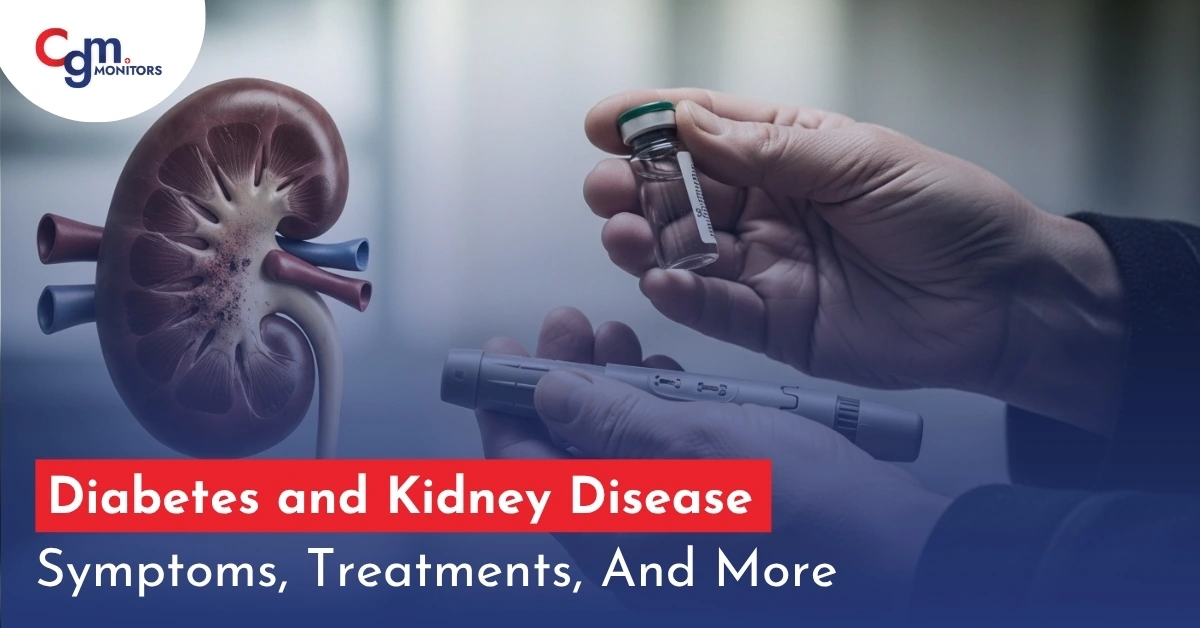
Diabetes, a mother of diseases, can cause kidney disease as well. Blood sugar can deteriorate the kidney’s filtering unit (nephron), resulting in scarring, albuminuria, and falling eGFR. If complications such as high blood pressure, fluid overload (swelling), anemia, bone/mineral disorders, or heart issues stack up, they may bring up the need for dialysis or transplant. Both types of diabetes, Type 1 and Type 2, impact your kidneys. According to the Centers for Disease Control and Prevention (CDC), nearly 1 in 3 adults with diabetes also has kidney disease.
High glucose damages the glomerulus (the filtering component in nephrons). When worsened, kidney disease may even lead to death. Let’s dive deep into diabetes and kidney disease.
Link Between Diabetes and Kidney Disease
Your kidneys act as natural filters through the basic unit called nephrons. It removes waste and excess fluids from your blood. Just like you filter the seed or pulp when making your favourite juice. When you have diabetes, high blood sugar levels can damage these tiny filtering units and cause hyperfiltration, protein leakage and scarring. This condition is known as diabetic nephropathy.
How It Happens:
- When your blood glucose level is high, this overworks your kidneys.
- With the passage of time, the pressure is raised and this causes the destruction of the blood vessels in the kidneys.
- Wounded kidneys start leaking protein (primarily albumin) in the urine an initial indication of kidney disease.
Diabetic Kidney Disease and Its Early Signs
Think of each kidney as a waste filter made of tiny blood-vessel bundles called glomeruli (kidney filters). When blood sugar (glucose) runs high:
- The glomeruli work too hard (hyperfiltration) early on.
- They start to leak albumin (a blood protein) into urine. This cannot be seen with the naked eye.
- Over time, this triggers scarring (fibrosis), which reduces filtration capacity.
- High blood pressure (hypertension) speeds this damage by pushing too much pressure through those delicate filters.
Early Kidney Damage Signs (for people with or without diabetes)
Usually, there are no symptoms at first. The earliest sign is a high urine ACR (albumin-to-creatinine ratio, a spot urine test that detects protein leak), while your eGFR (estimated glomerular filtration rate, a blood test that estimates kidney function) is still normal.
Subtle changes you might notice:
- Mild ankle swelling
- Foamy urine (from protein) – this can be noticed with the naked eye.
- A creeping rise in blood pressure
Red flags—Seek urgent care
Call your clinician promptly or seek urgent care if you have:
- Persistent or worsening swelling
- Shortness of breath
- Severe fatigue, nausea, itching, and confusion
- Very foamy urine
- Suddenly worsening blood pressure
These can signal significant kidney strain or fluid buildup.
Note: Kidney disease can also lead to hair loss. When the kidneys don’t filter toxins properly, it affects nutrient balance and blood flow to hair follicles, causing thinning or shedding over time.
Can kidney damage be reversed?
With early detection and cure, microalbuminuria (albumin in pee) can be improved or even normalized with excellent glucose and blood pressure control plus kidney-protective medications. CKD or established scarring (scarring of the kidney that has taken place) is usually not reversible, but with the right plan, we can slow progression.
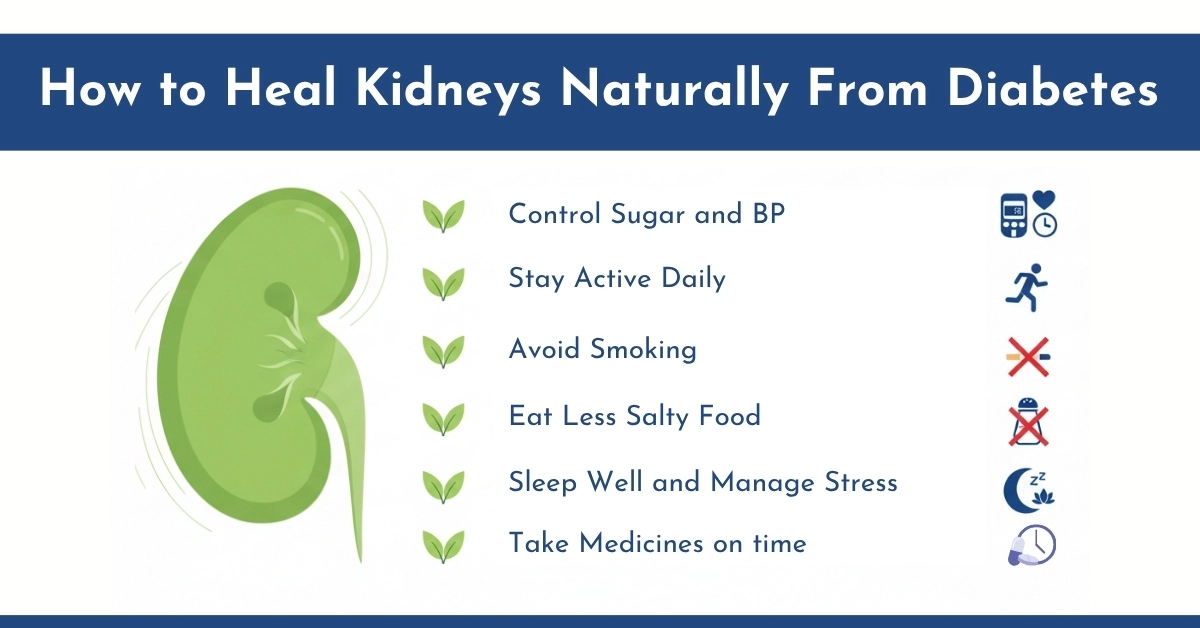
How to Heal Kidneys Naturally From Diabetes
Daily habits have a great impact on our health, say that be diabetes or even cardiac issues, taking care of your diet and exercise can help you live longer and better. The following habits may help:
- Hit your glucose and BP goals. A continuous glucose monitor (CGM), such as Dexcom G7 sensors, may help you achieve your target sugar levels.
- Take medications exactly as prescribed. If they are not working or are causing any side effects, talk to your doctor immediately.
- A daily walk of at least 30 minutes, even in short laps, can help you achieve these goals. Even better if you combine it with 2 strength sessions per week.
- Don’t smoke. This can make things harder for you. Even non-diabetics are more likely to develop diabetes if they smoke.
- Limit sodium (salt). While it adds great taste, it’s sometimes called slow poison.
- Prioritize sleep and stress management. Lack of sleep and stress can worsen your blood sugar.
Still pricking fingers?
CGM sensors like dexcom G6 or Libre 3 Plus monitor your blood sugar 24/7, give readings on a reader or your compatible phone, whichever you prefer. These sensors have proven to help users get better A1C.
Claim yours with the help of CGM Monitors today.
Diabetes and Kidney Disease Diet
Emphasize plants, lean proteins, whole grains (portion-aware), unsalted nuts, and olive oil. As CKD advances, diet gets more specific—work with a renal dietitian. And NEVER forget to maintain portion size. The following may help:
Foods That May Help Diabetics
These foods mainly include non-starchy green vegetables, fish, chicken (skinless), apples, oats, and more such foods, especially those that have low carbs and good fiber content. Make sure you consume, depending on your specific condition, and maintain portion size.
Foods Diabetics Should Limit/Avoid
Almost all processed foods should be limited or avoided altogether. This includes, but is not limited to, processed meats, instant noodles, bananas, oranges, potatoes (high sodium/phosphate → raises BP & kidney load), and Ultra-processed snacks. Sugary drinks, sweets (glucose spikes) should be restricted, while the high-sodium sauces, pickles (salt excess) should also be avoided.
Note: Protein, potassium, and phosphorus targets vary by CKD stage—get individualized advice.
How to Keep Kidneys Healthy with Medications
While the following are some of the medications that reduce kidney decline, these are only listed for educational purposes and are solely based on research. Do NOT take any medical action without the supervision of a doctor.
- ACE inhibitors/ARBs (e.g., lisinopril, losartan): First-line for albuminuria or hypertension; lower pressure inside glomeruli and reduce protein leak.
- SGLT2 inhibitors (e.g., empagliflozin, dapagliflozin): Slow CKD progression and lower heart risk in T2D with CKD—even with modest A1C change.
- GLP-1 receptor agonists (e.g., semaglutide): Strong cardiovascular benefits; growing evidence for kidney protection.
- Finerenone (non-steroidal MRA): For T2D with albuminuria already on ACEi/ARB; reduces CKD progression.
- Statins: Lower cardiovascular risk, which rises as kidneys decline.
- Metformin: Foundational in T2D; dose depends on eGFR.
- Safety tip: After starting ACEi/ARB, SGLT2i, or finerenone, check potassium and kidney labs as advised.
Mini-Glossary To Understand This Topic
- Diabetic kidney disease (DKD): Kidney damage or eGFR <60 for ≥3 months in a person with diabetes—often with albuminuria (protein in urine).
- Glomeruli: Tiny kidney filters that clean your blood.
- Albuminuria / ACR: Protein leak into urine measured as albumin-to-creatinine ratio.
- eGFR: Estimated filtering ability of kidneys, calculated from a blood creatinine test.
- ACEi/ARB/SGLT2i/GLP-1 RA/MRA: Classes of medications that can protect the kidneys and heart in diabetes.
Conclusion:
Diabetes is the mother of diseases; high sugar in your blood can cause harm to your organs, including your kidneys. This can trigger diabetic kidney disease, which, if not treated in time and properly, can lead to kidney failure as well. If you suspect to have damaged kidneys, it’s best to visit your doctor and take the required tests ASAP. Moreover, consuming a diet that does not spike your blood sugar provides you with the required nutrients, which can also help, especially if you have an active lifestyle.
Disclaimer: This blog is for informational purposes only and does not constitute medical, legal, or professional advice. While we strive for accuracy, errors or omissions may occur.
Some images in this blog may be AI-generated or for illustrative purposes only. Device images belong to their respective manufacturers and are used here for reference. Actual products may vary.
Frequently Asked Questions
Is insulin damaging to the kidneys?
No, insulin is not harmful to the kidneys. Actually, insulin treatment can be used to ensure the well-being of the kidneys through maintenance of the level of blood sugar.
What is the time frame of developing kidney disease as a result of diabetes?
Kidney disease normally takes a number of years to develop due to poorly managed diabetes. After being diagnosed with diabetes, many individuals can fail to show any signs after 10-15 years.
Is it possible that dehydration increases diabetic kidney disease?
Yes. Dehydration may limit the amount of blood to kidneys exacerbating the already damaged kidneys. Diabetics must keep up with the proper levels of hydration yet not excessively consume fluid as prescribed by the physician (particularly at later stages of CKD).
What is the distinction between chronic kidney disease (CKD) and diabetic kidney disease?
DKD is a form of chronic kidney disease, which is brought about by diabetes. CKD, however, may be caused by a wide variety of factors – high blood pressure, autoimmune diseases, or infections. Diabetes is the major cause of CKD in the world.
Are there some drugs to preserve the kidneys in diabetes?
Yes. Some drugs like ACE and ARB and SGLT2 (like Jardiance or Farxiga) have also been demonstrated to safeguard the kidney function and decrease the likelihood to progress to kidney failure in diabetic patients.
Will exercise improve kidney in diabetes?
Absolutely. Exercise is also a good activity that helps you maintain better blood circulation, control blood sugar, and lower blood pressure all of which are healthy towards your kidneys. The best activities to engage diabetic patients in are low-impact activities such as walking, yoga, or swimming.
What is the relationship between high blood pressure and diabetic kidney disease?
High blood pressure also brings added pressure on the blood vessels of the kidney enhancing the destruction of high blood sugar. The combination of diabetes and hypertension is an important area of controlling, and the management of this area is fundamental to preventing serious kidney complications.
Are protein supplements advisable to diabetic kidney disease patients?
No. Kidney disease patients should not take high-protein supplements without the recommendation of a doctor. Redundancy of protein may raise the workload of the kidneys and hasten their destruction.





Write a comment
Your email address will not be published. All fields are required