

Table of content
- Key Takeaways
- Link Between Diabetes and Cracked Heels
- Common Reasons for Diabetic Heel Cracks
- Are Cracked Heels a Sign of Diabetes?
- Common Causes of Cracked Heels in Diabetic Feet
- Early Stage Dry Feet in Diabetes
- How to Recognize Cracked Heels in Diabetes
- How to Cure Cracked Heels with Diabetes: Natural Tips
- Conclusion
- Disclaimer:
- Frequently Asked Questions
Do your heels stay cracked no matter what lotion you use? Many people with diabetes face this exact problem, and most never find out why their heels won’t heal after long-term treatment with medications.
Cracked heels and diabetes are closely connected. Many people notice dry, rough heels and ignore them. But if you have diabetes, cracked heels are more than a cosmetic concern. They can signal serious underlying issues with your blood sugar, nerves, and circulation.
Uncontrolled blood glucose levels damage your skin from the inside out. The result? Painful, deep fissures that heal slowly and can become dangerous. Understanding this link early protects your feet and your overall health.
Key Takeaways
In this guide, which an endocrinologist reviews you will learn:
- Direct Connection of Diabetes and Heel Fissures
- Key Reasons and Causes of Diabetic Heel Cracks.
- Early Stages of Diabetic Feet Cracks that Need to Be Monitored.
- Natural Methods and Diabetes Management to Cure Diabetes Feet Cracks.
Link Between Diabetes and Cracked Heels
People with diabetes are at a higher risk of developing cracked heels due to changes in skin hydration, nutrient supply, and nerve function. Even the condition becomes severe if a person is not managing their diabetes with the help of CGMs like the Dexcom G7 Sensor. Understanding these factors can help prevent and manage heel fissures effectively.
Common Reasons for Diabetic Heel Cracks
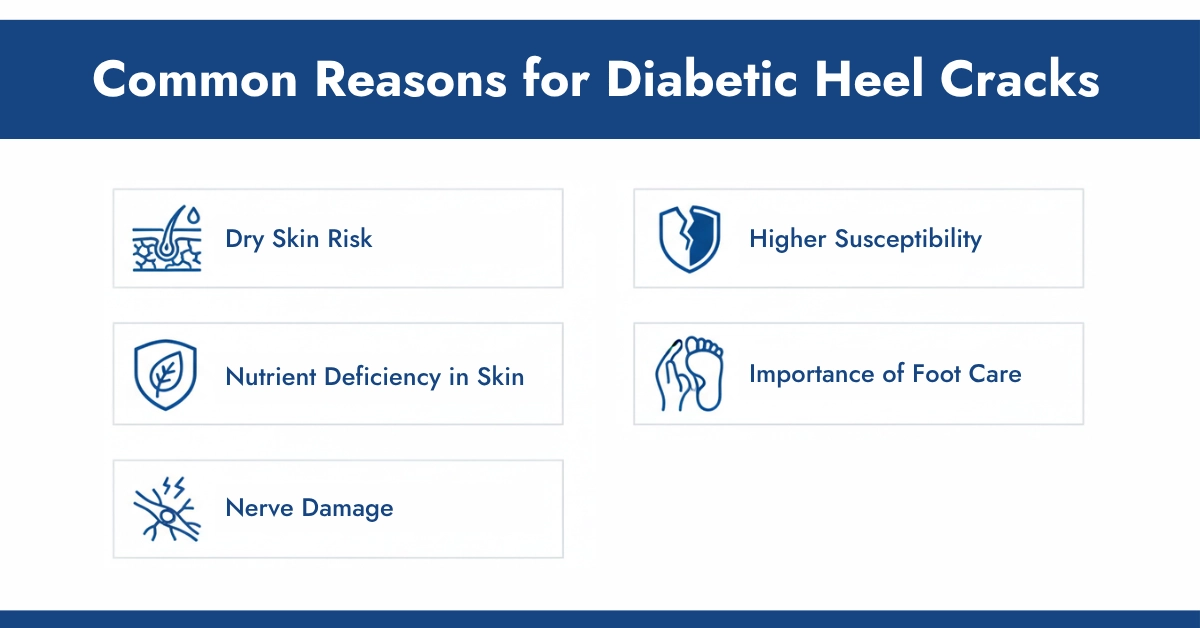
- Dry Skin Risk: Diabetes can reduce the skin’s natural moisture, making heels drier and more prone to cracking.
- Nutrient Deficiency in Skin: High blood sugar affects nutrient delivery to the skin, weakening it and increasing fissure risk.
- Nerve Damage (Neuropathy): Nerve damage can prevent sweat glands from releasing moisture, further drying the skin.
- Higher Susceptibility: Cracked heels are more common and severe in diabetics than in non-diabetics.
Are Cracked Heels a Sign of Diabetes?
Yes, cracked heels are an early sign of diabetes. However, not every case of dry heels points to diabetes. The key is to know what to look for. The proper answer depends on severity and accompanying symptoms.
Early Warnings of Cracked Heels and Diabetes
Watch for these specific signs that go beyond ordinary dryness:
- Heels that stay dry despite regular moisturizing.
- Skin that feels numb or tingly around the heel area.
- Slow-healing cuts or cracks that take weeks to close.
- Skin that thickens quickly and turns yellow or calloused.
- Cracking that appears even in warm, humid weather.
These signs suggest that nerve damage or poor circulation, both caused by high blood sugar, may already be affecting your feet.
When Cracked Heels Are Not Diabetes?
Cracked heels also come from dehydration, prolonged standing, cold weather, nutritional deficiencies (especially zinc and omega-3s), and thyroid problems. If basic cream fixes your heels within a week, diabetes is less likely.
If you get a bump or minor injury while sitting, standing, or walking, or if you feel that pain might affect your blood sugar levels, you can follow this guide “Pain and its effect on the glucose level” for help.
Common Causes of Cracked Heels in Diabetic Feet
Understanding the cause helps you treat the problem correctly.
High Blood Sugar
When blood glucose stays high, it triggers a process called glycation. Excess sugar binds to the collagen in your skin, creating Advanced Glycation End-products (AGEs). These make skin stiff, brittle, and prone to cracking.
Research published in JCD (2024) confirmed that AGEs directly destroy the flexible collagen structure that keeps skin from cracking. Importantly, the Journal of Clinical Investigation found that improving blood sugar control measurably reduces collagen glycation, meaning better glucose levels actively repair your skin.
Peripheral Neuropathy & Sweat Gland Damage
According to the American Diabetes Association, about 50% of people with diabetes develop peripheral neuropathy over time. This nerve damage affects the sweat glands in your feet.
Healthy feet sweat naturally to stay moisturized. When neuropathy disrupts this function, your heels lose their built-in hydration, no matter how much lotion you apply. Dryness becomes severe, and heel fissures develop more easily.
Poor Circulation
Elevated blood sugar damages blood vessel walls over time. Less blood reaches your feet. That means less oxygen, fewer nutrients, fewer immune cells arriving at the skin, and a much higher risk of infection, like diabetic foot ulcers from even a small crack.
The Mayo Clinic notes that diabetic foot complications are among the leading causes of hospitalisation in people with diabetes.
Early Stage Dry Feet in Diabetes
In the early stages, it is possible to tackle the situation. Here are common signs that need to be monitored before the consequences catch up.
- Mild Dryness: Skin on the feet may feel slightly rough or flaky.
- Itching or Tightness: Common in the heels and soles.
- Cracks Starting to Form: Small fissures may appear if dryness is not managed.
- Caused by Reduced Moisture: Diabetes can limit sweat production and affect skin hydration.
How to Recognize Cracked Heels in Diabetes
Diabetic cracked heels have specific characteristics that set them apart:
- Deep fissures that bleed or ooze.
- Surrounding skin that is hard, thickened, or discolored.
- Pain or complete absence of pain (neuropathy can mask pain).
- Persistent dryness that does not respond to normal lotions.
- Cracks that take weeks or months to heal.
Importantly, the absence of pain in cracked heels is itself a red flag. When you cannot feel heel pain, nerve damage may already be significant.
How to Cure Cracked Heels with Diabetes: Natural Tips
These steps form the foundation of diabetic cracked heels treatment:
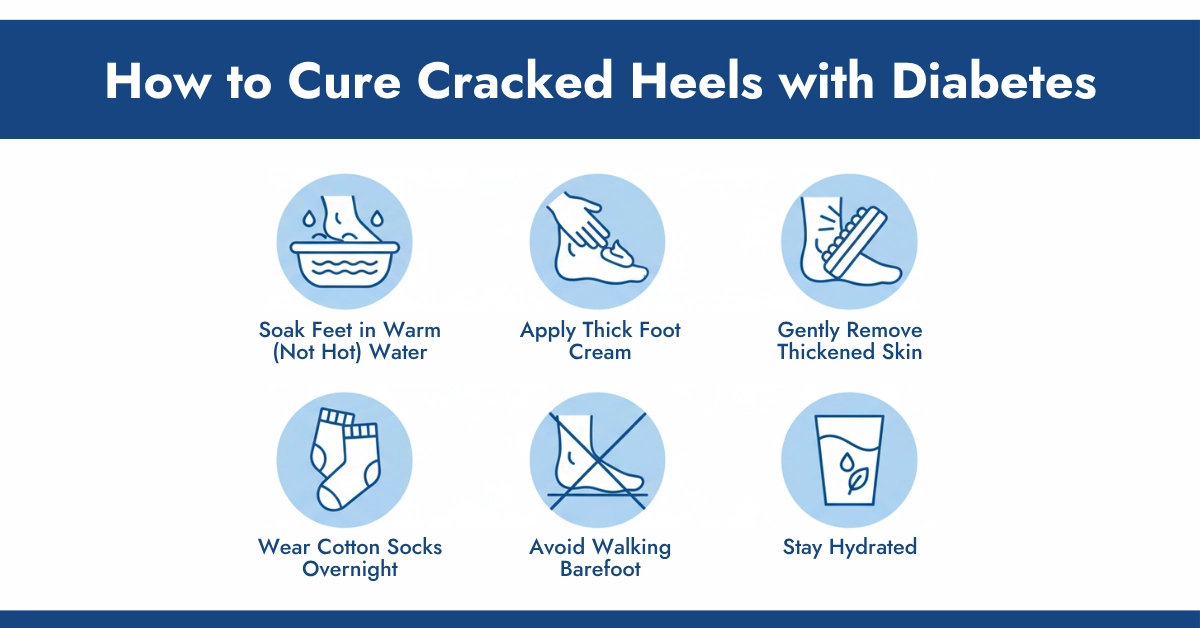
- Soak feet in warm (not hot) water for 10 minutes nightly.
- Use a pumice stone to gently remove thickened skin only.
- Apply a thick foot cream immediately after soaking while the skin is damp.
- Cover feet with cotton socks overnight to lock in moisture (occlusive therapy).
- Avoid walking barefoot at all times, even indoors.
- Drink water frequently.
The overnight sock method works through occlusion, trapping moisture against the skin long enough for it to absorb deeply into the heel tissue.
Conclusion
Cracked heels and diabetes are not just skin issues. They are your body signalling that blood sugar is damaging your nerves, circulation, and skin structure. Treat your heels correctly. See a specialist when needed. But most importantly, control your glucose daily with the help of CGM sensors like Libre 3 Plus or 15-day Dexcom G7 Sensors.
CGM Monitors supports diabetic individuals across the USA with high-quality CGM devices, fast free delivery, and easy insurance processing. Follow us on Facebook and Instagram for more diabetes care tips.
Your feet carry you every day. Protect them and start now.
References
Disclaimer:
This blog provides general information on cracked heels and diabetes, not medical advice. Consult your doctor/podiatrist for personalized diagnosis and diabetic cracked heels treatment. CGM Monitors supplies monitoring devices only. Some images that are shown in this content are AI-generated just to give you information.
Frequently Asked Questions
How do cracked heels in diabetics differ from those in non-diabetics?
Diabetic heels crack deeper and bleed easily. They heal in weeks, not days. Numbness hides pain. Non-diabetic heels usually heal quickly with lotion and mild care.
Can cracked heels due to diabetes lead to leg amputation?
Yes, about 21% of persistent diabetic heel cracks become ulcers. Poor circulation blocks healing. Bacteria reach the bone fast and cause a higher amputation risk without treatment.
Do cracked heels mean diabetes even without a diagnosis?
Yes, they can. Persistent cracked heels often signal undiagnosed diabetes. High blood sugar dries skin and damages nerves before diagnosis. Dry heels resisting lotion and family history come with strong warning signs.
Why do diabetics experience dry and cracked heels more frequently than others?
Diabetes can damage nerves and sweat glands, reducing natural foot moisture. High blood sugar also makes skin stiff, and poor blood flow slows healing. Together, this makes cracks more likely.





Write a comment
Your email address will not be published. All fields are required