

Table of content
Have you noticed your nails changing from light pink to some shade of brown to black after a diabetes diagnosis? You’re not alone because patients with type 2 diabetes for 5-10 years commonly experience it. Moreover, the person who is newly diabetic diagnosed with diabetes and he/she is not maintaining their blood sugar can also face such a condition.
Yellowing, thickening, darkening, or even a toenail falling off- these aren’t just ageing issues; they’re your body sending signals. The good news for you? When you catch these changes early and manage your blood sugar consistently with CGM devices and diabetic friendly diets, you can protect your nails and avoid serious complications. This guide covers everything, from what causes nail problems with diabetes to how to safely care for them at home.
Understanding Diabetic Toenails? Why Do They Turn Black
“Diabetic nails” describe nail conditions that are more common in people with diabetes. These changes occur because high blood sugar affects:
- Circulation
- Immune response
- Nail structure and growth
Over time, these effects make nails more vulnerable to fungal infections, thickening, brittleness, and discolouration. Yes, diabetes causes black nails if the condition becomes severe, such as not managing blood sugar, late-night snacking, and irresponsible behaviour by the diabetic patient.
According to the National Institutes of Health (NIH), nail abnormalities can serve as early markers for systemic diseases, including diabetes. Think of your nails as a monthly health report; if something looks off, it’s worth investigating.
Why Does Diabetes Change Your Nails?
Your nails depend on strong blood flow and healthy nerves to stay in good shape. Diabetes disrupts both. High blood sugar damages small blood vessels over time, and sometimes even your nails can fall off. This reduces circulation to your fingers and toes. Less blood means fewer nutrients reaching the nail bed.
At the same time, diabetic neuropathy nerve damage means you may not feel pain when something goes wrong. A small injury under the nail can worsen silently, unnoticed for days.
According to the American Diabetes Association, poor circulation and nerve damage are the two biggest drivers of foot and nail complications in diabetics.
Diabetes Nail Symptoms: Signs You Match Watch
Nail changes like splinter hemorrhages and subungual discoloration can appear before classic diabetes symptoms emerge, reflecting the same microvascular damage that affects the kidneys and eyes.
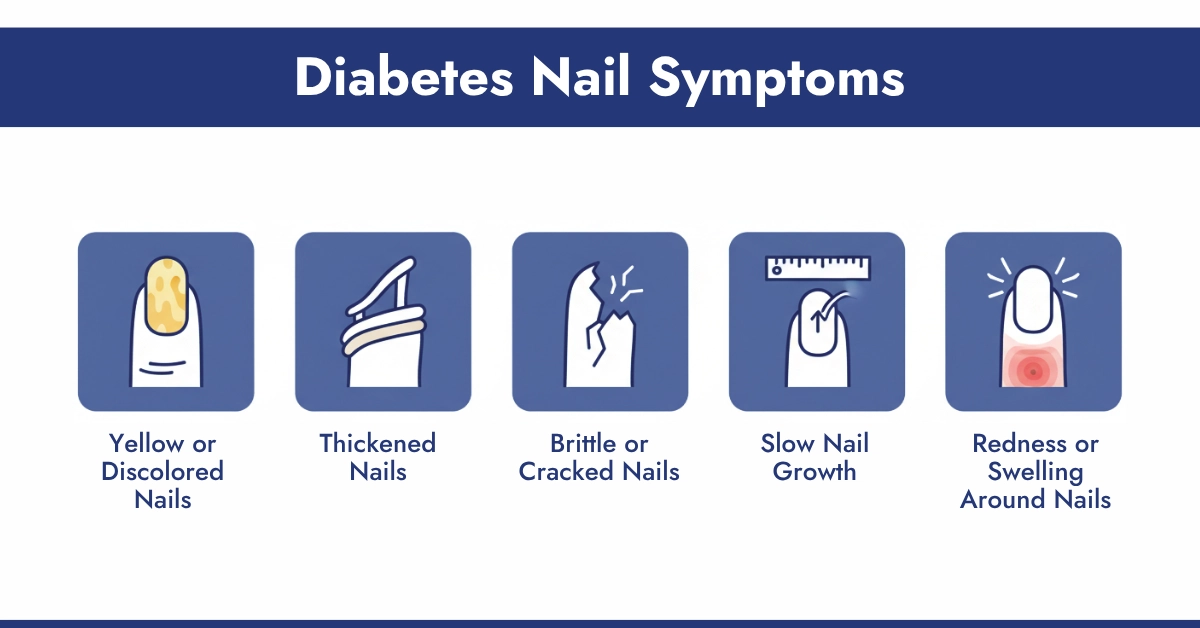
Some nail symptoms of diabetes:
- Sudden yellowing at nail tips.
- Noticeable thickening within weeks.
- Dark spots or streaks that don’t grow out.
- Horizontal ridges across the nail plate.
- Redness or swelling on the surrounding skin.
- Nails separating without obvious injury.
If you notice several of these at once, especially if your diabetes nail symptoms appear alongside fatigue or increased thirst, consult your doctor promptly.
Common Diabetic Nail Problems with Types
Yellow Nails and Diabetes
Yellow nails are often the first visible change. The most common cause is a fungal nail infection, medically known as onychomycosis. High blood sugar creates an environment where fungi thrive, spreading from the nail tip inward.
Diabetics are much more likely to get nail fungus, and it spreads faster due to high blood sugar and a weaker immune system. A process called glycation, where excess sugar binds to nail proteins, can also cause permanent discoloration even without infection.
On home remedies: Tea tree oil and apple cider vinegar are widely searched, but lack clinical evidence for clearing nail fungus in diabetics. Applying unverified products to diabetic feet risks irritation and delayed treatment. Always consult your doctor first.
Thick Brittle Nails (Onychauxis)
Thickening of the nail is called onychauxis. It is common in type 2 diabetes due to poor circulation, starving the nail of oxygen. Without proper trimming, nails can curl into a Ram’s Horn deformity, pressing into surrounding skin.
This surrounding skin is also at risk. Thick nails create pressure on skin folds, leading to paronychia, a bacterial or fungal skin infection around the nail that spreads quickly in diabetics if untreated.
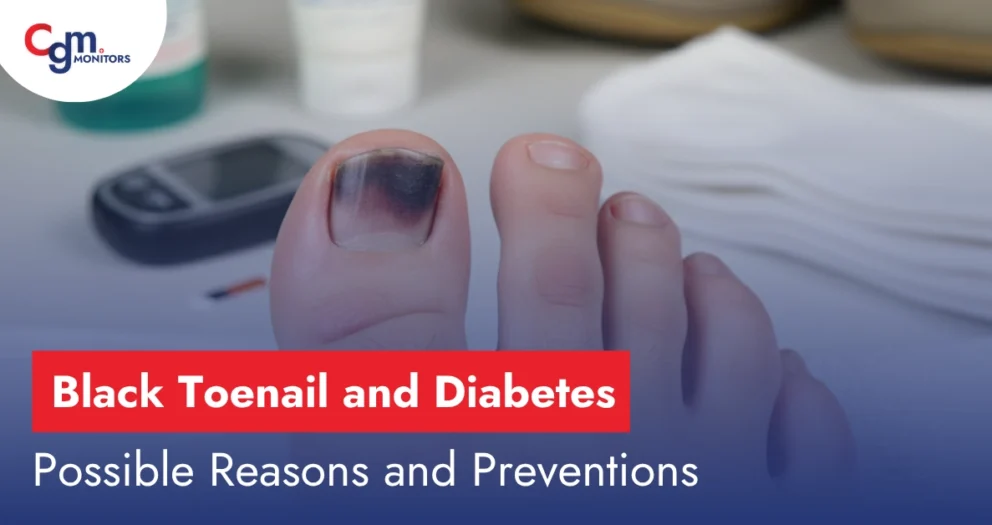
Black or Dark Nails in Diabetes
A black toe or fingernail in diabetes usually signals one of three things:
- Subungual hematoma: Blood trapped under the nail from unnoticed trauma.
- Severe fungal infection: Advanced fungal growth darkening the nail bed.
- Tissue damage: In serious cases, black nails may indicate tissue death from severely poor blood flow.
Dark nails, including toenail or fingernail hemorrhages, can sometimes be an early warning sign of undiagnosed Type 2 diabetes, not just a cosmetic issue. Do not ignore a black nail; see a podiatrist immediately if it feels cold, numb, or swollen.
Nail Falling off Scenario
Onycholysis, a toe or fingernail separating from the nail bed, results from fungal infection, unnoticed trauma, or nail deformity pressure. If a nail detaches, clean gently, keep it covered and dry, and see a podiatrist promptly. Don’t try to remove the nails by yourself. Go to a podiatrist as soon as possible; the exposed nail bed is highly vulnerable to infection.
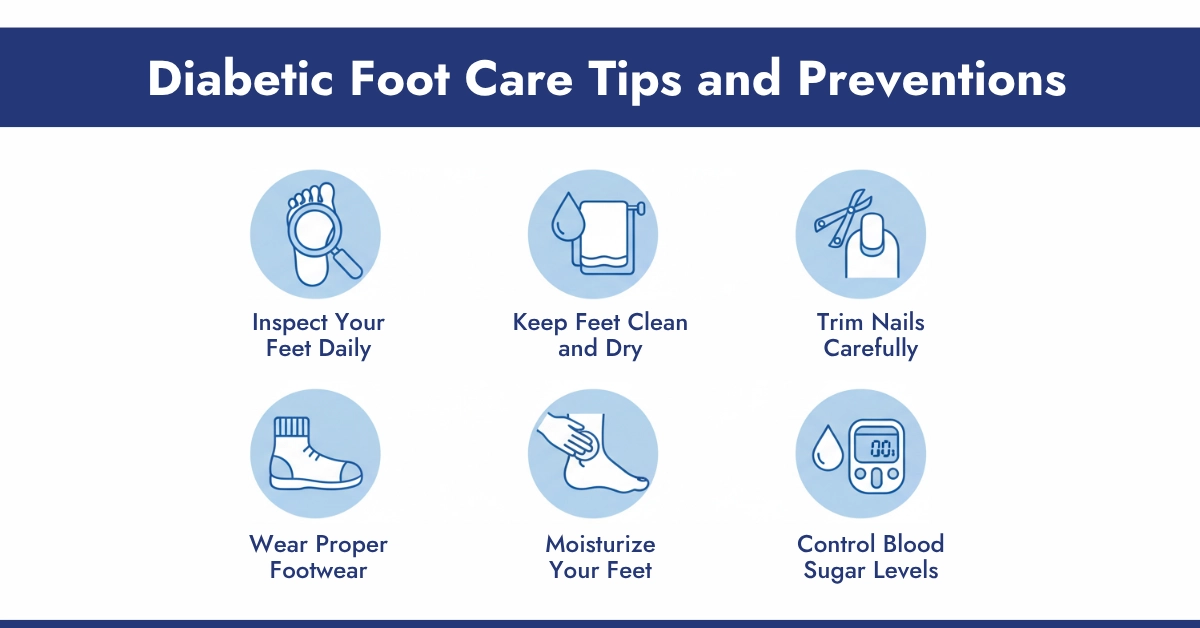
Diabetic Foot Care Tips and Preventions
- Soft first: Soak in warm water for 5-10 minutes.
- Use sharp clippers: Never scissors or rough files.
- Cut straight across: Never round the corners. This prevents ingrown nails.
- Leave a small white edge: Protect the nail bed.
- Inspect after: Check for cuts, redness or discoloration.
See the podiatrist if nails are thick, curved, or if circulation is poor.
Daily Habits:
- Inspect your feet and nails every day.
- Moisturize dry skin and avoid between toes.
- Wear diabetic shoes with extra depth.
- Dry thoroughly between toes after washing.
- Always wear breathable and clean socks.
- Never walk barefoot, even indoors; small objects can injure nails you won’t feel.
Diabetic Nail Care with Controlling Blood Sugar
No topical treatment protects your nails if your blood sugar stays uncontrolled. Frequent glucose spikes accelerate vessel damage, slow healing, and let infections spread faster.
Real-time monitoring is your strong defense. Devices like FreeStyle Libre 3 Plus and Dexcom G7 15-days are available through CGM Monitors, which track your glucose trends continuously so you can act before damage occurs.
CGM Monitors supplies top brands, including Abbott and Dexcom, with insurance support, free delivery across the USA, and monthly sensor refills, so you never run out of supplies that keep you on track.
Conclusion:
Diabetic nails are more than a cosmetic concern. They’re a window into your overall health. Yellow nails, black toenails, thick or falling nails. These are signals worth taking seriously.
The combination of daily nail checks, proper trimming technique, good footwear, and consistent blood sugar monitoring gives you the best defense against serious complications.
At CGM Monitors, we believe every diabetic deserves the tools and information that make real management possible. Explore our range of CGM devices and supplies, and follow us on Facebook and LinkedIn for more expert tips on diabetes care.
Disclaimer:
This blog is for general information only and isn’t a substitute for professional medical advice. Always check with your doctor or podiatrist if you notice nail changes or have concerns about your diabetes care. The images in this blog are AI-generated and just for illustration.
Frequently Asked Questions
Can fingernails also show diabetes nail symptoms?
Yes, watch for splinter hemorrhages, Beau’s lines, unusual brittleness or slow growth on fingernails, all reflecting microvascular changes from high blood sugar.
How long does diabetic nail fungus take to clear?
Typically, 6-12 months. Poor circulation slows drug delivery to the nail bed. Oral antifungals are usually required alongside blood sugar control; topical treatments alone rarely work.
Is a black toenail always a medical emergency for diabetics?
Not always, but it should never be ignored. A black toenail from minor trauma may heal on its own, but if it spreads, is painful, swollen, numb, or has no clear cause, see a doctor immediately.
Why do my nails grow so slowly since my diabetes diagnosis?
Slow nail growth is a direct result of poor blood circulation in diabetes. Nails need oxygen-rich blood to grow. When blood flow to the toes is reduced, nail cells divide more slowly. Improving blood sugar control over time can gradually restore healthier nail growth.
Can diabetic nails grow back normally?
Yes, diabetic nails can grow back normally if blood sugar is well-controlled, infections are treated, and proper nail care is followed.




Write a comment
Your email address will not be published. All fields are required