

Table of content
- Feeling Dizzy After Eating: A Real Concern
- Is Dizziness After Eating Linked to Diabetes? Possible Answers
- Major Causes of Dizziness After a Meal and Common Concerns
- Other Triggers for Diabetic Patients
- Dizziness After Eating Sugar: When It Becomes Serious
- Precautionary Measures to Stop Dizziness
- When to Consult Your Doctor About Dizziness Condition
- Conclusion
- Frequently Asked Questions
You just finished your meal. Suddenly, the room feels unsteady. You feel lightheaded, tired, or woozy, and you are not sure about what is happening to you. Maybe you feel nauseous right after. Sound familiar? Dizziness after eating affects more people than you think. It happens to young adults, older individuals, and especially people managing blood sugar conditions. For patients with diabetes, dizziness after eating is not just uncomfortable. It is a signal your body is sending to your brain. It could mean your blood sugar dropped too fast. Most of the time, it has a clear cause, and it is manageable.
The good news? Once you understand what is happening inside your body, you can take control of it. This guide explains the real causes of dizziness after a meal, when to be concerned, and simple steps that actually help.
Feeling Dizzy After Eating: A Real Concern
When you eat, your body shifts blood flow toward your digestive system. Your blood sugar levels rise and fall in an abrupt manner. For people with diabetes, this process is more complex than your thinking, and it is harder to control. Diabetic patients deal with blood glucose changes like hyperglycemia and hypoglycemia conditions every single day. Meals make those changes even more dramatic.
According to Harvard Health Report, these post-meal changes in blood pressure and blood sugar are a leading cause of lightheadedness after eating in older adults and people with metabolic conditions.
This is why feeling dizzy after eating is not random for sugar patients. It is directly connected to how your body handles food.
Is Dizziness After Eating Linked to Diabetes? Possible Answers
Answer for a Diabetic Person
Yes, dizziness after eating can be linked to diabetes, but it is not a diagnosis on its own. For people with type 2 diabetes, swings in blood sugar, both high and low, can trigger dizziness, lightheadedness, or a foggy feeling after eating.
If you notice dizziness after eating alongside classic diabetes symptoms such as increased thirst, frequent urination, or fatigue, it is important to check your blood sugar with recommended sensors like Libre 3 Plus or talk to your doctor.
What About Pre-diabetes?
Before full diabetes develops, many people have insulin resistance, where the body has trouble using glucose efficiently. Insulin resistance may not only lead to metabolic issues but also cause post-meal dizziness.
For Your Information: The Mayo Clinic notes that dizziness is a recognized symptom of both high and low blood glucose in people with diabetes. At the same time, causes like low blood pressure after meals, dehydration, or certain medications can also cause dizziness after a meal.
Why an Healthy Person Feeling Dizziness After Eating?
Dizziness after eating lunch or supper is not always linked to diabetes. While it can be a symptom of blood sugar fluctuations in people with diabetes, in healthy individuals, it’s more often caused by low blood pressure after meals, dehydration, or other gastrointestinal diseases. If it happens frequently, it’s best to consult your healthcare physician or dietician, and they will recommend some keto diets to mitigate this condition.
Major Causes of Dizziness After a Meal and Common Concerns
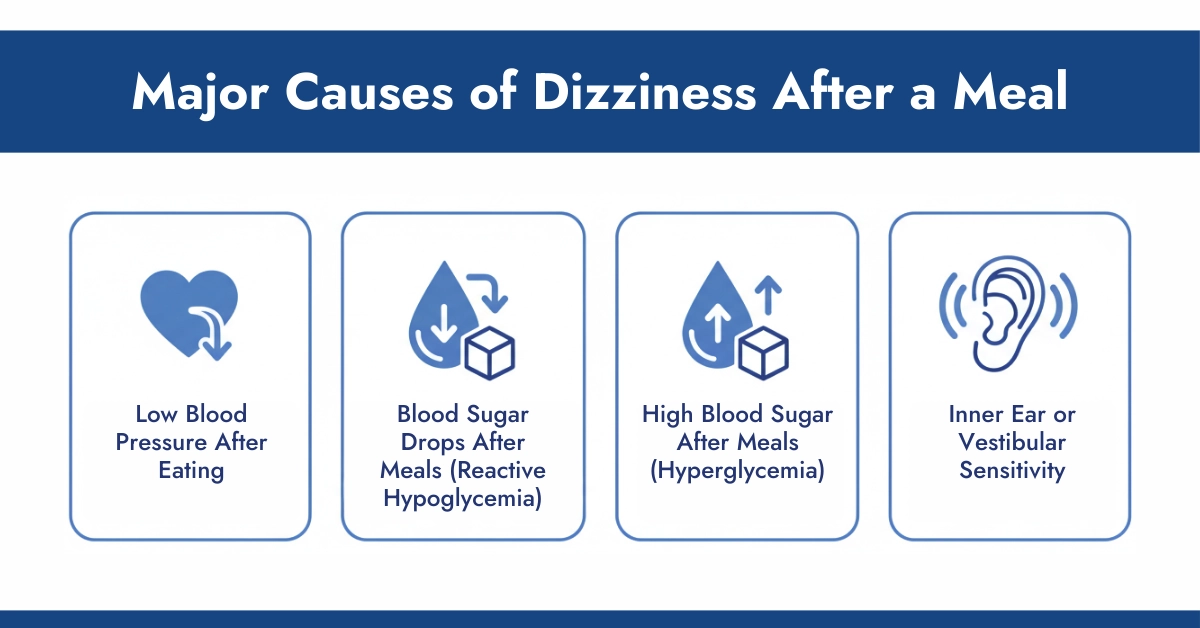
Low Blood Pressure After Eating
After eating, blood shifts toward the digestive system. For some individuals, this can lead to:
- Low blood pressure.
- Reduced blood flow to the brain.
- Feeling faint or dizzy after meals.
This is known as postprandial hypotension and is more common in people over 60 or those with autonomic nervous system dysfunction.
Blood Sugar Drops After Meals
This condition is called reactive hypoglycemia. It happens when blood sugar rises quickly after eating, then drops too fast. Your body overproduces insulin in response. Blood sugar crashes. You feel dizzy, shaky, tired, and lightheaded after eating all at once.
This drop usually happens 1 to 3 hours after a meal. Sugary foods and refined carbs make it worse.
High Blood Sugar After Meals
Can high blood sugar cause dizziness? Yes, high glucose levels can contribute to dizziness. The people with elevated blood sugar may experience:
- Dehydration due to frequent urination.
- Electrolyte imbalance.
- Fatigue and weakness.
These effects can combine to make someone feel dizzy, especially after meals that spike blood sugar levels.
Inner Ear or Vestibular Sensitivity
Blood sugar spikes may influence the inner ear and nervous system, which play a role in balance. Some studies suggest fluctuating glucose levels can worsen vertigo sensations, especially in people predisposed to vestibular sensitivity. If you experience vertigo (spinning sensation), this might be related to the inner ear rather than blood sugar.
Other Triggers for Diabetic Patients
Several other factors cause dizziness after meals in diabetic patients:
- Eating too much sugar or high-carb food.
- Dehydration.
- Skipping meals.
- Certain diabetes medications.
- Low-carb or carnivore diet.
Dizziness After Eating Sugar: When It Becomes Serious
Dizzy after eating sugar is common for some people, but it’s not always harmless. Occasional lightheadedness may result from sudden hyperglycemia and hypoglycemia, but persistent or severe dizziness could signal an underlying health issue, such as:
- Diabetes.
- Chest pain or tightness.
- Sudden severe headaches and nausea after eating.
- Vision loss or double vision.
- Difficult to speak.
- Weakness on one side of the body.
- Fainting or loss of consciousness.
- Nausea and dizziness after eating that do not stop.
However, if it happens frequently, it still needs attention. Repeated episodes can mean your blood sugar is poorly managed.
Precautionary Measures to Stop Dizziness
Small changes in how you eat make a big difference:
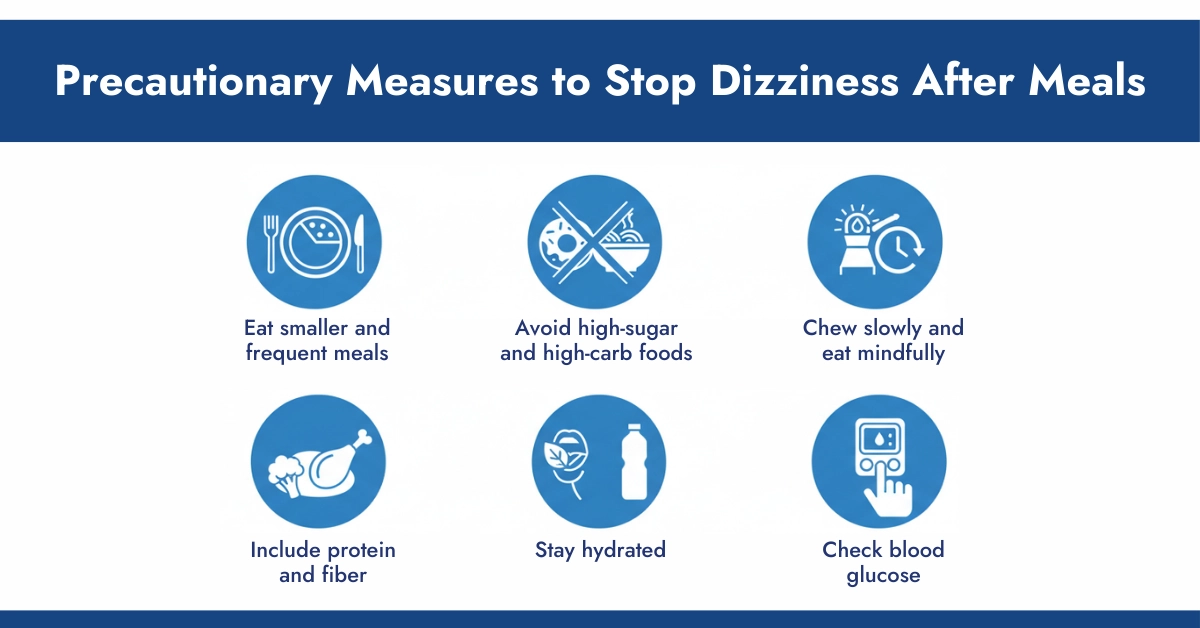
- Eat smaller, more frequent meals instead of large ones.
- Avoid high-sugar and high-carb foods that spike glucose fast.
- Chew slowly and never rush through meals.
- Add protein and fiber to every plate; they slow glucose absorption.
- Stay hydrated before, during, and after meals.
- Check blood glucose before and after eating.
Beyond meals, simple daily habits help prevent post-meal dizziness:
- Sit straight for approximately 30 minutes after eating
- Avoid standing up too quickly after meals
- Take a gentle, short walk; it helps regulate blood sugar naturally
- Limit alcohol and caffeine around mealtimes
- Monitor your glucose regularly, not just when you feel symptoms
Most diabetic patients skip the important step, which is checking the sugar with the CGM device or not using any strategies to prevent diabetes naturally. Tracking the sugar after eating shows you exactly what your body is doing. CGM Monitors, a trusted diabetic supplier, gives you a genuine, top-quality CGM system from trusted brands like FreeStyle Libre and Dexcom with fast delivery across the US, with insurance support. Check your eligibility here.
When to Consult Your Doctor About Dizziness Condition
Do not ignore dizziness after eating if it keeps happening. Talk to your doctor when:
- Episodes occur more than twice a week.
- Blood sugar readings are consistently high or low after meals.
- The current medication seems to trigger dizziness.
- Feel tired and dizzy after eating almost every day.
- Over-the-counter strategies are not helping.
Your doctor can adjust your treatment plan, review your medication, and rule out conditions like postprandial hypotension or autonomic nerve damage, both linked to long-term diabetes.
Conclusion
Feeling dizzy after eating is your body sending a signal. For sugar patients, that signal is almost always connected to blood sugar or blood pressure changes. The news is that it is manageable. With the right eating habits, proper hydration, and consistent glucose monitoring, most people see real improvement.
At CGM Monitors, we help diabetic patients across the USA stay on top of their glucose management with trusted brands and reliable support. Our strong focus on customer satisfaction has helped us achieve a 94% satisfaction rate on Google, and this reflects our commitment to excellence. Follow us on Facebook and Instagram for tips, updates, and resources built for sugar patients like you.
Disclaimer:
The information in this article is for general education only and not medical advice. Always talk to a doctor if you feel dizzy after eating, especially if you have diabetes. Some images are AI-generated and used for illustration only and do not show real patients.
Frequently Asked Questions
Why do I feel dizzy after eating sweets?
Sweets can make your blood sugar rise fast, then drop quickly. This sudden change can make you feel dizzy and lightheaded.
Does high blood sugar make you dizzy?
Yes. High blood sugar can cause tiredness, dehydration, and imbalance in your body, which can make you feel dizzy after a meal.
Can low blood sugar cause dizziness?
Yes. Low blood sugar can make you shaky, weak, or lightheaded, especially after eating or when your blood sugar drops too fast.
Is dizziness after eating a sign of diabetes?
Not always. But if it happens often, it may mean your blood sugar is not well balanced and could be a warning sign worth checking with a doctor.
How do I stop feeling lightheaded after meals?
Eat smaller meals with protein and fiber, drink water, and avoid too much sugar. Move slowly after eating and rest if you feel woozy.
How can I prevent dizziness after eating?
Watch your blood sugar with CGM devices like Dexcom G7 15-days available on CGM monitors, eat balanced meals, stay hydrated, and avoid large sugary or carb-heavy foods. If you feel dizzy after meals regularly, talk to your doctor.





Write a comment
Your email address will not be published. All fields are required