

Table of content
For years, people with diabetes have been told to avoid dried fruit because of its concentrated sugar content. Yet, a surprising 2024 study published in “Nutrition & Metabolism” found that dried fruit intake is actually linked to a lower risk of developing type 2 diabetes, especially for the prediabetic person. This contradiction highlights a crucial point: not all dry fruits are created equal, and with the right knowledge, they can be part of a healthy diabetic diet.
Recent research from Medical News Today highlights that increasing daily intake of dried fruits like prunes, apricots, and raisins could lower the risk of type 2 diabetes by up to 60%.
Let’s explore how to make informed decisions based on both nutrition science and your personal data with the CGM devices that see exactly how specific dried fruits affect your glucose level in real-time
Are Dry Fruits Good for Diabetics?
Yes, but with some rules. According to the ADA organization, fruits, including dried varieties, provide essential vitamins, fiber, and antioxidants that fit into a balanced diabetes meal plan. The important thing is that when fruits become dried, natural sugars like fructose and glucose become more concentrated.
Three universal rules before eating:
- Type of dried fruit (low-GI options are best)
- Portion Size
- Timing
For Example:
One cup of fresh grapes has 27 grams of carbs, while the same amount of raisins contains 115 grams. Because the dried fruits retain their fiber, polyphenols, and antioxidants. Many recent reports confirm that fresh or dried fruits belong in a diabetes meal plan when consumed strategically. The key is the glycemic index (GI) and glycemic load (GL), which measure how quickly foods raise blood glucose.
Tip from CGM monitors: Not all dry fruits are equal. It depends on the type and portion of the dry fruit that you take. If you control the portion and choose the best ones, you enjoy the dry fruits without spark the blood sugar
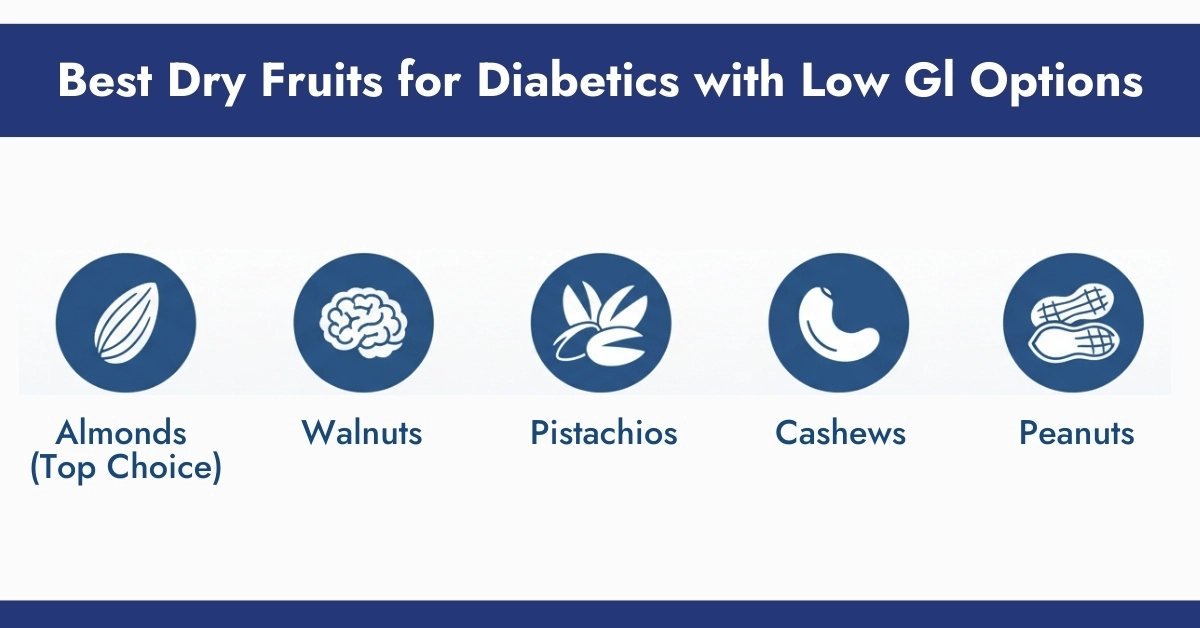
Best Dry Fruits for Diabetics with Low Gl Options
Choosing low glycemic dry fruits is the most important and effective way to include dry fruits in a diabetes-friendly diet. A study published in Nutrition and Metabolism found that certain compounds within dried fruits, including polyphenols and fiber, may help improve insulin sensitivity and reduce inflammation. Here are the top options you can choose them with Glycemic Index (GI) options:
- Low GI: 55 or less (best)
- Medium GI: 56–69 (limit portions)
- High GI: 70+ (avoid or restrict)
1. Almonds (Top Choice)
Why they’re perfect for you
- Very low glycemic impact and GI value is ~15.
- High in healthy fats, protein, and fiber
- Improve insulin sensitivity
Recommended portion
- 10–12 almonds per day
How to eat
- Raw or soaked overnight
- Add to salads or yogurt
2. Walnuts
Why they’re good
- Rich in omega-3 fatty acids with ~15 Glycemic index. (Very Low)
- Support heart health (critical for diabetics).
- Minimal effect on blood sugar.
Recommended portion
-
2–4 walnut halves per day.
3. Pistachios
Why they’re great
- Low glycemic index (~15–20)
- High fiber and protein
- Help control post-meal glucose spikes
Recommended portion
- 1 small handful (20–25 pistachios, unsalted)
4. Cashews (With Caution)
Why they can work
- Moderate glycemic index (~22–25 GI)
- Provide magnesium and healthy fats
Recommended portion
-
5–6 cashews only
Overeating can cause hyperglycemia.
5. Peanuts (Technically a Legume, But Often Included)
Why they’re helpful
- Low glycemic index with GI value is approximately ~14
- Low carb impact
- High protein and healthy fats
- Keep you full longer
Recommended portion
-
1 small handful (unsalted)
Limit or Avoid (High Sugar)
- Dates
- Raisins
- Dried figs
- Dried mango
- Sweetened dried fruits
Note: GI values can vary by brand or drying method, so monitor your blood sugar with the 15.5 days sensor Dexcom G7 (only for adult) from CGM monitors, which gives you real-time data.
Best Practices for Using Dried Fruits in Diabetes
Choosing the right fruit is step one. Here’s how to eat them safely:
Master Portion Control
Forget measuring cups when you’re away from home. Use these simple visuals:
- 1 tablespoon of raisins = size of your thumb
- 2 dried figs = two grapes
- ¼ cup apricots = small handful that fits in your palm
Pre-portion your dried fruits into small containers immediately after buying them. Never eat from the original package.
Always Pair with Protein or Fat
The American Diabetes Association confirms that combining carbs with protein, fat, or fiber prevents spikes. Try these pairings:
- Dried apricots + 1 ounce almonds
- Two figs + string cheese
- One tablespoon raisins + celery with peanut butter
- Dried cranberries + pumpkin seeds
Time Your Consumption
Your insulin sensitivity changes throughout the day. Most people tolerate dried fruits best:
- Mid-morning when insulin works most efficiently
- Before exercise to fuel activity
- As part of a meal, not a standalone snack
Avoid late-night snacking when insulin resistance naturally rises. Use your FreeStyle Libre 3 Plus trend arrows to find your optimal timing.
Read Labels Carefully
Many research reports warn that “unsweetened” doesn’t mean low sugar, dehydration concentrates natural fructose. Check these details:
- Total carbohydrates per serving
- Added sugars (must be zero)
- Serving size (often misleadingly small)
- Ingredients (should list fruit only)
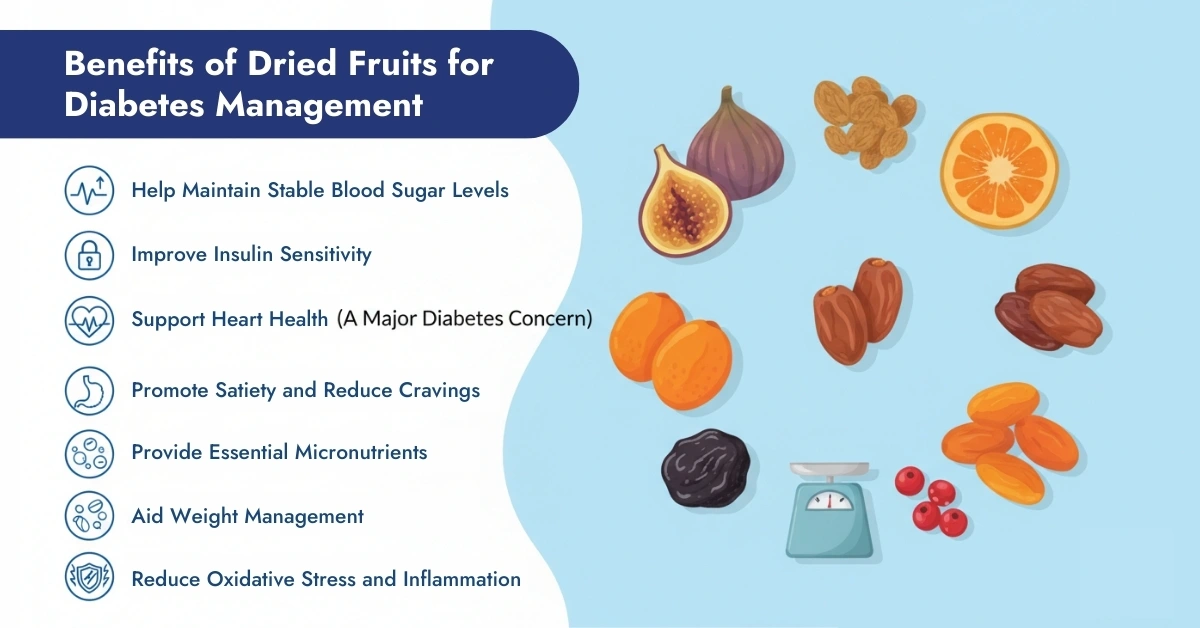
Benefits of Dried Fruits for Diabetes Management
When chosen wisely, dry fruits are good for diabetes in several ways:
1. Help Maintain Stable Blood Sugar Levels
Low-GI dried fruits such as almonds, walnuts, pistachios, and peanuts digest slowly.
This:
- Prevents sudden glucose spikes
- Supports smoother post-meal blood sugar curves
Fiber and healthy fats slow carbohydrate absorption, improving glycemic control.
2. Improve Insulin Sensitivity
Certain dried fruits—especially nuts—are rich in:
- Magnesium
- Healthy fats (monounsaturated and omega-3s)
These nutrients help the body respond better to insulin, which is essential for both Type 2 diabetes and insulin resistance.
3. Support Heart Health (A Major Diabetes Concern)
People with diabetes have a higher risk of heart disease. Dried fruits like walnuts and almonds:
- Lower bad cholesterol (LDL)
- Increase good cholesterol (HDL)
- Reduce inflammation
Heart health improvements directly support long-term diabetes outcomes.
4. Promote Satiety and Reduce Cravings
Dried fruits are calorie-dense but filling when eaten in small portions.
Benefits include:
- Reduced hunger between meals
- Less dependence on high-carb snacks
- Better portion control throughout the day
This helps prevent overeating and blood sugar swings.
5. Provide Essential Micronutrients
Many dried fruits contain key nutrients often lacking in diabetic diets:
- Vitamin E (antioxidant support)
- Zinc (immune and insulin function)
- Magnesium (supports glucose metabolism)
- Potassium (blood pressure control)
These nutrients contribute to overall metabolic balance.
6. Aid Weight Management
Healthy weight management is critical in diabetes care.
Low-GI dried fruits:
- Reduce emotional snacking
- Improve metabolic efficiency
- Support fat loss when part of a balanced diet
Maintaining a healthy weight improves insulin sensitivity and glucose control.
7. Reduce Oxidative Stress and Inflammation
Diabetes is associated with chronic inflammation and oxidative damage.
Antioxidants found in nuts and certain dried fruits:
- Protect blood vessels
- Reduce cellular stress
- Slow diabetes-related complications
Large observational studies discussed by the NIH, Harvard health and New-Medical suggest dried fruit consumption may contribute to improved metabolic outcomes when eaten moderately.
Dry Fruits to Avoid for Diabetics
Some dried fruit products will spike your blood sugar no matter how small the portion:
- Sugar-coated or “candied” dry fruits, which contain extra sugar that can cause a blood sugar spike.
- Fruits infused with fruit juice (like juice-sweetened cranberries).
- Yogurt-covered raisins.
- Raisins, Dates, Dried Figs, because they have high sugar and GI.
- Trail mixes with candy pieces.
- Dried tropical fruits with added sugar (mango, pineapple, papaya), these are usually high in sugar and often sweetened better to avoid them.
Verywell Fit emphasizes that ¼ cup of sweetened dried cranberries has 29 grams of carbs, nearly double the unsweetened version. This difference completely changes insulin dosing needs.
Conclusion:
Dry fruits can be a healthy part of a diabetic diet if you choose the right ones and control portions. Low-GI options like prunes, apricots, and unsweetened cranberries provide fiber, antioxidants, and essential nutrients without causing big sugar spikes. Pairing them with protein supplements or healthy fats and timing your intake wisely makes them even safer. Using a CGM devices that are available on CGM websites, which helps you see exactly how each fruit affects your blood sugar, making it easier to enjoy dry fruits confidently. Remember, moderation, smart choices, and monitoring are the keys to enjoying dry fruits without compromising sugar control.
References:
Disclaimer:
This blog is for general information and shouldn’t replace advice from your doctor. Always check with your healthcare provider before changing your diet. Some pictures here are digitally created just to help explain things.
Frequently Asked Questions
Can dried bananas be safely eaten by diabetics?
Dried bananas are high in sugar and GI, so diabetics should avoid or eat very small portions with protein.
Do preservatives in dried fruits affect blood sugar?
Some preservatives don’t spike sugar, but added sulfites or sweeteners can affect glucose levels. Always check ingredient labels carefully.
How often can diabetics include dried fruits in their diet?
Limit dried fruits to a few times per week. Frequent consumption may increase blood sugar, even with low-GI options.
Are homemade dried fruits safer for diabetics?
Yes, homemade dried fruits without added sugar or preservatives give better portion control and predictable blood sugar impact.
Can diabetics use dried fruits in baking or cooking?
Yes, small amounts of low-GI dried fruits can enhance flavor. Pair with fiber or protein to reduce sugar spikes.





Write a comment
Your email address will not be published. All fields are required