
Table of content
- What Are the ADA 2026 Standards of Care in Diabetes?
- CGM Is Now Recommended for More People Than Ever
- Automated Insulin Delivery Is Now the Preferred Choice
- New Diabetes Technology and Devices for 2026
- AI and Smarter Glucose Predictions Are Also Coming
- CGM in Schools, Workplaces, & During Pregnancy
- Conclusion
- Frequently Asked Questions
Diabetes Technology is changing fast. Every year, new devices and guidelines make it easier for people with diabetes to manage their health. In 2026, those changes are bigger than ever. The American Diabetes Association (ADA) has released its “Standards of Care in Diabetes 2026 on December 8, 2025.” This is the gold standard in evidence-based guidelines for diagnosing and managing diabetes and prediabetes. It covers strategies for children, adolescents, and adults. It also includes methods to prevent or delay diabetes and its related conditions, like obesity.
If you have diabetes or care for someone who does, this is the year to pay close attention to the latest developments in diabetes technology.
What Are the ADA 2026 Standards of Care in Diabetes?
The ADA releases updated diabetes tech guidelines every year. The 2026 version is based on the latest scientific research and clinical trials. It covers care for children, adolescents and adults. It also includes methods to prevent or delay diabetes and related conditions like obesity.
The 2026 guidelines bring together the latest research with practical strategies. They give healthcare professionals better tools to care for people living with diabetes. For patients, this means better access, better devices and a care plan that fits real life more than ever before
CGM Is Now Recommended for More People Than Ever
One of the biggest updates in diabetes technology news this year involves Continuous Glucose Monitoring (CGM). The ADA now recommends CGM at the time of diabetes diagnosis, not just later in treatment.
Before 2026, CGM was mainly discussed for people already on insulin. Now, it is recommended for any person with diabetes who could benefit from real-time glucose data. This includes adults with type 2 diabetes, even those who are not using insulin.
Intermittently scanned CGM has also been removed from the current technology table, according to AAFP. Real-time CGM (rtCGM) is now recognized as the standard of care.
The FreeStyle Libre 3 Plus from Abbott is a strong example of what real-time CGM looks like today. It is one of the smallest sensors available. It sends a glucose reading every single minute, directly to a smartphone. No scanning is needed. CGM Monitors carries this sensor with monthly refill scheduling, so patients never face a gap in supply
Automated Insulin Delivery Is Now the Preferred Choice
The ADA’s 2026 guidelines go further than recommending CGM. They also position Automated Insulin Delivery (AID) as the preferred method for insulin delivery, for type 1 and insulin-dependent type 2 diabetes alike. This is a major shift. AID systems used to be an advanced option. In 2026, they are the first recommendation.
The new standards remove all prior eligibility barriers to starting an AID system. There is no longer a requirement for a C-peptide level test, proof of islet autoantibodies (immune proteins), or a minimum insulin duration. This means more patients can access these systems through insurance without delays
The iLet Bionic Pancreas from Beta Bionics is a leading example of how AID works today. It only needs the patient’s body weight to get started. There is no carbohydrate counting and no manual basal rate programming. Clinical data published in the New England Journal of Medicine showed that it improved HbA1c outcomes compared to standard pump therapy.
The Omnipod 5 is another widely used AID system. It is tubeless and wearable. Its SmartAdjust algorithm adjusts insulin delivery every five minutes based on live CGM data. Patients who prefer a patch-style pump find it very convenient for daily life.
New Diabetes Technology and Devices for 2026
This is where diabetes tech gets very exciting. Several major new products are entering or approaching the market in 2026. Here is what to watch.
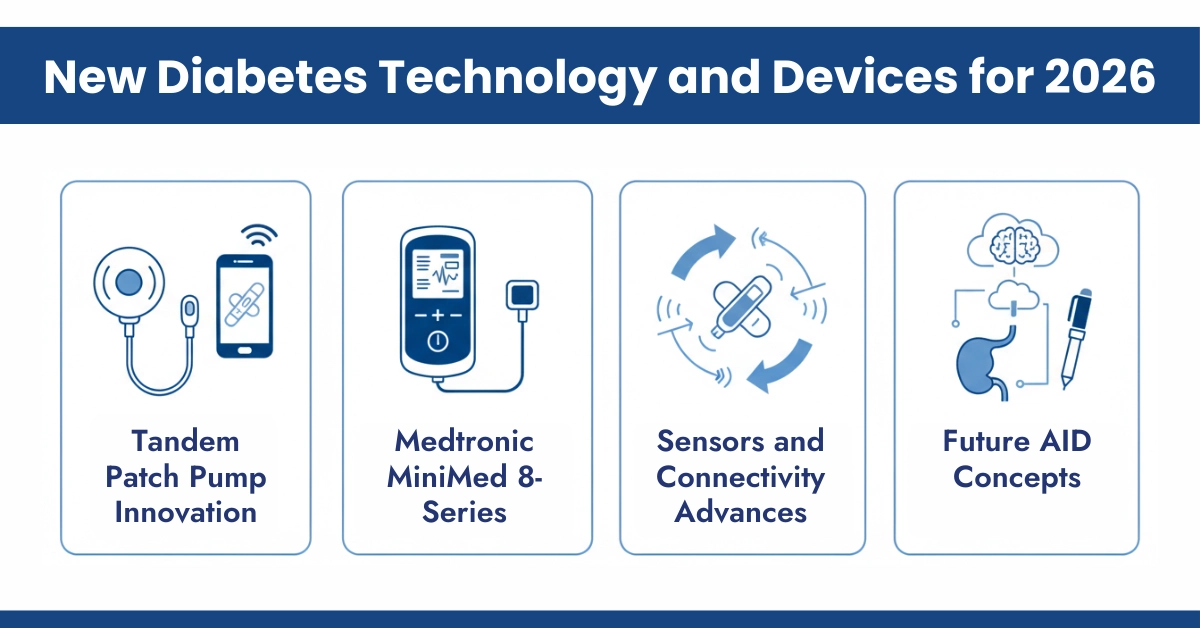
Tandem Patch Pump Innovation
Tandem Diabetes Care is working on a tubeless patch version of its Mobi pump. This future device is expected to offer up to a 7-day wear time and wireless charging, two features that current tubed pumps cannot offer. Tandem is also expanding sensor compatibility to include FreeStyle Libre 3 Plus, giving users more flexibility in their AID setup.
Medtronic MiniMed 8-Series
Medtronic is preparing to submit its next pump platform, the MiniMed 8-series. This new system may not have a built-in screen at all. Instead, it is expected to run entirely through smartphone control. It will feature a larger reservoir and a longer wear window than current models.
Medtronic is also exploring compatibility its 8 series with the Simplera Sync sensor. This sensor is already FDA-approved and available at CGM Monitors
Sensors and Connectivity Advances
Dexcom G7 Extended Wear
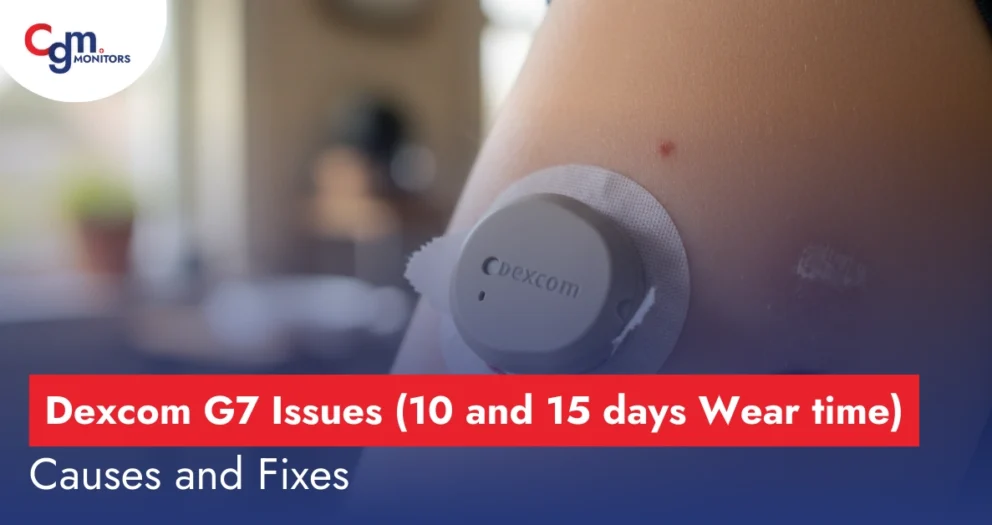
Dexcom has already received approval for a 15.5-day wear version of the Dexcom G7. This cuts sensor changes in half compared to many current options. The G7 now also connects directly to Apple Watch, no phone needed for a quick glucose check on the wrist. The new 15 days Dexcom G7 is available now at CGM Monitors. Patients can order it and also get an insurance claim.
Note: if you are new to 15 days Dexcom G7 and do not know how to apply or replace it then this expert guide will help you in this regard. Get Dexcom G7 placement insights from here.
Multi-Analyte Sensors
Abbott is actively researching the next generation of sensors that measure both glucose and ketones at the same time. This is a major development. Ketones alongside glucose can give patients and clinicians early warning of DKA risk before blood sugar levels shift dramatically. No single commercially available sensor does this today, but it is coming.
Future AID Concepts
Beta Bionics: Reusable Patch Pump
Beta Bionics, the company behind the iLet Bionic Pancreas, has previewed a reusable patch pump prototype called “Mint.” It aims to reduce disposable waste while keeping full automated insulin delivery. Exact timelines are not yet public, but it signals where AID hardware is heading.
Insulet: Omnipod Evolution Continues
Insulet continues to evolve the Omnipod 5 platform. Community discussions around what is often referred to as Omnipod 6 are growing, though specifics have not been fully released. What is clear is that the platform is continuing to develop, and improvements in wearability and algorithm performance are expected.
Sequel Med Tech: Twiist AID Platform
The twiist AID system from Sequel Med Tech is gearing up for wider release. It offers users a choice of algorithm options, including Loop-based and FDA-cleared commercial choices. This level of personal customization is rare and gives patients more control over how their AID system works.
AI and Smarter Glucose Predictions Are Also Coming
Beyond hardware, diabetes tech in 2026 is also being shaped by artificial intelligence. Research presented at major diabetes conferences this year has focused on AI-driven pattern recognition and glucose forecasting tools.
These tools do not just show glucose readings. They analyze trends, predict where levels are heading, and reduce the mental load of managing diabetes. Future CGM systems are expected to include 30 to 60-minute glucose forecasts with high clinical accuracy, built directly into the sensor software.
This direction is confirmed by research from Roche Diagnostics, which has published work on predictive CGM, systems that go beyond reporting and start anticipating glucose shifts based on patient-specific data. This predictive capability is one of the most closely watched areas in diabetes technology news right now.
CGM in Schools, Workplaces, & During Pregnancy
The 2026 ADA standards address real-life settings that past guidelines did not fully cover. Children and adolescents with diabetes now have formal clinical backing to use CGM and AID systems at school. Clinicians are encouraged to support this and help families navigate school-based accommodations.
Adults in the workplace are also covered. The ADA now clearly states that people using diabetes technology are entitled to reasonable accommodations at work, including time to manage devices and respond to glucose alerts.
For pregnant women with type 1 diabetes, the 2026 standards confirm that CGM helps achieve important targets, including Time in Range (TIR) and HbA1c goals. All pregnancy-related CGM and AID guidance has been brought into a single section for clearer clinical direction.
Conclusion
Diabetes Technology News in 2026 is clear, better tools are now more accessible to more people. The ADA has removed barriers to CGM and AID use, expanded eligibility to include millions of additional patients, and formally recognized patient-driven innovations like open-source systems. New devices from Abbott, Dexcom, Medtronic, Tandem, and Beta Bionics are making this a defining year for diabetes tech. For patients and clinicians, the message is simple: the technology is here, the guidelines support it, and access has never been more possible.
Disclaimer:
This article is for general informational purposes and is not a substitute for professional medical advice. Always consult your healthcare provider before making changes to your diabetes treatment plan. Some of the illustrations and visuals used in this blog have been created using generative AI tools for educational and illustrative purposes.
Frequently Asked Questions
What’s the biggest CGM change in 2026?
The ADA now recommends CGM at diabetes diagnosis and anytime after, giving more people access to real-time glucose monitoring.
How does Dexcom G7 15-Day CGM improve monitoring?
FDA-cleared for up to 15.5 days, it reduces sensor changes, boosts accuracy, and connects seamlessly to smartphones and watches.
What role does AI play in diabetes tech this year?
AI analyzes glucose patterns and predicts trends, helping users anticipate changes before they happen for smarter daily management.
Can type 2 diabetes patients use CGM without insulin?
Yes. ADA guidance supports CGM for adults who benefit, even if they are not using insulin.
What does expanded AID access mean for patients?
Barriers like C-peptide tests are removed, making automated insulin delivery systems more accessible through insurance coverage.
How do new CGM sensors make life easier?
Longer wear, fewer replacements, app integration, and watch compatibility reduce daily hassle and improve glucose insight.
Are open-source diabetes technologies clinically recognized?
Yes. Open-source AID systems are now acknowledged in guidelines, encouraging safe engagement with healthcare providers.



Write a comment
Your email address will not be published. All fields are required