
Table of content
- Can You Really Lower A1C Overnight?
- Key Difference Between A1C and Daily Blood Sugar
- Warning Signs of High A1C You Should Not Ignore
- How to Reduce A1c Levels Overnight with Important Tips
- How Sleep Affects Your A1C Levels
- Best Foods That Lower A1C Levels Quickly
- Common Mistakes That Raise Your A1C
- How Long Does It Take to Lower A1C Levels?
- Conclusion:
- Frequently Asked Questions
Many people feel frustrated after a high A1C result. The number feels too big and the timeline too long. That frustration is real, valid, and completely understandable.
Here is the truth for diabetic patient that you cannot truly lower your A1C in one night; however, you can make smart short-term changes like fixing your dinner, drinking water, walking for 10-20 minutes after eating, permanently stop late-night snacking, and checking your blood sugar with Cgms sensors (Libre 2 Plus and Dexcom G7 Sensor) at the right time. A1C measures your average blood sugar over the past 2-3 months. However, what you do tonight absolutely matters. Every good decision you make right now moves the number in the right direction.
This guide covers the truth answers based on the facts of whether you can lower A1c overnight or not. The key differences between A1C and daily blood sugar, warning signs if your A1C is high, proven ways to lower A1C, what you can start doing in the next few hours, and how to set yourself up for meaningful results in three months.
Can You Really Lower A1C Overnight?
A1C measures glucose attached to red blood cells. Those cells live approximately 120 days. One good night cannot reset months of data. This means a single perfect evening cannot dramatically move your percentage. However, it also means this: Every day you improve counts.
According to the American Diabetes Association, consistent daily improvements compound into meaningful results within three months. Starting tonight means your very next A1C test reflects your effort.
Key Difference Between A1C and Daily Blood Sugar
Many people are confused about these two numbers. Understanding the difference is critical.
- Daily blood sugar is a snapshot. It shows your glucose level at one specific moment. It rises after meals and drops with exercise or medication.
- A1C is the full picture. It reflects the average of all those daily spikes and drops over 90 days. This is why one good day does not move A1C dramatically, but one good month absolutely does.
Warning Signs of High A1C You Should Not Ignore
This is where most articles skip an important step. Before focusing on solutions, recognise the signals your body is sending.
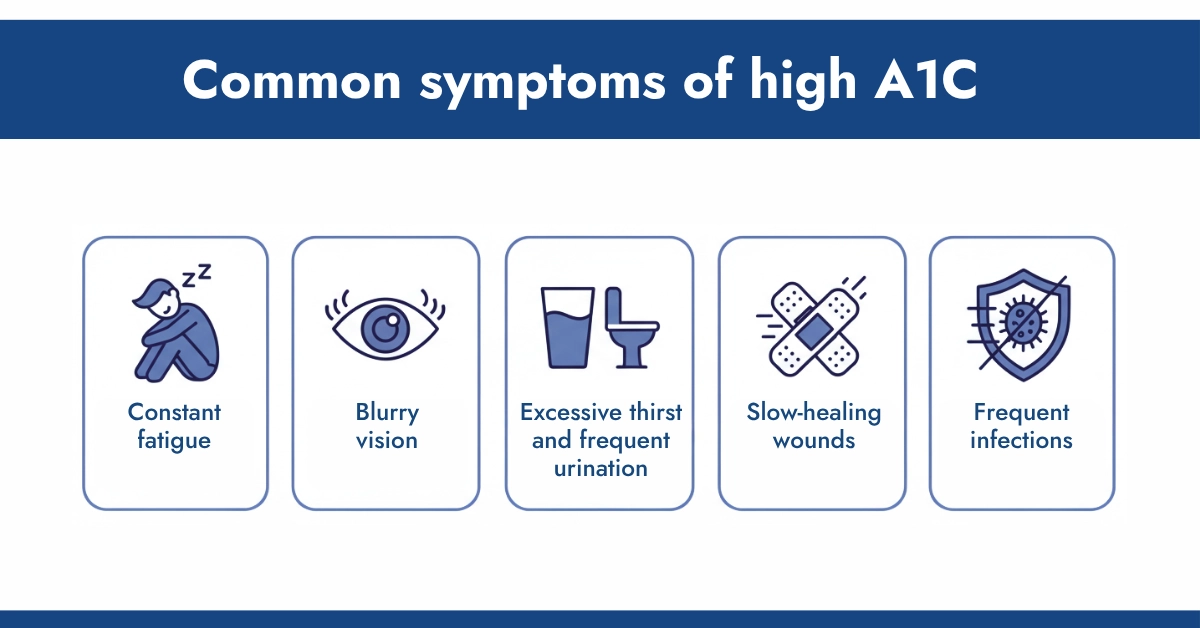
Common symptoms of high A1C include:
- Constant fatigue: Cells are not receiving glucose efficiently.
- Blurry vision: High blood sugar affects the lens of the eye.
- Excessive thirst &frequent urination: Kidneys work harder to flush excess glucose.
- Slow-healing wounds: Poor circulation caused by elevated blood sugar.
- Frequent infections: High glucose weakens the immune response.
If you recognize these symptoms, your A1C likely needs immediate attention. These signs tell you that your blood sugar has been elevated consistently, not just on one bad day.
How to Reduce A1c Levels Overnight with Important Tips
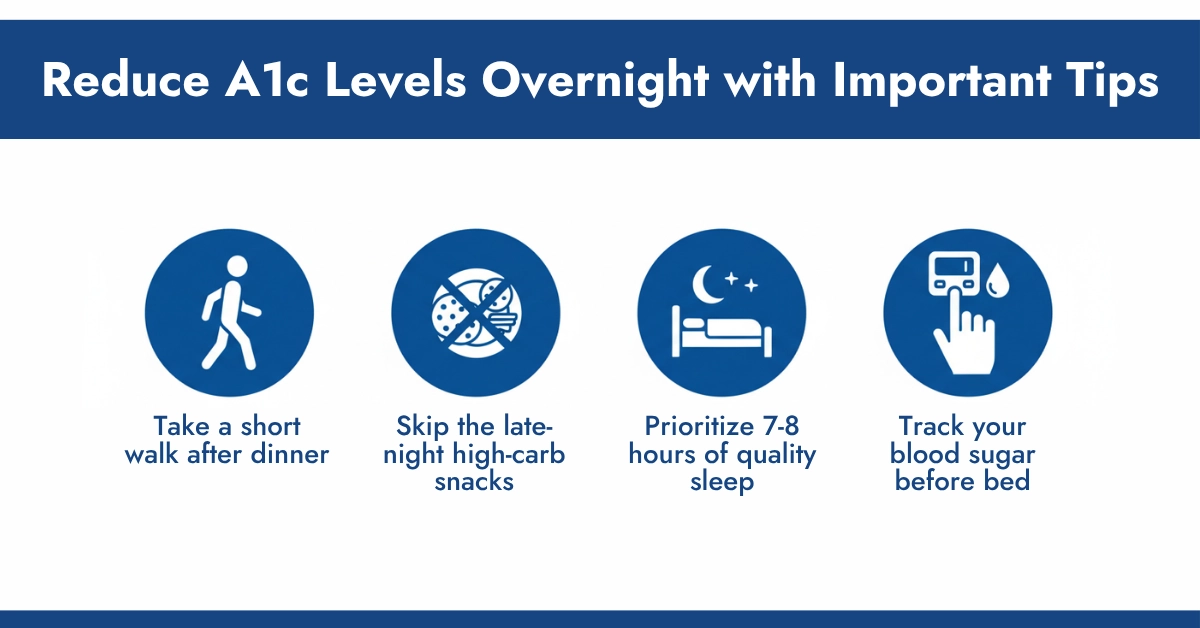
You cannot lower A1C overnight completely. But you can start the process right now. Here are five actions you can take tonight:
- Fix your dinner: Follow the simple rules; eat lean protein like chicken, fish and eggs, adding fibre-rich vegetables like broccoli, spinach, and cucumber. Avoid white rice, roti/bread/, sugary drinks and desserts.
- Take a short walk after dinner: A 10-15 minute walk after eating helps your muscles absorb glucose directly. This reduces the post-meal blood sugar spike that silently raises your A1C over time.
- Skip the late-night high-carb snacks: Late-night eating, especially refined carbs or sugary foods, causes overnight blood sugar spikes. These spikes contribute heavily to your A1C reading. Choose a small protein-based snack instead if you are genuinely hungry.
- Drink enough water before bed: Dehydration concentrates glucose in your blood. When you stay hydrated, it helps your kidneys flush excess sugar through urine. Aim for a glass of water before going to sleep.
- Prioritize 7-8 hours of quality sleep: Sleep directly impacts blood sugar. Poor sleep raises cortisol levels, which pushes your glucose higher. This connection is explored in more detail in the next section, where we study how sleep affects your A1C levels.
- Track your blood sugar before bed: Knowing your numbers at night puts you in control. Devices like the Freestyle Libre 3 Plus or Dexcom G7 15-day, available through CGM Monitors, give you real-time glucose data. Seeing your actual number motivates action and helps you adjust your evening routine intelligently.
How Sleep Affects Your A1C Levels
Most diabetic patients focus on diet, exercise and management of blood sugar with CGM devices, but core sleep is just as important. If your sleep is poor, it triggers cortisol levels, and this level signals your liver to release stored glucose into the bloodstream, even without eating, and you face a hyperglycemia condition. One bad week of sleep can noticeably worsen your morning glucose readings.
This also explains the dawn phenomenon. Between 4-8 AM, your body releases wake-up hormones that spike blood sugar naturally. Many people blame their diet when sleep quality is the real problem.
How to Improve Sleep and Lower A1C
- Keep a consistent sleep schedule.
- Avoid late-night eating.
- Limit Screen time before bed.
- Create a relaxing night routine.
- Watch Caffeine Intake.
- Keep your room sleep-friendly.
Better sleep directly supports lower blood glucose levels over weeks, which meaningfully improves your A1C.
Best Foods That Lower A1C Levels Quickly
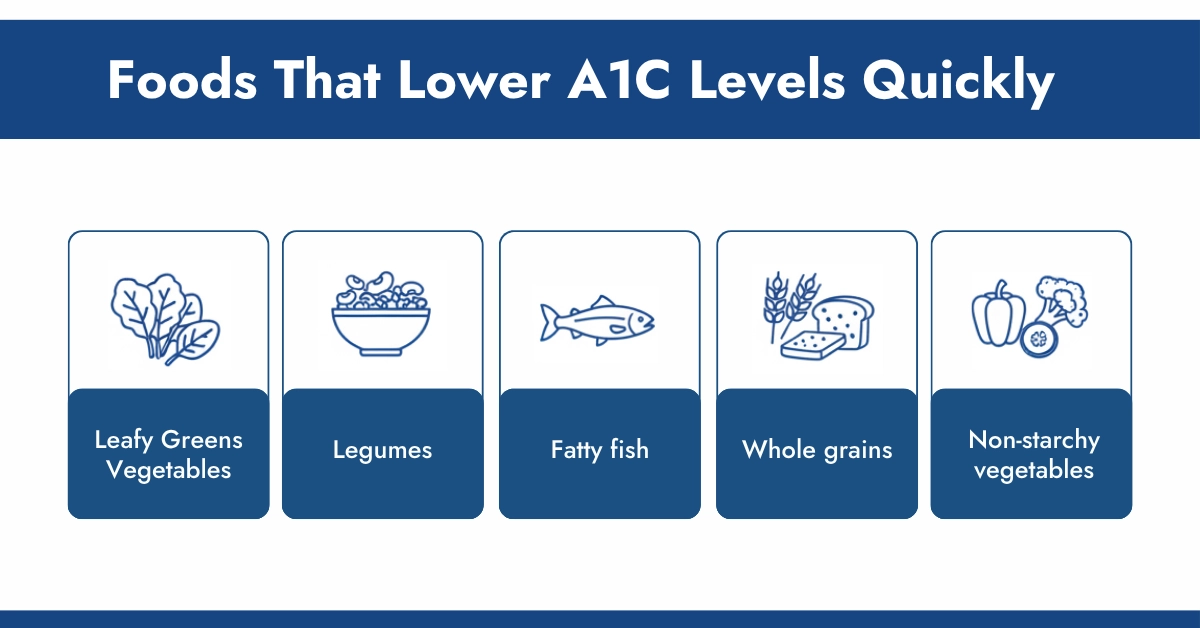
No single food fixes A1C overnight. But these choices consistently accelerate your results:
What to Eat
- Leafy Greens Vegetables: Spinach, kale, collard greens lower glucose response.
- Legumes: Lentils, chickpeas, black beans are high in fiber and protein.
- Fatty fish: Salmon and mackerel reduce inflammation that worsens insulin resistance.
- Whole grains: Oats and quinoa digest slowly and prevent sharp glucose spikes.
- Non-starchy vegetables: Broccoli, zucchini, bell peppers fill your plate without raising. blood sugar
What Not to Eat
- Sugary drinks, sodas, and fruit juices.
- White bread, white rice, processed cereals.
- Large late-night carbohydrate meals.
Pair smart eating with exercise. According to Healthline, one exercise session lowers blood sugar for up to 24 hours. Target 150 minutes of moderate activity weekly; walking counts completely.
Common Mistakes That Raise Your A1C
This section alone can save your next A1C test. Many people do everything right, then unknowingly undo their progress with these habits:
- Drinking fruit juice instead of water.
- Skipping exercise on stressful days.
- Late-night carbohydrate meals.
- Ignoring sleep quality.
- Not tracking glucose regularly.
- Missing medication doses.
Avoiding these mistakes is just as powerful as adding new healthy habits. Both directions move your A1C in the right direction simultaneously.
How Long Does It Take to Lower A1C Levels?
| Timeline | What Happens |
| Week 1–2 | Daily blood sugar begins responding to changes. |
| Week 6 | Early A1C improvement starts showing. |
| Month 3 | Meaningful, measurable A1C drop at lab testing. |
Note: With consistent lifestyle changes, most people achieve a 0.5% to 2% drop within three months. For a complete breakdown of realistic timelines and what drives faster progress, visit our full guide: How Much Can A1C Drop in 3 Months.
Conclusion:
High A1C is not permanent. Every smart meal, every walk, every good night of sleep moves your number in the right direction.
Start tonight. Track your glucose. Stay consistent. Your next A1C test will reflect everything you do between now and then.
CGM Monitors provides the devices, sensors, and supplies to make smarter blood sugar management possible. Visit CGM monitors or follow us on Facebook and Instagram for daily diabetes tips and product support.
Frequently Asked Questions
Can I lower my A1C in one day?
No, A1C reflects your average blood sugar over approximately 120 days. One day cannot change it. However, every good day contributes to a lower result over time. Starting tonight is genuinely the best thing you can do.
What brings down A1C the fastest?
The fastest combination is reducing refined carbohydrate intake, adding daily exercise, especially post-meal walks, improving sleep quality, managing stress, and using a CGM device to monitor glucose in real time. Medication prescribed by your doctor further accelerates results.
How much can A1C drop in 3 months without medication?
Most people can lower A1C by 0.5% to 2% within three months through diet, exercise, and lifestyle changes alone. Starting points and consistency levels both affect the outcome.
Does drinking water lower A1C?
Staying well-hydrated helps your kidneys remove excess glucose through urine. While water alone does not lower A1C directly, chronic dehydration concentrates blood glucose and can worsen your readings. Consistent hydration supports overall blood sugar management.
What is a dangerous A1C level?
An A1C above 6.5% indicates diabetes. Levels above 9% are associated with serious complications, including heart disease, kidney damage, nerve damage, and vision loss. Work with your healthcare provider to bring your level below 7%, which the ADA recommends as the target for most adults with diabetes.
Disclaimer:
This article is for informational purposes only. Talk to your doctor before making health changes. CGM Monitors is a licensed DME supplier, not a medical practice. Some visuals used are AI-generated for illustrative purposes only.





Write a comment
Your email address will not be published. All fields are required