

Table of content
- Why Fruit Is Important for Diabetics
- Best Fruits to Choose Before Eating For Diabetic
- Top 10 Best Fruits for Diabetics with Low Glycemic Index
- Timing and Combination Strategies That Stabilise Glucose
- Fruits to Avoid for Better Diabetes Control
- Smart Ways to Eat Fruit Without Sugar Spikes
- Conclusion:
- Frequently Asked Questions
Managing diabetes doesn’t mean giving up the natural sweetness of fruit that fulfils your fiber to carbs. The right fruit can actually support your blood sugar control while providing essential nutrients your body needs. The best fruits for diabetics should be fresh, low glycemic choices and enjoyed in controlled portions. It really fascinates you after reading the report of The American Institute for Cancer Research (1) that shows that eating at least five servings of fruits containing anthocyanins weekly reduces type 2 diabetes risk by 23%.
Contrary to outdated fears, fruit is a vital part of a diabetes-friendly diet, providing essential fiber, vitamins, and antioxidants that support health. The key is choosing the right fruits, understanding proper portions, and most importantly, learning how your unique body responds.
Why Fruit Is Important for Diabetics
For years, people who manage diabetes were warned away from fruit due to its natural sugar content. Even that kind of myth was also spread in the doctor community that forces the patient to not eat fruits due to the carb values in it. But science has become more advanced in the modern 21st century which has shackled many myths related to fruits and diabetes. Basically, fruits provide vitamins, minerals, antioxidants, and fiber that are important for the body to perform multiple functions. They also play a key role in a balanced diet for those with diabetes. They provide essential nutrients that help combat inflammation, boost immunity, and promote heart health.
Fruits for a diabetic person provide:
- Fiber: Slows sugar absorption, preventing crashes
- Vitamin C: Supports immunity (crucial for diabetic wound healing)
- Potassium: Manages blood pressure, a common diabetes complication
- Hydration & minerals: Many fruits provide potassium and water, supporting overall metabolic health
If you are interested in eating such food that has low glycemic values with the best vegetables and more, then take our guide on it to understand your body chemistry then take this guide to learn further.
Did you know?
According to the Cleveland Clinic (2), eating a variety of colorful fruits with low glycemic can help stabilize blood sugar by providing fiber and antioxidants. But it totally depends on the individual’s body response. For example, one person might handle an apple fine while the other person sees a slight rise. By using CGM monitors like Dexcom G7 from CGM monitors you can see exactly how your body responds when you eat different fruits.
Best Fruits to Choose Before Eating For Diabetic
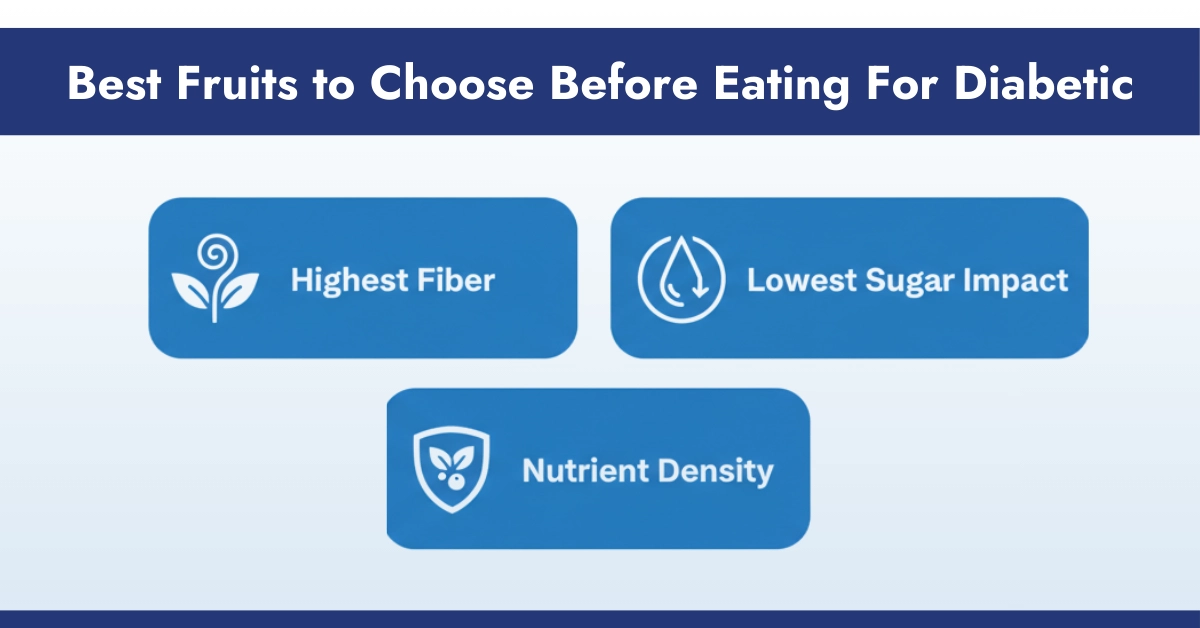
Not all fruits that diabetics can eat perform equally. Here’s what sets the winners apart:
- Highest Fiber: Blackberries lead with 8 grams per cup, followed by raspberries at 8 grams. This fiber creates the blood sugar stability you need.
- Lowest Sugar Impact: Berries are packed with antioxidants and are low in carbohydrates, with about 21 grams of carbs per cup, making them superior choices.
- Nutrient Density: Citrus fruits provide vitamin C, fiber, folate, and potassium, nutrients that support immunity and reduce diabetes complications.
Top 10 Best Fruits for Diabetics with Low Glycemic Index
The following fruits are widely considered diabetes-friendly fruits for type 1 and type 2 due to their nutrient density and relatively low glycemic impact when eaten whole.
| Fruit | Approx. GI | Carbs per Serving | Key Benefit |
| Cherries | ~20-25 | ~22g/cup | Antioxidants support insulin sensitivity |
| Strawberries | ~25-40 | ~11-13g/cup | High vitamin C with low glucose impact |
| Grapefruit | ~25 | ~11g/half | Low GI, supports metabolic health |
| Pears | ~30-38 | ~27g/medium | Soluble fiber aids glucose control |
| Apples | ~36-40 | ~25g/medium | Pectin fiber slows sugar absorption |
| Peaches | ~28-42 | ~15-16g/medium | Provides antioxidants and potassium |
| Oranges | ~35-44 | ~15-17g/medium | Fiber and vitamin C support balance |
| Kiwi | ~50 | ~13g/medium | Supports digestion and immunity |
| Mixed Berries | ~25-40 | ~15g/cup | Anti-inflammatory antioxidants |
| Avocado | ~10-15 | ~2g/half | Healthy fats with minimal sugar |
According to the ADA reports, including fruit in your meal plan is a positive step toward balanced nutrition. Using systems like the Omnipod 5 with integrated CGM helps you understand which fruits from this list work best for your unique metabolism.
Timing and Combination Strategies That Stabilise Glucose
This is critical for maintaining stable blood sugar levels.
Best timing:
- Mid-morning (10 AM) or afternoon snack (3 PM), not on an empty stomach
- 30 minutes after a protein-rich meal to blunt spikes
Power Combinations:
- Medium Size Apple + 10 almonds (fat + fiber)
- Berries + Greek yogurt (protein slows absorption)
- Half grapefruit + scrambled eggs (protein first)
Avoid: Eating fruit as a standalone breakfast or right before bed.
Fruits to Avoid for Better Diabetes Control
Some fruits are higher in natural sugar or have a higher glycemic effect that may raise blood sugar more quickly if eaten in large amounts:
- Mangoes
- Bananas (especially ripe)
- Pineapple
- Watermelon
- Dried fruit
These fruits aren’t “bad”; they just require careful portion control and monitoring. Many CGM users report that fruits like grapes and dried fruits can cause noticeable blood sugar spikes, especially when eaten alone.
Smart Ways to Eat Fruit Without Sugar Spikes
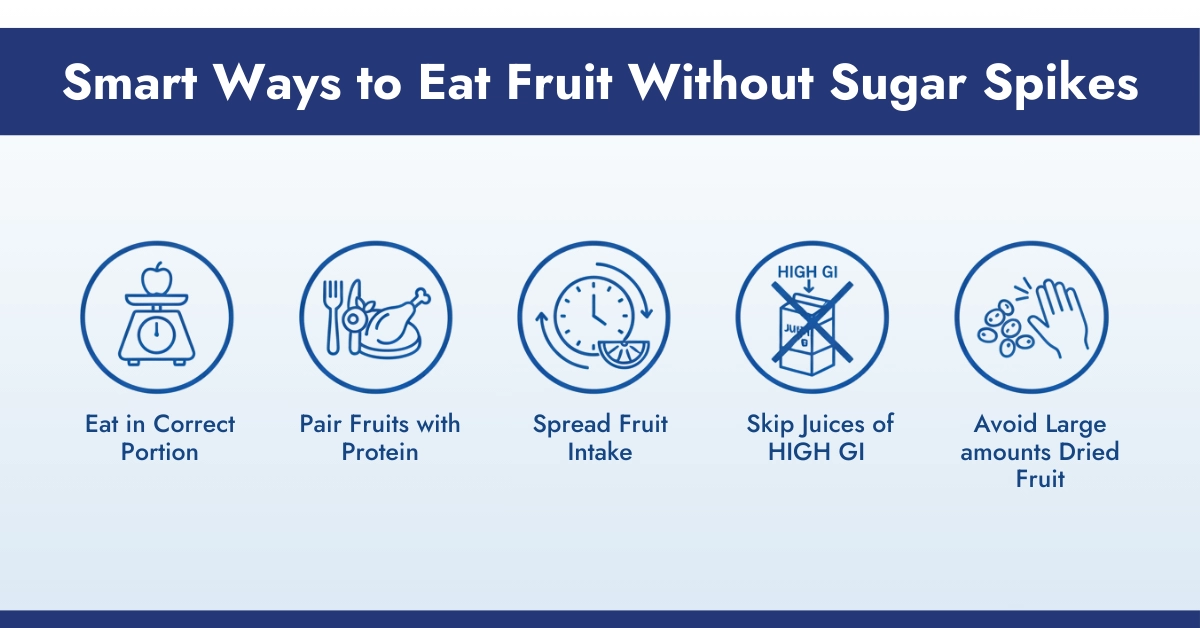
1. Portion Matters
A small serving of about one to half a cup of whole fruit is mostly enough to enjoy the benefits without excess carbs.
2. Pair Fruit with Proteins or Healthy Fats
Example combinations include:
- Apple slices + a handful of nuts
- Berries + plain Greek yoghurt
- Pear + cheese or nut butter
- Protein and fat slow digestion and reduce the rise in blood sugar.
3. Spread Fruit Intake Throughout the day
Instead of one large serving, have small portions as part of snacks or mixed with meals.
4. Skip Juice and large amounts of dried fruit
Juices lack fiber and can spike blood glucose more quickly; dried fruits are concentrated in natural sugars, so portions need to be small.
Note: Dry fruits are very helpful for diabetes if you take in a small portion, as discussed in our blog, which states dry fruits and diabetes and their impacts on glucose management.
Simple Advice: Eat fresh, avoid juice, and use monthly refills from suppliers like CGM Monitors to stay equipped.
Conclusion:
The best fruits for diabetics are not just low-GI options. They are the ones your body tolerates well. Stop trial-and-error. Start tracking with the CGM monitors so you will discover that cherries, berries, and apples can be a daily pleasure or fear. Track how fruit affects your glucose in real time with our Libre 3 plus sensor from CGM monitors, because the best diabetes management is personalized. With the right strategy, fruit can be part of a vibrant, satisfying diet that supports long-term health and glucose stability.
Resources:
Frequently Asked Questions
Can diabetics eat fruit at night?
Yes, but it’s better to eat fruit earlier in the day. Nighttime fruit may cause higher glucose levels due to reduced insulin sensitivity.
Are frozen fruits safe for diabetics?
Frozen fruits without added sugar are safe. They retain nutrients and fiber, but portions still matter, just like fresh fruit.
Does cooking fruit change its effect on blood sugar?
Yes. Cooking softens fiber and can raise the glycemic impact. Whole, raw fruit usually causes slower and steadier glucose responses.
Is organic fruit better for blood sugar control?
Organic fruit doesn’t directly lower blood sugar, but it reduces pesticide exposure. Blood sugar impact depends more on fruit type and portion size.
Can diabetics eat fruit every day?
Yes, most diabetics can enjoy fruit daily by choosing low-GI options, controlling portions, and pairing fruit with protein or healthy fats.
Disclaimer:
This article is meant to share general information and should not be taken as medical advice. Everyone’s blood sugar reacts differently, so it’s best to follow guidance from your doctor or healthcare provider. Some images used here are created for visual explanation only.





Write a comment
Your email address will not be published. All fields are required