
Table of content
- What Is Drooling During Sleep?
- Is It Normal to Drool While Sleeping?
- Common Causes of Drooling During Sleep
- What Causes Excessive Drooling at Night
- Is Drooling in Your Sleep a Sign of Diabetes?
- When Drooling at Night Could Signal a Health Issue
- How to Prevent Drooling During Sleep
- Conclusion
- Frequently Asked Questions
Drooling while you sleep is a sign of diabetes? No, it is not. Drooling in your sleep isn’t a direct sign of diabetes. It is not about saliva going wrong. It is about four specific complications, like nerve damage, oral infections, acid reflux, and sleep apnea that uncontrolled diabetes quietly triggers over time. Your body produces up to 1.5 litres of saliva daily, even at night. Most people never think about drooling in their sleep until they wake up with a wet pillow and begin worrying it might signal something serious, like diabetes. The above complications are capable of causing sleeping drooling as a downstream effect.
Key Takeaways
- Understanding Drooling and its Concern.
- Common Causes Behind Drooling.
- Drooling and Diabetes Connection.
- Health Related Concerns.
- How to Prevent It.
What Is Drooling During Sleep?
Salivating while asleep is medically called sialorrhea or ptyalism. It happens when saliva escapes from the mouth involuntarily during sleep because the automatic swallowing reflex slows down during sleep. So slobbering on your sleep becomes more likely, especially when the mouth is open.
Drooling is not an infection or bacterial disease. It is a normal response that affects people of all ages. But when drooling becomes frequent or sudden, the body is usually trying to tell you something that raises the concern of diabetes. The dryness while drooling mimics the diabetes condition but truly it is not. This condition is common in deep sleep and is not inherently dangerous for most people.
Is It Normal to Drool While Sleeping?
Yes, for most people, drooling while sleeping is completely normal. Saliva production continues through the night and the body’s ability to swallow it decreases as muscles relax. Occasional nighttime drooling does not need medical attention.
In fact, some sleep researchers suggest that drooling is a sign of good sleep. It may mean the body has fully relaxed into a deep sleep stage. The issue only starts when drooling in your sleep becomes consistent, sudden, or paired with other symptoms.
Common Causes of Drooling During Sleep
Reasons for drooling while sleeping include:
- Excess saliva
- Your mouth stays open
- Your ability to swallow decreases during sleep
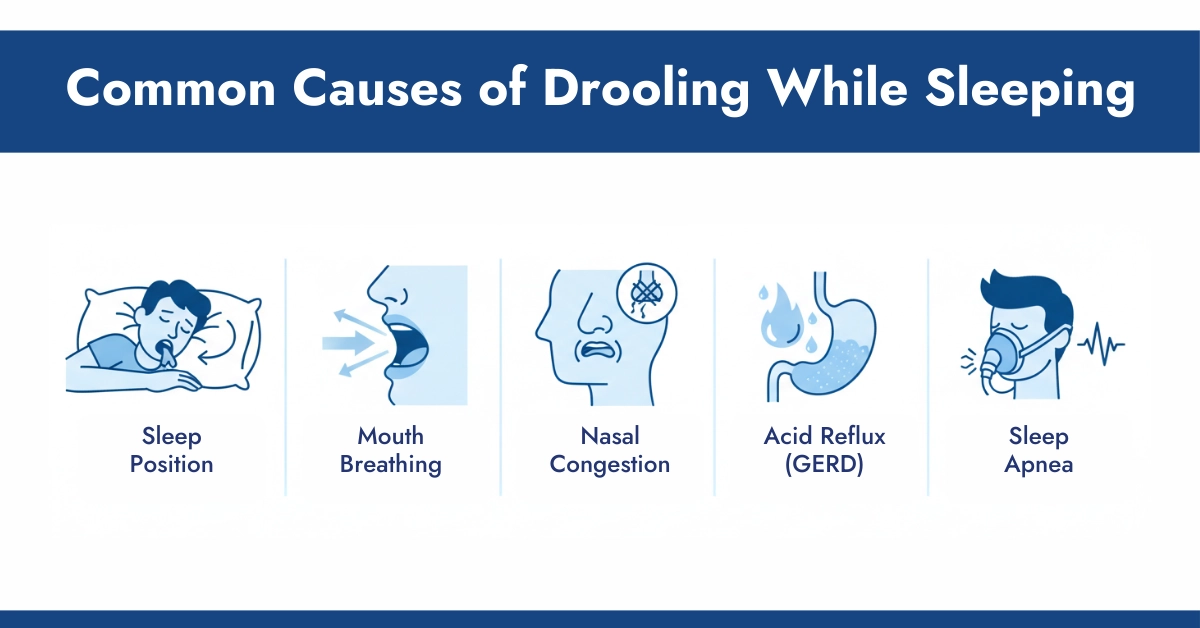
Here are the most recognized causes for drooling while sleeping in adults:
- Sleep Position: Side and stomach sleeping allow gravity to pull saliva towards your pillow. Back sleeping tends to keep saliva inside the mouth longer.
- Mouth breathing: The most common cause of excessive drool at night; when the nose is blocked, the mouth stays open all night.
- Nasal congestion: Allergies, colds, or sinus infections block airflow through the nose and force mouth breathing.
- Acid reflux (GERD): Stomach acid irritates the esophagus and triggers extra saliva as a protective response.
- Medications: Antipsychotics, some antibiotics, and neurological drugs are known to increase saliva production.
- Sleep apnea: Repeated airway blockages force the mouth open throughout the night, making drooling during sleep much more frequent.
- Mouth and gum infections: Active infections increase local saliva as part of the body’s defense mechanism.
What Causes Excessive Drooling at Night
Beyond sleep position, these factors directly trigger excessive saliva during sleep, especially at night includes:
- Spicy or acidic foods.
- Unmanaged GERD.
- Active dental infections.
- Certain Medications.
Excessive drooling during sleep in healthy adults almost always traces back to a combination of these, not a single serious disease.
Is Drooling in Your Sleep a Sign of Diabetes?
Drooling in your sleep is not a direct sign of diabetes, as we discussed above. That is the clear answer. However, uncontrolled or undiagnosed diabetes creates four well-documented indirect pathways that lead to nighttime drooling, and this is what most competing blogs fail to explain fully.
- Diabetic Autonomic Neuropathy: According to the NIDDK, diabetes can damage nerves over time. Around 50% of people living with diabetes develop neuropathy, and more than 30% develop autonomic neuropathy, which impacts automatic functions like swallowing. Trouble swallowing can allow saliva to build up and cause.
- Mouth Infections from High Blood Sugar: High blood sugar creates a sugar-rich environment in saliva that feeds harmful bacteria. This raises the risk of gum disease and oral infections. Infections near the mouth can interfere with normal swallowing and may contribute to drooling during sleep
- GERD Triggered by Metformin: Metformin, the most prescribed type 2 diabetes drug, commonly causes indigestion and heartburn. The Mayo Clinic lists GERD as a recognized complication of long-term gastric irritation from metformin. Stomach acid then irritates the esophageal lining overnight, and the body produces extra saliva as a neutralizing response.
- Obstructive Sleep Apnea: Research found that 55%-86% of people with type 2 diabetes have obstructive sleep apnea (OSA). It is a condition where the airway collapses repeatedly during sleep. OSA repeatedly collapses the airway, forcing the mouth open, the direct mechanical trigger for sleeping drooling. Treating sleep apnea often eliminates nighttime drooling.
Important: Drooling alone is never a diabetes diagnosis. But if it occurs alongside increased thirst, frequent urination, unexplained fatigue, or tingling in the hands and feet, those are recognized diabetes warning signs that need a blood sugar check.
For people already managing diabetes, overnight glucose tracking matters. The Freestyle Libre 3 Plus Sensor from Abbott monitors blood sugar continuously through the night, helping identify patterns that affect overall health. You can buy it from CGM monitors
When Drooling at Night Could Signal a Health Issue
Sudden drooling while sleeping in someone who never experienced it before is the most important red flag. New nighttime drooling in adults can point to:
- Parkinson’s disease or stroke: Both damage the facial and throat muscles that control swallowing
- Nasal polyps or deviated septum: Structural blockages that force chronic mouth breathing
- Worsening GERD: Especially when paired with a sour taste or morning hoarseness
- A newly started medication: With hypersalivation listed as a recognized side effect
- Developing sleep apnea: Increasingly common with age or gradual weight gain
Sudden drooling in your sleep alongside facial weakness, difficulty swallowing, or neurological changes requires prompt medical evaluation.
How to Prevent Drooling During Sleep
Stopping drooling during sleep depends on correctly identifying the root cause first.
Lifestyle and Sleep Changes
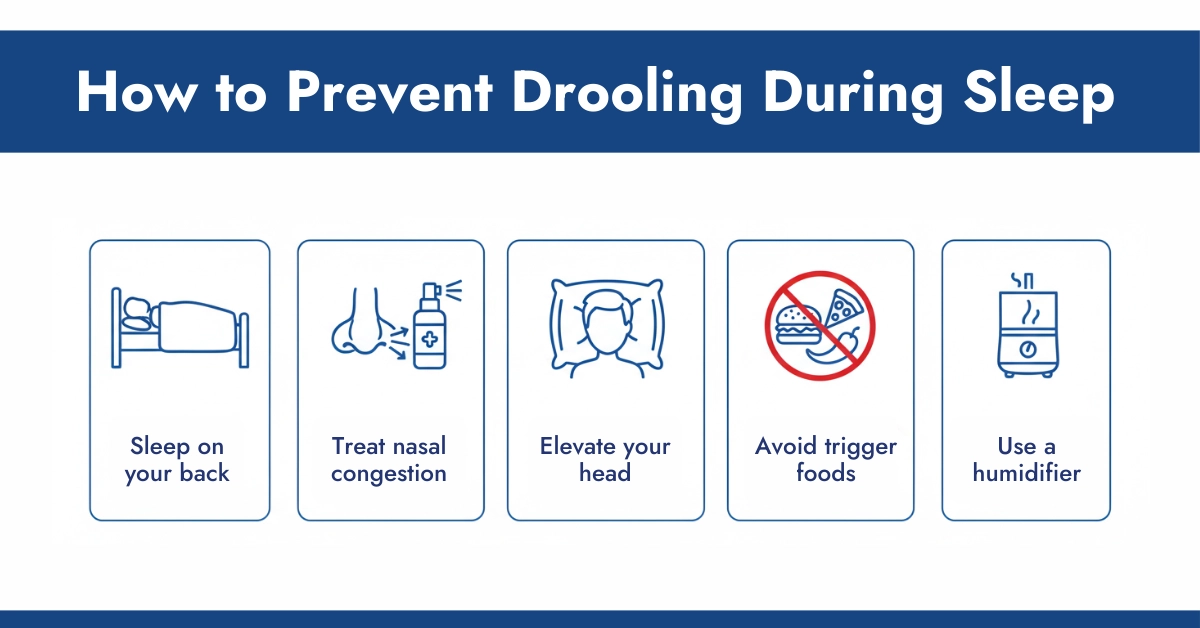
These simple adjustments address the most common causes of drooling while sleeping:
- Sleep on your back: the single most effective positional change to reduce nighttime drooling.
- Treat nasal congestion: Saline rinses, nasal strips, or antihistamines before bed reduce mouth breathing.
- Elevate your head: A wedge pillow reduces acid reflux and overnight saliva overproduction.
- Avoid trigger foods: Alcohol, spicy meals, and caffeine within 3 hours of sleep worsen GERD-related drooling.
- Use a humidifier: Dry bedroom air worsens congestion and mouth breathing overnight.
For people with diabetes, better glucose control reduces GERD, slows neuropathy, and lowers sleep apnea severity, all of which directly reduce drooling in your sleep. The Dexcom G7 15 day Sensor delivers real time glucose readings every five minutes throughout the day and night, giving people with diabetes continuous overnight glucose insight to support smarter management decisions.
Conclusion
Drooling in your sleep is always harmless. For most adults, the real cause is something simple, such as a sleep position, a blocked nose, or a mouth that falls open at night. However, when nighttime drooling becomes sudden or frequent, especially in someone managing diabetes, it deserves a closer look.
Diabetes does not directly cause drooling, but its complications do. Autonomic neuropathy, oral infections, GERD from metformin, and sleep apnea each create a clear pathway that connects uncontrolled blood sugar to drooling during sleep. Treating those root causes, not the drooling itself, is what actually works.
Frequently Asked Questions
Can drooling in your sleep be related to bruxism (teeth grinding)?
Yes. People who grind or clench their teeth during sleep (called bruxism) are more likely to breathe through their mouths, which makes saliva easier to escape and leads to drooling. Bruxism often co exists with other sleep issues and may contribute to increased saliva flow at night.
Are there neurological conditions (other than diabetes) that can cause drooling in sleep?
Yes. Conditions like Parkinson’s disease, stroke, cerebral palsy, or other nerve/muscle disorders can weaken swallowing control or saliva regulation, which may lead to increased drooling during sleep.
Can pregnancy cause you to drool more during sleep?
Yes. Hormonal changes and increased nasal congestion during pregnancy can lead to more mouth breathing and higher saliva production, causing more drooling while you sleep.
Does aging affect the likelihood of drooling while you sleep?
Yes. As people age, the muscles around the mouth and throat can weaken, and swallowing reflexes may slow. These changes make it easier for saliva to pool and escape during sleep.
Can dental problems or oral irritation cause nighttime drooling?
Yes. Conditions like mouth ulcers, cavities, gingivitis, or inflamed oral tissues can stimulate extra saliva production and make it harder to swallow normally, increasing the chance of drooling at night.
Is it normal to drool more during short naps than full nighttime sleep?
Yes. Drooling can vary with sleep patterns. Some people drool more during naps because deep sleep or relaxed jaw position during short rest periods makes it easier for saliva to escape.
Can a deviated septum or blocked nasal airway cause drooling during sleep?
Yes. A deviated septum, sinus congestion, or other nasal blockages can make nasal breathing difficult. This forces mouth breathing, which makes it easier for saliva to leak out while you sleep.
Disclaimer:
This content is provided for general informational purposes only and is not medical advice. It should not replace consultation with a qualified healthcare professional for personal health concerns. Some images used in this article may be AI-generated and are for illustrative purposes only.





Write a comment
Your email address will not be published. All fields are required