

Table of content
- Pumpkin and Diabetes: Why Most People Misread GI vs GL Values
- Nutritional Benefits of Pumpkin for Diabetics
- Effect of Pumpkin on Blood Sugar Levels and High Blood Pressure?
- Why This Benefit Matters for Type 2 Diabetics
- Common Concerns of Diabetes Related to Pumpkin with Answers
- How to Make a Diabetes-Friendly Pumpkin Pie
- The Best Ways to Eat Pumpkin with Diabetes
- How to Track Your Blood Sugar After Eating Pumpkin
- Conclusion
- Frequently Asked Questions
Is pumpkin safe for diabetics? Yes, pumpkin is safe for diabetics, but in moderate portions. Despite a high Glycemic index of 75, its Glycemic Load per serving is just 3-8, meaning it causes minimal blood sugar impact. Its fiber, magnesium, and potassium actively support glucose control and cardiovascular health.
If you have diabetes, pumpkin probably raises a question before it raises your appetite: Will this spike my blood sugar? The GI number looks alarming. The natural sweetness adds doubt. This guide cuts through both, with the science, the right portions, and the smartest ways to eat it.
Pumpkin and Diabetes: Why Most People Misread GI vs GL Values
Pumpkin’s Glycemic Index (GI) is between 51 and 75, which classifies it as high, but GI only measures the speed of blood sugar rise, tested in an unrealistic 50g carbohydrate serving. Nobody eats that much pumpkin in one sitting. Glycemic Load (GL) combines GI with actual carbohydrate content per portion.
Pumpkin’s GL sits between 3-8, which is firmly low. A standard half-cup cooked serving contains only 6-11 grams of carbohydrates. That modest carb load means pumpkin causes minimal blood sugar impact in realistic portions. For diabetics, GL is the number that matters, not GI alone. According to Harvard Medical School’s glycemic index database, any GL under 10 is considered low impact.
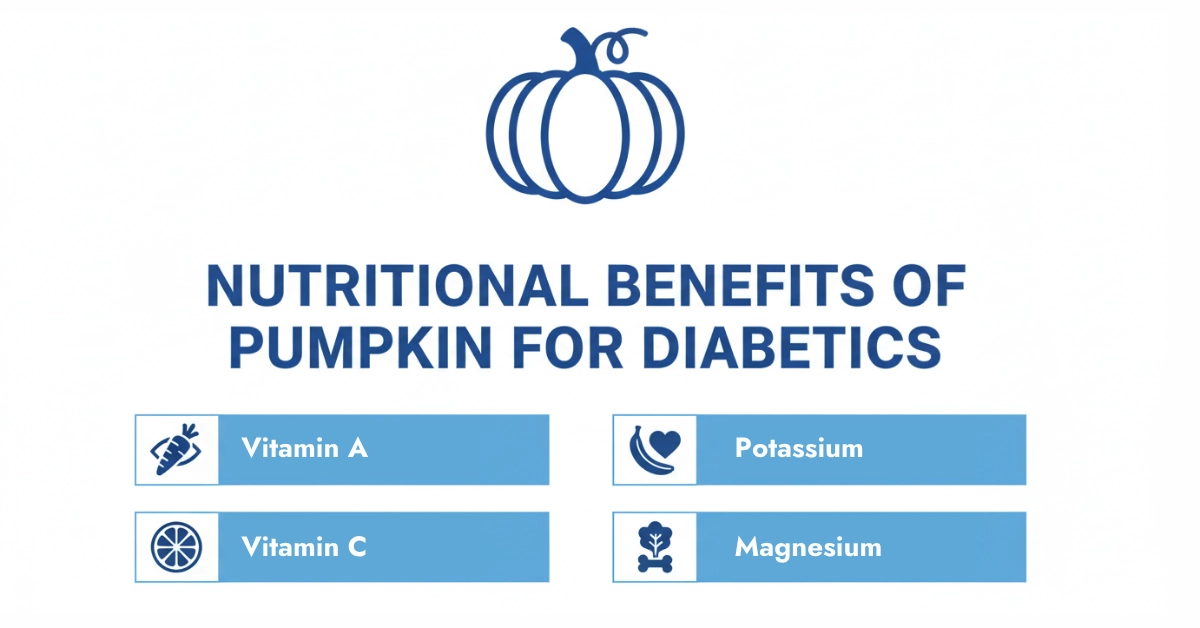
Nutritional Benefits of Pumpkin for Diabetics
A half cup serving of cooked pumpkin delivers:
- Vitamin A: 280% of the daily value, critical for eye health, which diabetes directly threatens.
- Vitamin C: 8% DV, supports immune function and wound healing.
- Potassium: Supports heart and kidney health, and regulates blood pressure.
- Magnesium: Plays a direct role in insulin sensitivity.
Additionally, pumpkin provides 12% of the daily fiber value per serving. Dietary fiber slows glucose absorption in the gut, which prevents rapid blood sugar spikes after meals. The fiber-rich diets improve long-term glycemic control in both Type 1 and Type 2 diabetics. Pumpkin delivers this fiber at very low caloric cost, just 50 calories per half cup.
Effect of Pumpkin on Blood Sugar Levels and High Blood Pressure?
Most diabetics also manage hypertension. Pumpkin addresses both conditions simultaneously.
Two minerals in one food:
- Potassium in pumpkin helps counteract sodium’s blood pressure-raising effect.
- Magnesium relaxes blood vessel walls, further supporting healthy pressure levels.
Together, these minerals make pumpkin a cardiovascular ally, important because adults with Type 2 diabetes face 2-4 times higher cardiovascular risk than those without it.
Important For You: If you feel pain in your legs, arms, or throughout your body and are concerned, you might wonder: does pain increase blood sugar levels? Don’t worry—our guide explains everything you need to know about pain and how it can affect your blood sugar.
Why This Benefit Matters for Type 2 Diabetics
Unlike many blood-sugar-friendly foods that are high in sodium or saturated fat, pumpkin is naturally low in both. This makes it one of the few foods that serve diabetic and heart health at the same time.
Common Concerns of Diabetes Related to Pumpkin with Answers
Here are the common answers asked by the diabetic person, which are answers correctly based on the experiences of several endocrinologists and dieticians
Are Pumpkin Seeds Good for Diabetes?
Yes, pumpkin seeds offer significant benefits for diabetics because of the magnesium minerals that help in reducing the risk of developing type 2.
Magnesium: A 1-ounce serving of pumpkin seeds provides roughly 37% of the daily magnesium value. Low magnesium levels are closely linked with insulin resistance. Research published in Diabetes & Metabolism suggests that increasing magnesium intake may significantly reduce the risk of developing Type 2 diabetes. For diagnosed diabetics, adequate magnesium supports cells in responding properly to insulin.
How Many Seeds Should Diabetics Eat Per Day?
A practical daily portion is 1 ounce (about 85 seeds or ¼ cup). Choose unsalted, raw, or dry-roasted varieties. Avoid oil-roasted or flavored seeds, which add unnecessary sodium, fat, and sometimes added sugars.
Is Pumpkin Pie Safe for Diabetics?
Traditional pumpkin pie is not diabetic-friendly, despite containing real pumpkin. A standard slice contains 46-52 grams of carbohydrates, primarily from the crust, condensed milk, and added sugars. That single slice can rapidly spike blood glucose to dangerous levels.
How to Make a Diabetes-Friendly Pumpkin Pie
Directions For a Smarter Version
- Crust: A nut-based or oat crust instead of refined flour pastry.
- Filling: Unsweetened pumpkin purée (not pumpkin pie filling, which has added sugar).
- Sweetener: Monk fruit sweetener or stevia instead of sugar.
- Milk: Unsweetened almond milk instead of condensed milk.
This approach preserves the flavor while slashing carbohydrates by up to 60%. Always check canned pumpkin labels, like “pumpkin puree” is safe; “pumpkin pie filling” is not.
Pumpkin Spice Chia Pudding – Diabetes-Smart & Delicious
Craving that cozy pumpkin pie taste without spiking your blood sugar? This creamy, no-bake chia pudding is packed with fiber, healthy fats, and protein to help keep levels steady. It skips the sugar bomb and crust, using real pumpkin and just a touch of natural sweetness.
Ingredients (makes 2 servings)
1½ cups (350 mL) unsweetened almond milk.
½ cup (120 g) pure pumpkin purée (not pie filling).
1 scoop (about 30 g) vanilla or unflavored protein powder (low-carb preferred).
2 tbsp (30 g) almond butter, peanut butter, or tahini.
1 tbsp (15 mL) raw honey or a diabetes-friendly sweetener to taste.
1 tsp pure vanilla extract.
1½ tsp pumpkin pie spice (or mix cinnamon, ginger, nutmeg).
Tiny pinch of sea salt.
¼ cup (40 g) whole chia seeds.
Extra almond milk for serving.
Quick Steps to Make it Properly
- In a bowl or blender, whisk or blend everything except the chia seeds until silky smooth.
- Stir in the chia seeds (or pour into a jar and shake well).
- Seal and refrigerate overnight (or minimum 3–4 hours) – it thickens into pudding magic.
- Stir, add a splash of almond milk on top if you like it looser, and dig in!
Why Does It Work for Diabetes Management?
High fiber from chia + pumpkin slows carb absorption, protein keeps you full longer, and healthy fats balance the small amount of natural sweetness. One serving stays gentle on glucose while feeling like a real fall treat. Enjoy chilled – perfect for breakfast, snack, or dessert!2sFast
The Best Ways to Eat Pumpkin with Diabetes
Smart Cooking Steps
- Boiled pumpkin has the lowest GL; water dilutes the carb concentration.
- Roasted pumpkin concentrates natural sugars slightly, still safe in moderation.
- Canned plain pumpkin purée is convenient and nutritionally comparable to fresh, just verify the label shows zero added sugar and no other ingredients.
What to avoid: Pumpkin juice and flavored drinks should be avoided; they strip fiber and concentrate sugars.
Smart Pairings with Protein or Fat
Pair pumpkin with protein or healthy fat to further slow glucose absorption.
Option Include:
- Eggs.
- Greek yogurt.
- Nuts.
- Olive oil.
Eating pumpkin as part of a balanced meal is always safer than eating it alone as a snack.
How to Track Your Blood Sugar After Eating Pumpkin
Every diabetic responds differently to the same food. Your blood sugar response to pumpkin depends on your insulin sensitivity, current medication, meal composition, activity level, and stress. Checking your glucose 1-2 hours after eating pumpkin tells you exactly how your body responds, not just the population average.
Continuous Glucose Monitor (CGM) devices like FreeStyle Libre 3 Plus and Dexcom G7 15-day remove the guesswork entirely. Instead of finger-prick spot checks, a CGM tracks your glucose curve in real time as your body digests pumpkin. You can see precisely whether a ½-cup or 1-cup portion keeps you within your target range.
Conclusion
Pumpkin is genuinely beneficial for diabetics when eaten in the right form and portion. Fresh or boiled pumpkin, pumpkin seeds, and thoughtfully modified pumpkin recipes all fit a diabetic diet well. The key is pairing smart food choices with real-time glucose monitoring so you always know how your body responds.
CGM Monitors supplies FDA-approved CGM systems from leading brands, including Abbott, Dexcom, and Medtronic, with free delivery across the USA, insurance coverage support, and monthly sensor refills. Their team handles insurance verification and prior authorization, so you can focus on managing your health rather than the paperwork.
References
- Healthline – Is Pumpkin Good for Diabetics?
- Diabetic Food Hub – Top diabetic Friendly Recipes
Frequently Asked Questions
Can pumpkin help reduce A1C over time?
Not directly. But pumpkin’s fiber lowers post-meal glucose spikes consistently. Since A1C reflects your 90-day average blood sugar, fewer spikes over time gradually bring A1C down.
Is pumpkin safe for diabetics with kidney disease (nephropathy)?
In early kidney disease, yes, in moderate amounts. In advanced nephropathy, pumpkin’s potassium content may need to be restricted. Confirm safe potassium limits with your nephrologist first if kidney disease is present.
Does eating pumpkin at night raise blood sugar more than during the day?
Yes, insulin sensitivity naturally drops in the evening. The same portion of pumpkin can spike blood sugar higher at night than during the day. Pair it with protein at dinner and track your overnight response if possible.
Is pumpkin handled differently in Type 1 vs Type 2 diabetes?
In Type 2, pumpkin’s fiber and magnesium support your natural insulin response. In Type 1, there is no endogenous insulin to support you, so you must count its 6-11g of carbs directly into your insulin dose, no exceptions.
Is pumpkin flour a viable low-carb baking option for diabetics?
Yes. It has fewer carbs than regular flour and retains fiber that slows glucose absorption. Mix it with almond flour for a better texture in low-carb recipes.
Disclaimer:
The information in this blog is for general informational purposes only and should not replace professional medical advice. Always consult with a healthcare provider before making dietary changes, especially if you have diabetes or other medical conditions. Individual responses to food may vary. Visuals in this blog are created from AI just for illustration purposes.





Write a comment
Your email address will not be published. All fields are required