

Table of content
- What Is Gluten-Free? A Simple Breakdown
- What Makes Rice Naturally Gluten-Free?
- Is Rice Safe for Diabetics?
- How Rice Affects Blood Sugar: Glycemic Differences
- Does Gluten Impact Blood Sugar?
- Should Diabetics Without Celiac Go Gluten Free?
- Smart Rice Strategies for Diabetics: Gluten and Carb-free Diet
- Conclusion
- People Asked For
If you live with diabetes, every meal feels like a problem for you, especially related to carbs. Add celiac disease or gluten sensitivity to the mix, and that simple bowl of rice becomes a question mark. You’re staring at it, thinking: “Is rice gluten free? Because of concerns about gluten exposure and blood sugar spikes.
Here’s the quick answer: yes, plain rice is naturally gluten-free. But if you’re managing both blood sugar and gluten intolerance, there are extra layers to consider: cross-contamination, rice type, heavy metal exposure, portion size, and how your body reacts to such a diet.
Research from the National Celiac Association shows that while rice itself is perfectly safe, 82% of people on gluten-free diets still worry about hidden contamination. That anxiety alone can change how you eat and not always for the better.
What Is Gluten-Free? A Simple Breakdown
So, what is gluten-free? It means avoiding gluten, a protein in wheat, barley, and rye that gives dough its stretch. For people with celiac disease, gluten harms the gut, but many others go gluten-free for sensitivity or preference. According to Healthline, natural foods like fruits, veggies, and grains such as rice are inherently gluten-free.
The reports highlighted that non-celiac gluten sensitivity often involves fermentable carbs more than gluten itself, adding nuance to why some feel better off without it. For diabetics, this matters because many gluten foods pack carbs that can influence blood sugar. If you’re tracking reactions, something like the New Dexcom G7 Sensor (15 days weartime) from CGM Monitors lets you see real-time impacts.
What Makes Rice Naturally Gluten-Free?
Rice is naturally gluten-free because it does not contain the proteins found in wheat, barley, or rye—namely, gluten. Whether you choose white, brown, or wild rice, it’s inherently safe for people with celiac disease or gluten sensitivity. This makes rice a versatile and reliable option for those avoiding gluten, while still providing essential nutrients and energy. Every rice type starts gluten-free:
All rice varieties start out gluten-free:
- White rice (jasmine, basmati, arborio)
- Brown rice (long-grain, short-grain)
- Specialty rice (black, red, wild)
Even “glutinous rice” is okay.
The Mayo Clinic confirms rice is safe, but they don’t emphasize the cross-contamination risks that happen after the rice leaves the field. And for someone with celiac disease with diabetes, that’s where the real danger lives.
Is Rice Safe for Diabetics?
For people with type and type 2 diabetes, the main concern with rice isn’t gluten—it’s the carbohydrate content. Rice, especially white rice, has a high glycemic index (GI), meaning it can cause rapid spikes in blood sugar. However, with portion control and smart choices, rice can still be included in a diabetic diet.
Tips for Diabetics Eating Rice:
- Prefer brown or wild rice over white rice for slower blood sugar release.
- Keep portions moderate—usually about ½ cup cooked rice per meal.
- Combine rice with fiber-rich vegetables and protein to reduce GI impact.
- Consider mixing rice with quinoa or lentils for added nutrients and better blood sugar control.
How Rice Affects Blood Sugar: Glycemic Differences
Rice affects blood sugar because it is rich in carbohydrates, which the body breaks down into glucose. White rice, in particular, has a high glycemic index (GI), meaning it can cause rapid spikes in blood sugar. Brown, wild, or basmati rice have more fiber and a lower GI, which helps release glucose more slowly, leading to steadier blood sugar levels. Here are the varieties with glycemic index that are mostly used in our daily lives.
| Rice Type | Glycemic Index | Fiber (per cup) | Best For |
| Brown Basmati | 50 (low) | 3.5g | Everyday meals |
| White Basmati | 58-65 (medium) | 0.6g | Occasional use |
| Jasmine (white) | 68-80 (high) | 0.3g | Post-workout only |
| Black Rice | 43 (low) | 4.9g | Antioxidant boost |
| Wild Rice | 45 (low) | 3g | Nutty flavor variety |
Point to Consider
- White rice digests faster → higher glucose spikes and need quick support to minimze with CGM monitors.
- Brown, black, and wild rice digest slower → gentler glucose curve.
The American Diabetes Association recommends making grains about ¼ of your plate, roughly ½ cup of cooked rice for many people. Pair that with lean protein, vegetables, and healthy fats to flatten post-meal glucose response.
With a Freestyle Libre 2 Plus Sensor, you can test different rice varieties by monitoring your glucose and see your exact response within your blood stream. It will be interesting for yoy to know this point that maybe brown jasmine spikes you more than white basmati.
Does Gluten Impact Blood Sugar?
In people without celiac disease, gluten itself does not convert to glucose — it’s a protein, not a carbohydrate. However, in people with celiac disease, eating gluten triggers inflammation in the gut. This immune response may raise stress hormones (e.g., cortisol), potentially indirectly raising blood glucose and reducing insulin sensitivity. So, for someone with both type 1 diabetes and celiac disease, avoiding gluten is not just about gut health, it may help reduce glucose variability and improve metabolic control.
A 2025 report from Breakthrough T1D (formerly JDRF) confirms that people with both type 1 diabetes and celiac disease who cheat on their gluten-free diet see higher time-above-range (38.72% vs 34.34%). Those few percentage points translate to hours of elevated glucose each day.
Should Diabetics Without Celiac Go Gluten Free?
Gluten-free diets had no significant effect on HbA1c, fasting glucose, insulin levels, or insulin resistance in people without celiac disease.
Unnecessary gluten avoidance may harm metabolic health
- Miss out on fiber-rich whole grains that improve insulin sensitivity
- Might eat more processed gluten-free products that are higher in sugar and carbs
- Reduce your gut microbiome diversity, which emerging research links to better glucose control
The only people who must be gluten-free are those with celiac disease or confirmed gluten sensitivity. For everyone else, it’s a personal choice, not a medical necessity. Save your energy for counting carbs and tracking portions—that’s what actually moves the needle on blood sugar.
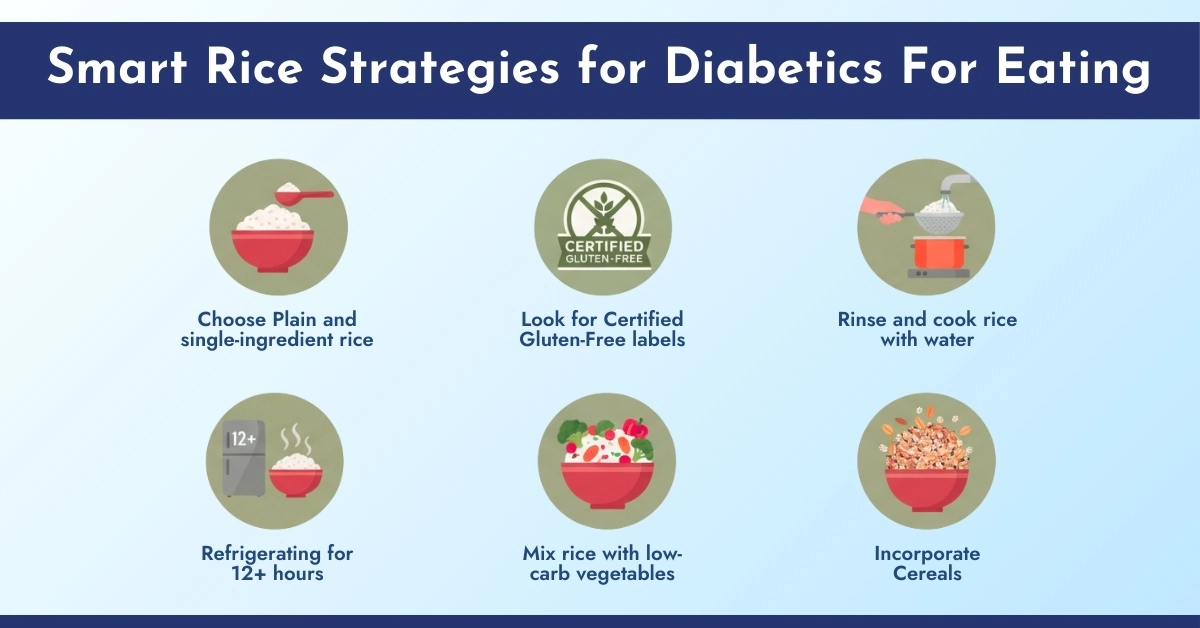
Smart Rice Strategies for Diabetics: Gluten and Carb-free Diet
Here are practical tips to enjoy rice safely, whether you’re managing blood sugar, gluten sensitivity, or both:
- Choose plain, single-ingredient rice, not flavored or mixed rice.
- Look for Certified Gluten-Free labels, especially if you have celiac.
- Rinse and cook rice in plenty of water, then drain which helps reduce arsenic.
- After cooking and refrigerating for 12+ hours, it increases resistant starch, which slows digestion.
- Mix rice with low-carb vegetables, e.g., cauliflower rice, to cut carbs and improve nutritional value.
- Incorporate quinoa, millet, buckwheat, and teff to reduce arsenic exposure and improve nutrient variety.
- Eat rice earlier in the day when insulin sensitivity may be higher.
Conclusion
Yes, rice is naturally gluten-free, making it safe for people with celiac disease or gluten sensitivity. For diabetics, rice can be included in the diet with careful portion control and smart pairing with other foods. A gluten-free diet is not necessary for diabetes management unless gluten intolerance is also present. Focus on whole grains, fiber, and balanced meals to keep blood sugar stable.
CGM sensors from CGM Monitors show exactly how rice affects your sugar, letting you tweak meals over guesswork. Rice can stay on the menu, just smartly. With strategies and tools, keep your health in check without ditching favourites.
People Asked For
Is brown rice gluten-free?
Yes, in its plain form, brown rice is naturally gluten-free, just like white or wild rice.
Does gluten turn into sugar in the body?
No, gluten is a protein, not a carbohydrate. It doesn’t directly raise blood sugar.
Is gluten-free food automatically low-carb?
No. Gluten-free foods can be very high in carbs (rice, potatoes, rice-based flours), so “gluten-free” ≠ “sugar-free.
Is Caribbean rice mix gluten-free?
Often not. Many commercially sold mixes contain wheat-based thickeners or pasta. Always check for “certified gluten-free.
Can a type 2 diabetic eat gluten-free bread?
Only if it’s made from low-carb, high-fiber ingredients (almond flour, flax, etc.). Most store-bought gluten-free breads are high in starch and spike blood sugar worse than regular bread.
How to make white rice not spike blood sugar?
Cook it with 1 tsp coconut oil or butter, cool it overnight (makes resistant starch), and reheat. Add protein, healthy fat, and plenty of non-starchy veggies to the meal.





Write a comment
Your email address will not be published. All fields are required