

Table of content
If you are taking Jardiance (empagliflozin) for type 2 diabetes, heart failure, or chronic kidney disease, you probably already know it is one of the most prescribed SGLT2 inhibitors. For good reason, it lowers blood sugar, protects your heart and kidneys, and often helps with modest weight loss.
But Jardiance also carries potential side effects, from mild and manageable to rare yet serious. In this guide, we’ll walk you through what is well-documented, what to watch out for, and how thoughtful CGM monitoring can help you stay safer.
Jardiance and Its Importance
Empagliflozin is a once-daily oral medication from the SGLT2 inhibitor class. It works by lowering blood sugar by preventing glucose reabsorption in the kidneys. This forces excess glucose out through urine, effectively lowering A1C levels by 0.7-1.0% on average. Beyond glycemic control, Jardiance has earned FDA approval for:
- Lower blood glucose (as part of diabetes treatment).
- Reduce risk of cardiovascular death and hospitalization for heart failure in adults with heart failure or type 2 diabetes with cardiovascular disease.
- Used in certain adults with chronic kidney disease (when appropriate) to slow progression of renal disease.
Because the drug increases urinary glucose and fluid loss, certain side effects — especially ones related to fluid balance, urinary or genital tract, and kidney stress — become more likely.
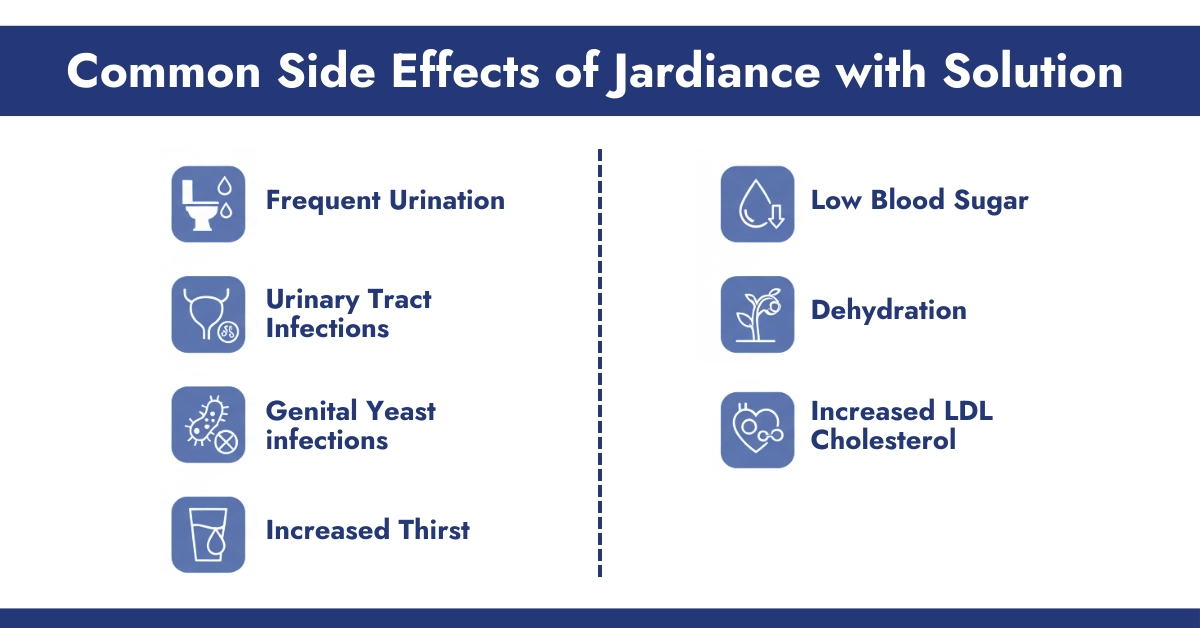
Most Common Jardiance Side Effects with Solution
Here are the side effects most often observed in clinical use and listed in official prescribing information.
- Frequent Urination: Jardiance works by helping the kidneys remove excess glucose through urine, so frequent urination is very common. It is recommended to take Jardiance in the morning and maintain steady fluid intake during the day.
- Urinary Tract Infections (UTIs): Extra glucose in urine can promote bacterial growth in the urinary tract. Affecting 17-18.4% of women and about 3.6-4.1% of men. Many users report burning with urination, cloudy or strong-smelling urine, and frequent urges to urinate. The solution is to practice good hygiene, stay hydrated, and seek early treatment if symptoms appear.
- Genital Yeast infections: Higher urine glucose increases fungal growth risk, especially in women, which may appear as vaginal area like itching, unusual discharge, or discomfort. It is recommended to keep the area clean and dry; antifungal medications are usually effective.
- Increased Thirst: Due to frequent urination, fluid loss may occur, which triggers thirst in the patient. You experience dry mouth constant need to drink.
- Low Blood Sugar: Jardiance alone rarely causes hypoglycemia in diabetics, but the risk increases with other diabetes meds. A diabetic may experience shakiness, sweating, confusion, and dizziness. Perfect solution is to monitor glucose level with CGM monitors like the new Dexcom G7 closely.
- Dehydration: Due to Jardiance, excess urination can lead to reduced body fluids. Dry skin, fatigue, dark urine, and weakness are the common symptoms of this condition. Simply increase water intake, especially during summer.
- Increased LDL Cholesterol: Some patients experience a mild rise in LDL cholesterol. There are no signs or symptoms of this condition. The best precaution is to follow a heart-healthy diet and monitor cholesterol levels regularly.
These side effects are relatively common — but for many people, they are manageable with proper hygiene, hydration, and monitoring, for example, using a CGM system such as FreeStyle Libre 3 Plus to detect glucose fluctuations early.
Who Needs Extra Caution
Some factors make side effects more likely or more dangerous. Be extra careful if you:
- Adults 65 years or older
- People with impaired kidney function (low eGFR)
- Those taking diuretics or blood pressure–lowering medications
- Those using insulin or insulin-stimulating drugs (sulfonylureas)
- Anyone with a history of urinary tract or genital infections
- People with reduced food or fluid intake (fasting, illness, surgery, vomiting, diarrhea)
If you have any of these risk factors, it’s especially important to stay alert, stay hydrated, and have regular checkups.
Jardiance Side Effects in Females vs Males
Women experience genital infections about 2-3 times more often than men. Affects 7-8% of women, with recurrence in 15-20% of cases. Vaginal yeast infections are the #1 reason women discontinue the drug. Men can develop yeast infections on the penis (balanitis or balanoposthitis), usually with redness, itching, or rash under the foreskin. 70% of reported cases are male
Good hygiene, breathable cotton underwear, and probiotic-rich foods or supplements help many patients. Some doctors prescribe a single-dose fluconazole at the start of therapy to prevent the first yeast infection.
Jardiance Side Effects on Kidneys
Jardiance is FDA-approved to slow kidney disease progression, and it reduced the risk of dialysis or transplant by 28% in the EMPA-KIDNEY trial. However, it can cause an initial drop in eGFR (about 3–5 mL/min) in the first few weeks due to volume changes — this is expected and usually recovers. A small percentage of patients, especially those already with low blood pressure, on diuretics, or over 75, can develop acute kidney injury.
Monitor creatinine/eGFR at start and periodically. Stay hydrated (at least 80-100 oz of water daily unless your doctor restricts fluid).
Prevention to Minimize Jardiance Side Effects
Here are some actionable steps to reduce risks and manage side effects effectively:
- Drink water all day, aim for pale yellow urine
- Wipe front to back, urinate after intercourse, consider a daily shower spray with antifungal wash
- Consider a prophylactic antifungal the first month (ask your doctor)
- Eat a small breakfast before your morning dose to reduce nausea or dizziness
- Use a CGM device so you can see exactly how Jardiance affects your glucose patterns — many users notice a 20–40 mg/dL drop in the first week
The CGM sensor like freeStyle Libre 2 Plus or Dexcom G7 gives you real-time data and customizable alerts that help catch dehydration-related highs or combination-therapy lows before they become dangerous. Patients using CGM report feeling much more confident on Jardiance because they can adjust insulin or fluids immediately when they see trends.
Conclusion:
Jardiance side effects range from bothersome to life-threatening, but their impact is drastically reduced through proactive monitoring. The medication’s cardiovascular and renal benefits far outweigh risks for most patients when properly managed. With the right monitoring tools available through CGM Monitors with insurance billing or affordable cash pricing and free nationwide shipping, you can stay ahead of glucose changes and feel confident on Jardiance.
Talk to your doctor about whether Jardiance is still the best choice for you, and consider adding a CGM if you haven’t already. Your peace of mind is worth it. CGM Monitors is a DME supplier and does not provide medical care.
Frequently Asked Questions
What are the warning signs of diabetic ketoacidosis (DKA) with Jardiance?
Warning signs include nausea, vomiting, abdominal pain, fruity-smelling breath, rapid breathing, fatigue, and confusion. Seek urgent medical care if these symptoms appear.
Why does Jardiance cause yeast infections in some individuals?
Jardiance increases glucose excretion in urine, creating an environment that promotes yeast overgrowth, especially in the genital area. Good hygiene and stable blood sugar control help reduce risk.
What is the mechanism of Jardiance in weight management?
Jardiance blocks SGLT2 in the kidneys, preventing glucose reabsorption and causing excess sugar and calories to be lost in urine, leading to sustained weight loss of about 2–4%.
How can you differentiate Jardiance vs Farxiga side effects?
Jardiance and Farxiga have nearly identical side effect profiles, including yeast infections, UTIs, and dehydration. There are no major clinical differences, though individual tolerance may vary.
What are the most common side effects of Jardiance?
The most common side effects are genital yeast infections, urinary tract infections, and increased urination. These effects are usually mild and manageable for most patients.
How does age impact the risk of Jardiance side effects?
Older adults may have higher risks of dehydration, low blood pressure, and kidney strain. Regular monitoring, adequate hydration, and dose review help maintain safety.
How can I manage common Jardiance side effects like frequent urination?
Frequent urination occurs due to glucose loss in urine. Staying hydrated, limiting caffeine and alcohol, and planning bathroom access can improve comfort and control.
Does Jardiance cause weight loss?
Yes. Around 50% of patients experience moderate weight loss of about 2–3% of body weight, mainly from calorie and glucose loss through urine.
Does Jardiance cause eye side effects?
There is no direct link. Temporary blurred vision is usually related to blood sugar changes or dehydration rather than the medication itself.
Will the increased urination ever stop?
Yes. Increased urination typically improves within 1–4 weeks as the body adjusts to the medication.
Can I drink alcohol while taking Jardiance?
Alcohol should be limited to one drink per day for women and two for men, as excess alcohol increases dehydration and DKA risk.
Is Jardiance safe for people with chronic kidney disease (CKD)?
Yes. Jardiance is approved for CKD and offers kidney protection, but close monitoring is needed in advanced stages or low eGFR.
How long do yeast infections last on Jardiance?
With treatment, yeast infections usually resolve within 3–7 days. Recurrent infections may require preventive strategies or medication changes.
Disclaimer:
This content is for general informational purposes only and does not replace professional medical guidance. Always consult your healthcare provider before changing or using any medication. Some illustrations or images in this article were created using AI and are intended for visual explanation only.




Write a comment
Your email address will not be published. All fields are required