
Table of content
- What Is an Insulin Pump?
- Who Is It Suitable For?
- Key Features and Sensor Compatibility
- Looking to get an Insulin Pump?
- Hybrid vs. Full Closed-Loop Systems
- Automatic Correction Boluses
- Technical Specifications
- Benefits of a Minimed Insulin Pump 780G
- Insurance Coverage and Cost For Mini Med Medtronic Insulin Pump
- User Feedback
- Final Thoughts
- People Asked For
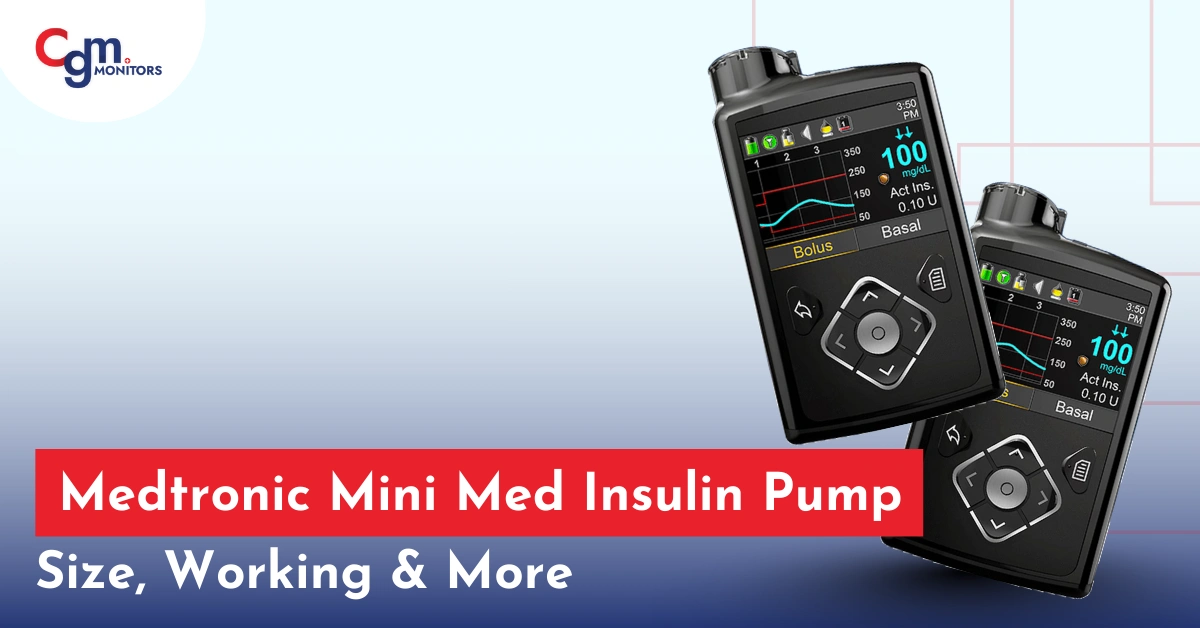
The Medtronic Mini Med Insulin Pump 780G is a hybrid closed-loop system designed to assist individuals with type 1 diabetes between 7 – 80 years of age. This automatic insulin delivery (AID) system is compatible with Guardian 4 Sensor and Guardian 3 Sensors. Equipped with SmartGuard technology, the system delivers correction boluses, and with meal detection technology, it reduces the hassle of manual carb counting. Thus, minimising adverse events, improving glycemic control and enhancing the quality of life for users. Let’s have a closer look at the features and how they may help people with type 1 diabetes, but before we dive, just have a glance at what insulin pumps are and how they work.
What Is an Insulin Pump?
An insulin pump is a medical device used to administer insulin continuously throughout the day and night. Unlike multiple daily injections, a pump delivers rapid-acting insulin via a small catheter placed under the skin. This method provides more precise and flexible insulin delivery, closely mimicking the body’s natural insulin release. Some insulin pumps only give you your bolus when you instruct from your phone or the AID system controller, while some offer the smart technology that automatically detects your blood sugar levels, based on which they will give you the required bolus doses or correction dose.
The 780g insulin pump belongs to the second type. However, as it is a hybrid closed-loop system, you are still required to input meal boluses.
Who Is It Suitable For?
As highlighted by the medtronicdiabetes, the MiniMed 780G system is primarily intended for individuals with type 1 diabetes aged 7 and above. It is particularly beneficial for those who:
- Experience frequent fluctuations in blood glucose levels.
- Have difficulty achieving target glucose levels with multiple daily injections.
- Desire to minimise the bolus counting and enjoy an automated approach to insulin delivery.
In short, any type 1 diabetic aged 7 plus and fed up of manually calculating carbs or who tends to forget taking insulin boluses may find it useful to opt for a waterproof insulin pump like the Insulin pump Medtronic Mini Med.
Key Features and Sensor Compatibility
The MiniMed 780G system boasts several advanced features:
- Hybrid Closed-Loop System: Based on continuous glucose monitoring (CGM) data, it automatically provides correction boluses every 5 minutes. The best part, new systems allow you to set target blood sugar levels as low as 100 mg/dL.
- Meal Detection Technology: Identifies meals and provides automatic corrections for missed or underestimated carbohydrate intake.
- Water Resistance: The pump is waterproof up to 12 feet for 24 hours, making it suitable for swimming and other water activities.
Looking to get an Insulin Pump?
Get a benefits check at no cost from CGMMonitors and receive pump supplies at your door. And do not worry, depending on what you require, we have a range of other automatic insulin delivery (AID) systems as well.
Hybrid vs. Full Closed-Loop Systems
| Feature | Hybrid Closed-Loop (MiniMed 780G) | Full Closed-Loop (iLet Bionic Pancreas) |
| Basal Insulin Adjustment | Automatic every 5 minutes | Automatic, based on CGM data |
| Bolus Delivery | User-initiated | Fully automated |
| Meal Detection | Yes | Yes |
| Fingerstick Calibration | Not required in SmartGuard mode | Not required |
In a full closed-loop system, both basal and bolus insulin delivery are automated, whereas in a hybrid system like the MiniMed 780G, users still need to initiate bolus doses for meals.
Automatic Correction Boluses
The MiniMed 780G system includes an automatic correction bolus feature that adjusts insulin delivery to correct high blood glucose levels. This function operates in the background, providing real-time corrections without requiring user input, thereby helping people with diabetes achieve and maintain their target glucose levels.
Technical Specifications
| Specification | Details |
| Size | 3.81 x 2.18 x 1.01 inches (9.68 x 5.36 x 2.49 cm) |
| Weight | 106 grams |
| Reservoir Capacity | Up to 300 units of insulin |
| Bolus Range | 0.05 to 25 units |
| Transmitter Range | Approximately 6 feet |
The Medtronic 780G dimensions are about 3.8×2.18×1.01 inches (length×width×depth ) with a weight of around 106 g (without consumables & battery). This compact size makes it easy to carry in your daily life routine.
Benefits of a Minimed Insulin Pump 780G
Advanced Automation with SmartGuard Technology: Builds on the 670G’s features with enhanced auto-adjustments for basal insulin every 5 minutes. This Medtronic latest pump maintains stable glucose levels with less manual intervention, which aligns with your interest in precise control and reduced effort in daily management.
Data Insights and Reports Features: Generates detailed reports on time in range and glucose patterns, helping optimize insulin dosing and integrate with lifestyle choices.
Integrated CGM Compatibility: Seamlessly integrates with the Guardian Sensor 4 for continuous glucose monitoring without fingersticks. It provides real-time data and alerts to prevent high and low episodes.
Extended Wear and User-Friendly Design: Supports up to 7 days of infusion set wear with fewer site changes, and includes customizable settings for activities like exercise, minimizing disruptions and potential troubleshooting issues you’ve inquired about.
Meal Detection and Auto-Corrections: Detect automatically missed meal boluses and deliver correction doses, reducing the risk of post-meal spikes. This mini med pump can be particularly beneficial for managing variable routines or keto-friendly meals.
Insurance Coverage and Cost For Mini Med Medtronic Insulin Pump
Insurance coverage for the MiniMed 780G system varies by provider and plan. In general, Medicaid may cover insulin pumps for individuals who:
- Have type 1 diabetes.
- Are insulin-treated with multiple daily injections or a continuous subcutaneous insulin infusion pump.
- Require frequent adjustments to their insulin regimen.
Consult with your healthcare provider and insurance company to determine specific coverage details. Or simply fill out this insurance eligibility form and let us do the rest for you.
User Feedback
Users have reported high satisfaction with the MiniMed 780G system, particularly appreciating its automatic adjustments and meal detection capabilities. And as it works with both the Guardian 4 Sensor and the Guardian 3 Sensors, some users do not seem satisfied with one of its compatible CGM sensors, the Guardian 4 Sensor. However, none seem to be reporting Guardian 3 Sensors.
Final Thoughts
Medtronic Mini Med Insulin Pump is suitable for individuals between 7 – 80 years of age living with type 1 diabetes. The Medtronic MiniMed 780G insulin pump is compatible with the Guardian 4 Sensor and Guardian 3 Sensors. Representing a hybrid closed-loop system combined with automatic correction boluses and meal detection, this insulin pump provides support in managing blood glucose levels easily and effectively.
Individuals looking for an AID system compatible with both Dexcom and Freestyle Libre CGM sensors may consider the Omnipod 5 pump here.
Disclaimer: This blog is only for informational purposes. Always consult your doctor before taking any medical action.
People Asked For
Who benefits most from the advanced features and smaller size of newer Medtronic MiniMed pumps?
Active individuals, children over seven, and people with type 1 or type 2 diabetes benefit most. Features like Meal Detection and automated insulin adjustments reduce manual effort and hypoglycemia risk. The smaller size improves comfort and discretion during sports, work, or travel, making it ideal for tech-savvy users needing 8–250 units of insulin daily without vision or hearing impairments.
Why is the size of an insulin pump important for daily life and user comfort?
A smaller insulin pump is less noticeable under clothing and allows more freedom during exercise, sleep, and daily activities. It reduces bulk-related discomfort and skin irritation while boosting confidence, especially for active users or those who prefer discretion. Compact pumps support better therapy adherence and long-term outcomes.
Why do some Medtronic MiniMed pumps have different form factors?
Different form factors are designed to meet diverse user needs. Medtronic focuses on tubed pumps that balance insulin capacity, battery life, durability, and advanced technology like CGM integration. These variations support pediatric, adult, and active users while prioritizing safety, flexibility, and ease of use.
How does the Medtronic MiniMed insulin pump deliver insulin and what are its key functions?
Medtronic MiniMed pumps deliver insulin continuously through a tubed system. Key functions include SmartGuard technology to prevent lows, automated insulin adjustments every five minutes, meal detection, and detailed glucose data tracking, helping mimic natural insulin delivery and reduce injections.
What are the different Medtronic MiniMed insulin pump models and their sizes?
Current models include the MiniMed 780G (about 3.8 x 2.2 x 1.0 inches), 770G with similar dimensions, and the 630G, which lacks advanced auto-corrections. Older 600/700 series are being phased out, while the upcoming 8-Series is expected to be much smaller with a screen-less design.
How do basal and bolus insulin delivery work on a Medtronic MiniMed pump?
Basal insulin is delivered continuously at adjustable rates to maintain glucose stability between meals, with SmartGuard automatically modifying delivery. Bolus insulin is given in doses for meals or high glucose levels, with auto-corrections helping manage fluctuations for better time in range.
How does continuous glucose monitoring (CGM) integrate with the Medtronic MiniMed pump?
CGM sensors like Guardian 4 wirelessly send glucose readings every five minutes to the pump. This real-time data enables SmartGuard to adjust insulin delivery automatically, reduce fingersticks, and provide alerts for highs and lows to improve overall glucose control.




Sorry service to pump