
Table of content
- What is Lymphedema?
- Common Stages of Lymphedema
- What People Call “Stage 4 Lymphedema”
- Stage 4 of Lymphedema In Details: Severity of Stage 3
- Areas of the Body Affected in Lymphedema
- Common Symptoms and Complications in Stage 4 Lymphedema:
- Treatment and Management Options For Stage 4 Lymphedema
- Stage 4 Lymphedema Life Expectancy Explained
- Safety Tips & Practical Strategies
- Conclusion
Facing stage 4 lymphedema life expectancy questions can be overwhelming. Many patients wonder whether this advanced stage of lymphedema shortens lifespan. Typically, it doesn’t directly shorten life expectancy but severe swelling leads to serious complications. This condition is an advanced stage of lymphedema that causes severe swelling and tissue changes. But when you understand it fully so you take control of it. Lymphedema is a chronic condition; if you manage it properly, the chances of maintaining a life without any complications.
What is Lymphedema?
Lymphedema is a chronic swelling condition in which fluid accumulates in body tissues. This condition happens when the lymphatic system is damaged, blocked, or unable to drain fluid effectively. This will cause swelling, tissue changes, and skin thickening. It also affects the arms, abdomen or legs.
Lymphedema is divided into two types:
Primary Lymphedema: It comes from birth defects.
Secondary Lymphedema: It arises from surgery, radiation, trauma or infections.
As per NCBI, primary lymphedema is rare, and this genetic condition affects approximately 1 in 100,000 individuals, but on the other hand, secondary lymphedema, the most common form, affects approximately 1 in 1,000 Americans, often after cancer treatments like breast cancer surgery.
It differs from regular swelling because the fluid is rich in proteins, which can lead to inflammation if ignored. Catching it soon matters, as it can progress to tougher stages.
Common Stages of Lymphedema
According to the International Society of Lymphology (ISL), lymphedema is officially divided into stages from 0 to 3. There is no separate Stage 4 in the ISL system. What many people call Stage 4 lymphedema is actually the most severe and advanced form of Stage 3, also known as elephantiasis.
1. Lymphedema Stage 0 (Latent Stage)
At this stage, no swelling is visible, but the lymphatic system is already damaged. You may feel heaviness, tightness, or discomfort in the affected area, even though it looks normal.
2. Lymphedema Stage 1 (Mild and Reversible)
Swelling becomes noticeable, but the good thing is that it usually goes down when you rest or elevate the limb. The skin feels soft, and when you press on it, it may leave a small dent, called pitting.
3. Lymphedema Stage 2 (Moderate Stage)
The swelling does not completely go away, even with elevation. The tissue starts to feel firmer or harder because scarring (fibrosis) begins to develop. At this stage, long-term care is needed to prevent further progression.
4. Lymphedema Stage 3 (Severe/Elephantiasis)
This is the most advanced stage recognized by ISL. The affected limb becomes very large, heavy, and difficult to move. The skin thickens, hardens, and may develop deep folds, rough texture, or wart-like growths. Infection risk is high. “Stage 4” is the advanced stage of 3, with extreme swelling and permanent tissue changes
What People Call “Stage 4 Lymphedema”
Many people use the term Stage 4 lymphedema to describe extremely severe cases of Stage 3. This includes deep skin folds, extreme swelling, and permanent tissue changes. Medically, this is not a separate stage, it is considered advanced Stage 3 lymphedema, also known as elephantiasis.
Stage 4 of Lymphedema In Details: Severity of Stage 3
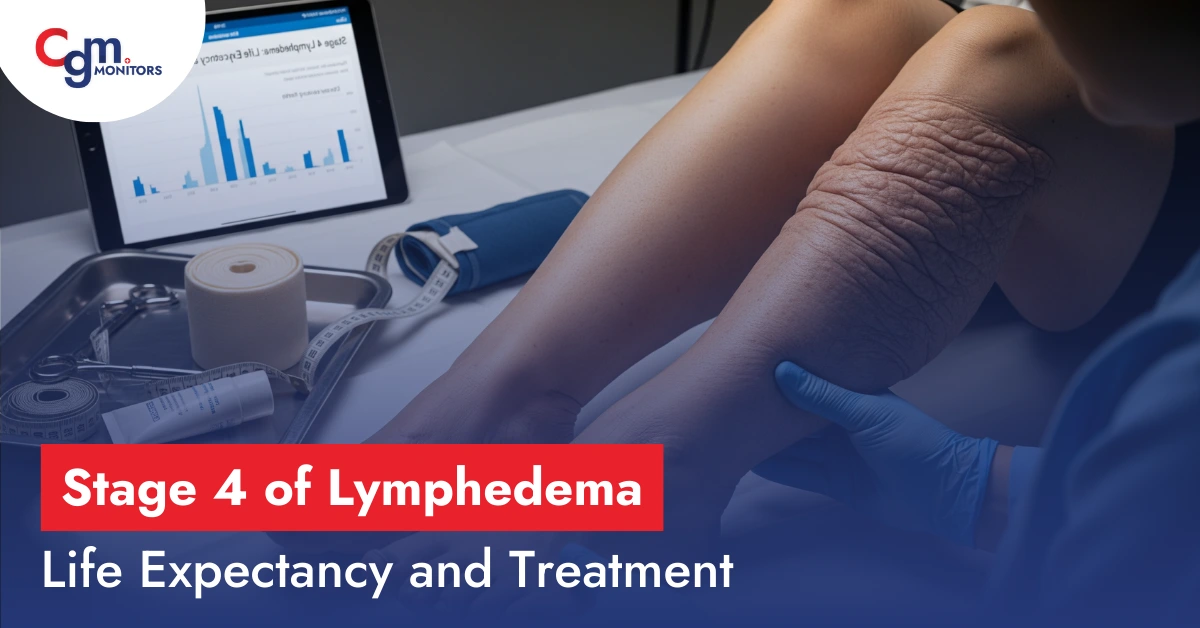
Stage 4 lymphedema is the most advanced and severe form of lymphatic swelling, medically part of Stage 3. While it brings serious physical and emotional challenges, life expectancy is not usually reduced with proper management. Consistent treatment, infection prevention, and supportive care allow people to maintain mobility and quality of life.
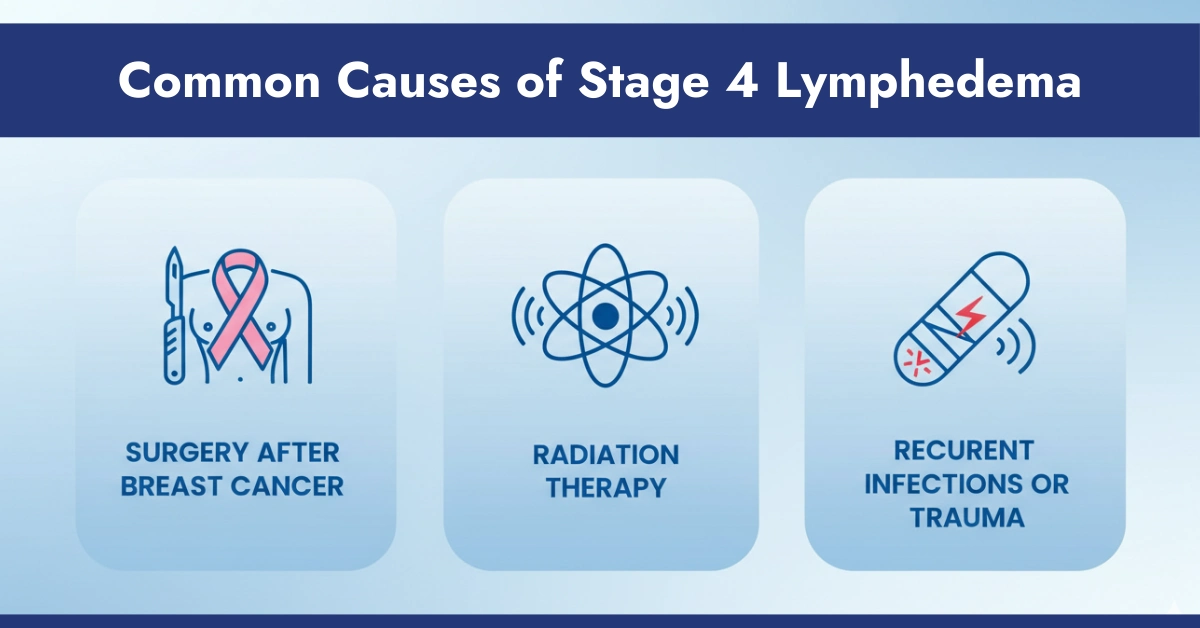
Common Causes of Stage 4 Lymphedema:
Key triggers include:
- Surgery, such as a mastectomy, leading to lymphedema after breast cancer.
- Radiation therapy, which scars lymphatic vessels.
- Recurrent infections or trauma.
Obesity can exacerbate it, linking to conditions like diabetes. Using a regular CGM tool that is available on the CGM monitors to monitor your glucose daily
Areas of the Body Affected in Lymphedema
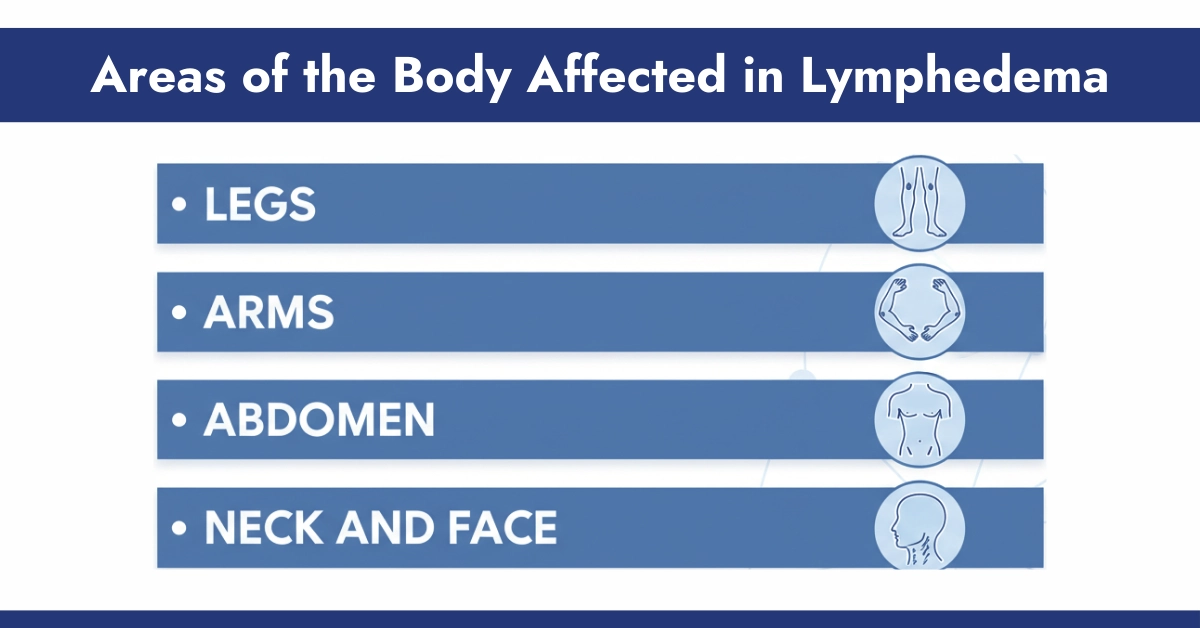
Legs: The most commonly affected area, lymphedema in the legs can cause significant swelling, discomfort, and may severely impact mobility and daily activities.
Arms: Frequently develops after breast cancer surgery or radiation therapy, leading to arm swelling, heaviness, and reduced range of motion.
Abdomen: Abdominal lymphedema may cause persistent swelling, tightness, and discomfort, often affecting posture and overall quality of life.
Neck and Face: Although rare, lymphedema in these areas is serious and can lead to noticeable swelling that may interfere with breathing, swallowing, or speech.
Common Symptoms and Complications in Stage 4 Lymphedema:
Recognizing signs early prevents escalation. Stage 4 brings intense challenges, but awareness leads to better control.
Symptoms in Stage 4 lymphedema
- Severe swelling and heaviness of limbs
- Skin changes lymphedema with roughness and warts
- Itching and restricted movement
Leg swelling and leaking fluid a hallmarks, often worsening with heat or prolonged standing.
Complications
The common complications of stage 4 of lymphedema include:
- Cellulitis, a bacterial skin infection, occurs due to compromised skin
- Infections like cellulitis, which can spread rapidly.
- Lymphedema flare-up, sudden worsening from injury or illness.
- It reduces mobility and leads to other issues like joint problems
The Cleveland Clinic reports that untreated advanced lymphedema significantly increases infection frequency, with some patients experiencing multiple cellulitis episodes yearly.
Daily Life Impact Living with lymphedema in the legs alters routine, like limiting standing. Emotionally, it may lead to anxiety. But following the strategies can be helpful to you. For comprehensive tips, check our guide on Lymphedema Physical Exercise: Safe Movement For Lymphatic Health.
Treatment and Management Options For Stage 4 Lymphedema
Effective management focuses on slowing progression, reducing swelling, and preventing complications.
Non-Surgical Therapies
- Complete Decongestive Therapy (CDT): gold standard including manual drainage, compression bandaging, and skincare.
- Compression garments: aid lymph flow and fluid removal.
- Physical therapy & safe movement: specialized exercise promotes lymphatic drainage (similar to what’s discussed in “Lymphedema Physical Exercise”).
- Skin care: hygiene and moisturization reduce infection risk.
- Safety Tips: Elevate limbs during rest to reduce pressure, and wear protective clothing outdoors.
Incorporating devices like the SC-2004-DL Bio Compression System can enhance at-home management by providing sequential compression.
Stage 4 Lymphedema Life Expectancy Explained
Advanced lymphedema does not inherently reduce life expectancy when well-managed, but complications like severe infections, chronic wounds, and rare cancers significantly affect overall health outcomes. Most individuals can live many years with proper treatment.
High-Risk Scenarios
- Chronic infections increase morbidity and may require hospitalization.
- Lymphangiosarcoma: less than 10% survival at 5 years among those with this complication, underscoring the importance of prevention and early treatment.
Maximizing Quality of Life
Optimal outcomes involve:
- Consistent therapy and compression
- Prompt treatment of infections
- Lifestyle habits that reduce risk (e.g., safe exercise, skin care)
Daily wellness and mobility activities help maintain function and reduce swelling progression, even at advanced stages.
Safety Tips & Practical Strategies
- Avoid limb injuries: cuts and bites can precipitate infections in lymphedema.
- Regular hygiene: keeps skin intact and prevents bacteria invasion.
- Weight and comorbidity control: particularly diabetes and heart disease, improves long-term outcomes.
- Seek specialist care: certified lymphedema therapists (CLT-LANA) and vascular specialists enhance treatment success.
Tip from Us: Patients often benefit from daily management technologies and therapeutic devices such as the Bio Compression System SC-4008-DL to help with persistent fluid buildup.
Conclusion
Understanding stage 4 lymphedema life expectancy requires looking beyond the swelling to the whole person. While this advanced stage presents significant challenges, it is not a death sentence. The key is early intervention for complications, unwavering commitment to daily management, and leveraging resources like Lymphedema Physical Exercise guides and nutritional planning. Remember, you are not alone in this journey.
Disclaimer
This article is for learning purposes only and is not a substitute for advice from a doctor. Always consult a qualified healthcare provider for diagnosis, treatment, and individualized care. Some images in this blog are AI-generated and are used only for illustration.




Write a comment
Your email address will not be published. All fields are required