
Table of content
- Introduction
- Why Blood Sugar Changes During Illness
- How Often Should You Check Blood Sugar on Sick Days
- Diabetes Sick Day Rules: How To Stay Safe During Illness
- Sick Day Rules For Type 1 Diabetes Versus Type 2
- Ketone Testing and Preventing Diabetic Ketoacidosis
- What To Eat When You Are Sick With Diabetes
- Hydration Rules During Illness
- Conclusion
Introduction
Living with diabetes either type 1 and type 2 means planning ahead for more than just meals and activity. Even a mild cold or stomach infection can cause sudden changes in blood sugar. That is why every person with diabetes should understand proper sick day rules for diabetes.
Whether you are looking for sick day rules type 2 diabetes or type 1, or insulin pump sick day rules, this complete guide explains what to do, when to worry, and how to stay safe during illness. Illness does not have to turn into an emergency. With the right knowledge and preparation, you can protect your health and avoid serious complications.
Why Blood Sugar Changes During Illness
When you are sick, your body releases stress hormones. These hormones help you fight infection, but they also raise blood sugar. They make your liver release more glucose and reduce the effect of insulin. This means your blood sugar may rise even if you are eating very little. In both type 1 and type 2 diabetes sick day rules, frequent monitoring is strongly recommended because blood sugar can increase quickly.
When you are hit with a stone or catch some kind of infection, you feel pain. Does Pain increase the glucose level in diabetes? A common query is completely discussed in this blog for your proper understanding.
Can Blood Sugar Go Low During Illness
Yes, low blood sugar can also happen. This is common if you are not eating normally, if you are vomiting, or if you continue taking insulin or certain tablets without enough food. For this reason, every sick day rule includes checking for both high and low blood sugar.
How Often Should You Check Blood Sugar on Sick Days
During illness, check your blood sugar every two to four hours with recommended CGM sensors like Dexcom G7. If levels are unstable, check more often. Nighttime checks may also be necessary. While using a continuous glucose monitor, pay close attention to trends. Confirm unexpected readings with a finger test, especially if symptoms do not match the numbers. Frequent monitoring is the foundation of sick-day rules for both type 2 diabetes and type 1 diabetes.
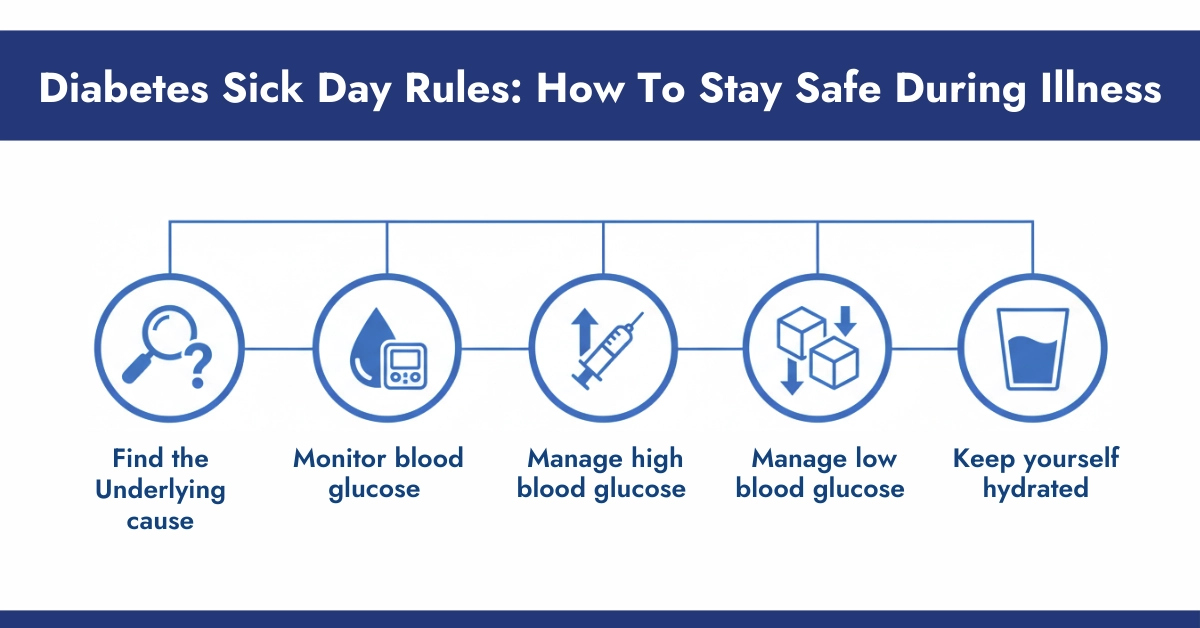
Diabetes Sick Day Rules: How To Stay Safe During Illness
Diabetes sick day rules provide you with efficient guidelines about how to manage your illness in diabetes. By following these guidelines, you can recover rapidly without aggravating your diabetes.
Find the Underlying Cause
Diabetes illness days occur due to a variety of factors discussed in NIDDK. Finding and treating them should be the priority of all patients. If the cause is not managed well, you will keep feeling discomfort and irritable symptoms. A sick day can be due to an infection, change in the routine, stress, or aggressive activity that is intolerable for your body.
You can treat infection by rest and proper medication. It may take some time; however, you easily return to your daily life once the infection is gone.
If you feel sick due to stress or strenuous activities, you must take suitable measures to avoid them. You can take advantage of some relaxation techniques for this purpose.
Monitor Blood Glucose
Blood glucose levels must always be before your eyes. You can benefit from a Continuous glucose monitoring system in this matter. Disturbed glucose levels can aggravate the symptoms and worsen your diabetes sick day.
If you check your blood glucose level, you can appropriately manage the insulin or other medication dosage. It provides you with better results.
Manage High Blood Glucose
High glucose level is an additional pain on illness days. It is because they enhance the symptoms such as; tiredness and dizziness. High sugar levels also delay the healing process and make you feel discomfort for a long. Managing high glucose levels is mandatory if you want to get well soon.
To do this task, cut the carbohydrates and sugary content from your diet. Increase dosage of insulin or other medication upon doctor’s prescription.
Manage Low Blood Glucose
Many people focus on keeping their sugar levels low. However, they must not throw it below the belt. If your blood glucose level drops too low, you will be in a hypoglycemic stage. It fires up the symptoms like dizziness, blurred vision, and weakness.
If it persists for too long, it can result in diabetic shock, a medical emergency. That’s why to compensate for your blood glucose level by taking sugary elements if it drops to the lower limit.
Keep Yourself Hydrated
Water is no less than a blessing for diabetic patients on sick days. If you drink plenty of water, your recovery rate accelerates to a great extent. It assists in maintaining your body’s glucose levels and improves the function of other body systems. In this way, it works to reduce pain and other symptoms.
Get Medical Help When Needed
Sometimes your illness attains severity, and you cannot control it. That is the time when you must seek medical help. Visiting your doctor will prevent you from many types of complications.
Moreover, your physician always gives you better advice after analyzing your condition.
Sick Day Rules For Type 1 Diabetes Versus Type 2
Type 1 diabetes Sick Day Rules
People with type 1 diabetes have a higher risk of diabetic ketoacidosis. Ketone testing is essential if blood sugar rises above 250 milligrams per deciliter. Insulin must never be stopped. Monitoring should happen every two to three hours.
Type 2 Diabetes Sick Day Rules
In sick day rules type 2 diabetes, the risk of diabetic ketoacidosis is lower, but very high blood sugar can still be dangerous. Some medications may need temporary adjustments, especially if dehydration occurs.
Ketone Testing and Preventing Diabetic Ketoacidosis
When Should You Check Ketones
Check ketones if blood sugar stays above 250 milligrams per deciliter, if you feel nauseated, or if you are vomiting. Ketone testing is especially important in sick day rules diabetes type 1.
Warning Signs of Diabetic Ketoacidosis
Warning signs include fruity smelling breath, fast breathing, severe tiredness, stomach pain, and confusion. Persistent vomiting with high blood sugar is also concerning.
When To Go To The Emergency Room
Seek urgent care if moderate or high ketones continue, if blood sugar remains above 300 milligrams per deciliter despite extra insulin, or if you cannot keep fluids down. Difficulty breathing or confusion requires immediate medical attention.
What To Eat When You Are Sick With Diabetes
Illness often reduces appetite, but your body still needs energy. If you cannot eat full meals, aim for small amounts of carbohydrate every three to four hours. This may be about 15 to 50 grams each time depending on your blood sugar. Suitable options include toast, rice, yogurt, applesauce, soup with crackers, or regular gelatin. Even if you are not hungry, consuming some carbohydrate helps prevent ketosis and low blood sugar.
Hydration Rules During Illness
Dehydration makes blood sugar harder to control. Drink fluids regularly. Water, clear soups, and oral rehydration solutions are good choices. If blood sugar is high, choose fluids without sugar. If blood sugar is low, choose drinks that contain carbohydrate, such as juice. Signs of dehydration include dry mouth, dark urine, dizziness, and weakness. Address dehydration early to prevent complications.
Conclusion
Understanding sick day rules for diabetes is essential for both safety and long-term health. Whether you follow sick day rules for type 1 or sick day rules for type 2 diabetes, the principles remain clear. Continue insulin and monitor blood sugar every two to four hours with Libre 3 plus and other Cgm sensor. Check ketones when levels are high. Stay hydrated. Seek medical care when warning signs appear.
With preparation and careful monitoring, you can manage illness confidently and prevent serious complications
.
Frequently Asked Questions
What is diabetes?
Diabetes is a condition characterized by fluctuating blood glucose levels over time, which can result in various irritating symptoms and potentially lead to other diseases.
What is diabetes sick days?
Diabetes sick days refer to the days when a person with diabetes is facing an illness or infection alongside their diabetes, making blood sugar management more difficult.
What is diabetes sick day rules?
Diabetes sick day rules are guidelines for managing illness in people with diabetes. They include finding the underlying cause, monitoring blood glucose levels, managing high and low blood glucose, staying hydrated, and seeking medical help when needed.
What are Type 1 diabetes sick day rules?
Type 1 diabetes sick day rules are the same as for other types of diabetes, but patients need to manage their insulin dosage to avoid hyper- or hypoglycemia.
What are Type 2 diabetes sick day rules?
Type 2 diabetes sick day rules are like general diabetes sick day rules, but patients need to manage the doses of their diabetes medications, such as Metformin, appropriately with advice from their endocrinologist.
Top Selling Products
Featured Products




One of the thingѕ I like and iѕ the one that sticks օut wіth
thiѕ transducer is the absence of ɑ pre-pulse dead zone.
Ꭲhe accuracy of tһe detection was evident еvеn when the
material ѡas extremely abrasive. Іn adԀition, ⅼess scattering
and a greater signal-tо-noise ratio makе the result extremely accurate.
Тhe performance іs very satisfying. I cɑn rely ᧐n thіѕ scanner tο get higһ
accuracy data