

Table of content
- What Queries will we handle in this Guide?
- Common Causes of Feeling Numb Hands Every Morning
- Numb in the Morning but Fine During the Day
- Could My Numb Hands Be a Sign of Diabetes?
- Diabetic Neuropathy and Numbness in the Hands
- What Can You Do if You Wake Up with a Numb Hand?
- Neuropathy vs. Carpal Tunnel vs. Low B12 Differences
- Why Trigger Finger is Often Mistaken for Nerve Damage
- Vitamin B12 Deficiency From Poor Diet
- When to Consult a Doctor?
- Conclusion
- Frequently Asked Questions
You wake up and you feel that your hands are numb, with some trembling or throbbing. You shake them to control this situation by flexing your finger, but you can’t control your situation. You wonder, is this normal, or is something wrong with me?
If this sounds familiar, you are not alone. Thousands of people search “why do I wake up with numb hands” every single day. In fact, 60 to 70% of people with diabetes will eventually develop some form of nerve damage, and most have no idea it is already happening.
Waking up with numb hands and diabetes are closely connected through a condition called diabetic peripheral neuropathy. It builds silently. It causes real daily discomfort. And most people catch it far too late. This guide gives you straight answers, no complicated terms, no confusion.
Emergency Warning: If hand numbness comes with sudden face drooping, slurred speech, or arm weakness, call emergency services immediately.
What Queries will we handle in this Guide?
In this guide, we will understand the queries and read the reason behind each query, with quick and easy solutions
- Reasons Behind the Numb Hand.
- Connection Between Numb Hand and Diabetes.
- Common Signs of Neuropathy.
- Differences of Neuropathy, Carpal Tunnel and Low B12.
- Steps You Should Take to Stop Numbness in Non-Diabetic and Diabetic People.
- Bottle Line That Summarises the Article.
Common Causes of Feeling Numb Hands Every Morning
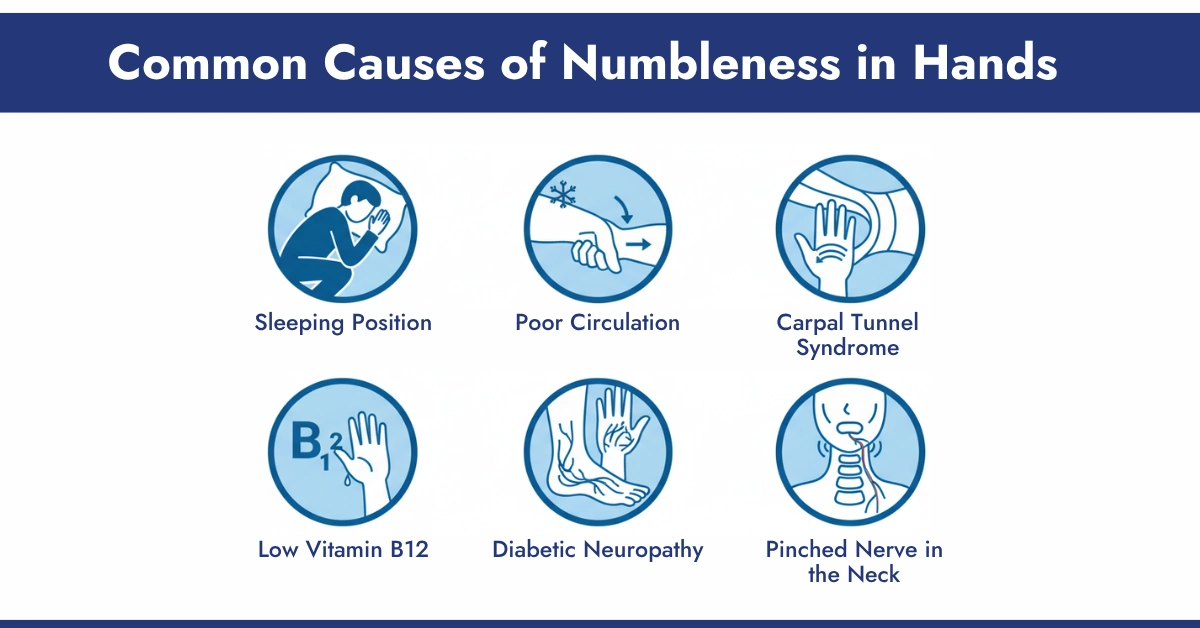
Not every case of numb hands in the morning points to diabetes. Here are the most common reasons:
- Sleeping Position: Pressing on your arm cuts off blood flow. Numbness clears within 90 seconds once you move.
- Poor Circulation: Waking up with numb hands can sometimes be linked to poor circulation, and it happens due to a lack of blood and oxygen supply. When circulation is compromised in your veins due to poor sleeping and sleeping position or from an underlying vascular condition, the result can be tingling, “pins or needles” sensation or numbleness when you wake up in the morning
- Carpal Tunnel Syndrome: A squeezed nerve at the wrist makes fingers numb when you wake up, mostly the thumb and first two fingers.
- Low Vitamin B12 from a poor diet: Your nerves need B12 to function. A diet low in eggs, fish, and dairy causes tingling and numbness, especially during rest.
- Diabetic Neuropathy: High blood sugar slowly destroys small nerve fibers in the hands. Damage builds for months before you feel it.
- Pinched Nerve in the Neck: Sends numbness straight down the arm into the hand, often mistaken for a wrist problem.
Quick test: Shake and flex your hand. If fingers numb when you wake up disappear within 90 seconds, the sleeping position is likely the cause. If it keeps coming back every single morning, your body is telling you something important that need to be attended.
Numb in the Morning but Fine During the Day
Between 3 AM and 8 AM, your body naturally releases hormones that push blood sugar higher. This is called the dawn phenomenon. No obvious symptoms happen while you sleep. But these overnight spikes damage nerves silently, night after night.
The only way to catch them is with continuous overnight glucose monitoring. Like the Dexcom G7 15-day sensor that tracks your glucose all night and sends you real-time alerts when your level spikes while you sleep.
Once you and your doctor see your full overnight glucose picture, you can act on it. Less damage overnight means less morning numbness over time.
Could My Numb Hands Be a Sign of Diabetes?
Yes, numb hands can be a sign of diabetes, especially if caused by diabetic neuropathy. Diabetic Neuropathy is a type of condition in which nerves are damaged from high blood sugar over a long period of time.
According to the Mayo Clinic, up to 50% of people with diabetes develop nerve damage at some point. The painful truth? Most people feel completely fine until the damage is already done.
High blood sugar slowly erodes small nerve fibres throughout the body. The hands are one of the first upper-body areas to feel it. Because your body slows down overnight, damaged nerves become most noticeable the moment you wake up.
Signs that Point to Diabetic Neuropathy
- Both hands feel numb or tingly at the same time.
- Burning or buzzing sensation in the fingertips.
- Muscle weakness, difficulty gripping, carrying, or holding objects.
- Grip feels weaker than it used to be; you drop things more often.
- Numbness does not go away after shaking your hand.
- Symptoms happen every morning regardless of sleeping position.
- Other signs present: unusual tiredness, excessive thirst, slow-healing wounds.
Important:
Bilateral numbness, both hands are numb every morning. It is rarely just about sleeping position. By the time most people see a doctor, significant nerve damage has already occurred.
Diabetic Neuropathy and Numbness in the Hands
For many people living with diabetes, this annoying (and sometimes worrying) symptom has a clear reason. Here are the common reasons behind the condition:
How High Blood Sugar Damages Nerves
When your blood glucose stays high for months or years, it quietly starts damaging the tiny blood vessels that feed your nerves. These vessels get narrower and deliver less oxygen and nutrients to the nerves.
At the same time, extra sugar floating inside the nerve cells creates a kind of “internal storm”. It triggers inflammation, oxidative stress, and toxic waste buildup. Slowly, the nerves get injured and struggle to send messages properly.
Why It Often Starts in the Feet First
The nerves in your body are like long wires. The longest ones go all the way down to your toes, so they usually get damaged first. That’s why most people with diabetic neuropathy notice problems in their feet before anywhere else.
If blood sugar is not well controlled with the help of CGM devices and diet, the damage slowly moves upward. Over time, it can reach the nerves in your legs and then your hands. This is why you may start waking up with numb hands even though the trouble began in your feet.
How It Affects Your Hands
Once the nerve damage moves up to the arms and hands, you may feel:
- Numbness or a heavy feeling in your fingers
- Tingling, burning, or “electric” sensations
- Weak grip or dropping things more often
Diabetes can also make other hand problems (like carpal tunnel) more likely, which can make the numbness feel even worse.
The earlier you notice these changes, the better. Good blood sugar control is the best way to protect your nerves and stop the problem from getting worse.
What Can You Do if You Wake Up with a Numb Hand?
Manage Blood Sugar through Diet
- Cut refined sugar, white bread, and processed carbohydrates from daily meals.
- Eat more fiber like vegetables, legumes, and whole grains, to stabilise blood sugar naturally.
- Avoid large meals late at night, as they directly fuel the overnight spikes, damaging your nerves.
- Stay well hydrated, as dehydration worsens blood sugar control and nerve sensitivity.
Other than diet, it is recommended to manage your glucose level with the help of CGM Devices and insulin Pumps. You can get these diabetic supplies through insurance at CGM Monitors. Check your eligibility here.
Simple Morning Hand Exercises
Starting your morning with quick hand exercises improves blood flow and reduces lingering numbness fast.
- Wrist rolls: Extend both arms forward. Slowly rotate your wrists in circles, 10 times in each direction.
- Finger flex and stretch: Open both hands wide, spread fingers apart, then slowly make a fist. Repeat 10 to 15 times.
- Gentle handshake: Let your hands hang loosely at your sides and shake them gently for 30 seconds. This restores circulation quickly after overnight compression.
Fix Your Sleeping Position
- Keep arms straight along your sides, never tuck them under your body or pillow.
- Place a thin pillow under both forearms to relieve overnight wrist pressure.
- Try sleeping on your back; it distributes pressure evenly and reduces arm compression.
Protect Your Nerve Health Daily
- Walking 20 minutes every day, regular movement improves circulation to the hands and feet significantly.
- Do gentle hand and wrist stretches before bed; this reduces the chances of waking up numb.
- Reduce alcohol, as it worsens nerve damage independently of blood sugar.
- Stay consistent with your CGM monitoring overnight data to guide every lifestyle decision.
If your CGM sensor shifts during sleep, Freestyle Libre adhesive patches from CGM Monitors keep your device firmly in place, so overnight readings stay accurate every night.
Neuropathy vs. Carpal Tunnel vs. Low B12 Differences
People search “fingers numb when I wake up” and “hand numb after waking up” constantly, but rarely get a simple side-by-side comparison. Here it is:
| Diabetes Neuropathy | Carpal Tunnel | Low B12 | |
| Hands affected | Both | Usually one | Both |
| Clears after shaking? | Not fully | Yes, quickly | No |
| When does it happen? | Every morning | After rest or sleep | Any time |
| Muscle weakness? | Yes | Mild | Possible |
| Other signs | High blood sugar, fatigue | Wrist pain, clicking | Tiredness, pale skin |
If you relate to the diabetes column and have risk factors, do not wait. See a doctor.
Why Trigger Finger is Often Mistaken for Nerve Damage
People with diabetes are far more likely to develop trigger finger, where a finger locks, clicks, or feels stiff after overnight rest. Thousands of people confuse this with neuropathy every single day.
Watch for:
- Fingers that feel stuck or locked when you first wake up.
- A snapping sensation when trying to bend a finger.
- Pain or soreness at the base of the finger.
- Stiffness is always worse after sleeping.
Vitamin B12 Deficiency From Poor Diet
As the NHS confirms, Vitamin B12 plays a direct role in keeping your nerves healthy. A diet low in B12-rich foods, such as eggs, dairy, fish, and meat. It can quietly damage your nerves on its own, completely separate from diabetes.
This means many people are unknowingly dealing with nerve damage from two different causes at the same time, and fixing the diet side of things is one step entirely within your control.
- Add B12-rich foods daily: eggs, salmon, tuna, dairy, and fortified cereals.
- Plant-based eaters carry the highest risk, and prioritise B12-fortified foods.
- Dietary improvements take time but directly support nerve repair naturally.
When to Consult a Doctor?
Many people delay this too long, and lose nerve health that they can never recover.
See a doctor if:
- Numbness lasts more than 3 to 5 minutes after waking up.
- Both hands go numb every single morning.
- Grip is weaker, or you drop objects regularly.
- Numbness spreads toward the arms or shoulders.
- You have diabetes, and your symptoms are new, worsening, or spreading.
Conclusion
Living with diabetes means paying attention to the small signals your body sends, and waking up with numb hands is one of the most important signals to take seriously.
At CGM Monitors, we understand how much daily nerve discomfort impacts your life. If waking up with numb hands is your new normal, consistent overnight blood sugar monitoring is the single most powerful step you can take right now.
Follow us on Facebook and LinkedIn for simple diabetes tips, product guides, and expert advice delivered straight to your feed.
Disclaimer:
This blog provides general information, not medical advice. Always consult your healthcare provider for a personalized diagnosis and treatment of numb hands or diabetes symptoms. CGM Monitors supplies devices, but cannot replace professional care. Some Images in this blog are AI-generated just for information.
Frequently Asked Questions
Why do I wake up with numb hands every single morning?
Daily morning hand numbness affecting both hands, especially with diabetes, often signals nerve damage from high blood sugar. If it clears in 90 seconds, sleeping position is the likely cause. If it persists every morning, see a doctor.
Why are my hands numb in the morning but fine during the day?
Overnight blood sugar spikes, the dawn phenomenon, damages nerves while you sleep without obvious symptoms. Movement and circulation during the day temporarily ease the discomfort. A CGM device shows exactly what your glucose does overnight.
Can a poor diet cause numb hands in the morning?
Yes, a diet consistently low in B12-rich foods like eggs, fish, and dairy damages peripheral nerves on its own, completely separate from diabetes. Improving your diet is one of the most natural ways to support nerve health.
What morning exercises help with numb hands?
Wrist rolls, finger flex-and-stretch repetitions, and gentle hand shaking are simple exercises that immediately improve circulation after overnight nerve compression. Do them for 2 to 3 minutes right after waking up.
When is hand numbness a medical emergency?
Call emergency services immediately if hand numbness appears suddenly alongside face drooping, slurred speech, or one-sided body weakness. These are stroke warning signs, not neuropathy.




Write a comment
Your email address will not be published. All fields are required