
Table of content
- Forms of Beetroot Consumption for Diabetic
- Beetroot Capsules Lower or Treat Blood Sugar?
- Beetroot Capsules and Diabetes: Common Queries
- Best Form of Beetroot
- Historical Uses of Beetroot
- Benefits of Beetroot Capsules for Diabetics
- Managing Diabetes through Beetroot and Lifestyle Modifications
- Conclusion
- Frequently Asked Questions
Beetroot Capsule contains 87% water, 8% of carbs, and 2 – 3% of fiber, beetroot is packed with essential nutrients, making it a powerful addition to any diet. It is rich in fiber, folate (Vitamin B9), manganese, potassium, iron, and vitamin C. One of its most notable components is dietary nitrates, which convert into nitric oxide, a compound known to improve blood circulation and reduce blood pressure. Additionally, beetroot contains betalains—antioxidants that provide anti-inflammatory properties and may benefit metabolic health.
Here we have discussed different forms of this root vegetable, including Raw Beetroot, Cooked Beetroot, Beetroot Powder, and Beetroot Capsules as well.
Forms of Beetroot Consumption for Diabetic
Beetroot is available in multiple forms, allowing for flexible consumption based on dietary preferences and convenience:
- Raw Beetroot: Freshly sliced or juiced, providing maximum nutrient retention.
- Cooked Beetroot: Boiled, roasted, or steamed to enhance taste while preserving essential nutrients.
- Beetroot Powder: A dried and ground form, often used in smoothies or drinks.
- Beetroot Capsules: A convenient supplement form that provides concentrated beetroot extract without the need for preparation.
Beetroot Capsules Lower or Treat Blood Sugar?
While beetroot cannot directly cure diabetes, its nutrients may help in prevention and management. Beetroot’s dietary nitrates help improve insulin sensitivity by increasing nitric oxide production, which enhances blood flow and glucose uptake in muscles. Additionally, its antioxidant properties reduce oxidative stress, a key factor in diabetes progression. Studies suggest that beetroot consumption may help regulate blood sugar levels, but it should not replace diabetes medications. Instead, it can complement a healthy lifestyle by improving vascular health and reducing inflammation—both of which are critical for people with diabetes. Here are the common queries that you need to know.
Does Beetroot Improve HbA1c?
There is no strong evidence yet that beetroot capsules alone significantly reduce HbA1c levels over time. Larger clinical trials are still needed, and the FDA is studying the consequences. Current research shows:
- Short-term improvements in post-meal glucose
- Possible reduction in insulin resistance
- Limited long-term data on HbA1c
Does It Increase Insulin Sensitivity?
Yes truely, this is one of the more promising areas.
- Beetroot’s nitric oxide production may:
- Improve endothelial function
- Reduce inflammation
- Enhance insulin signaling pathways
Improved insulin sensitivity can help stabilise blood sugar in type 2 diabetes, especially when combined with diet and exercise.
Did you know?
Studies suggest that beetroot can help improve physical performance and lower blood pressure up to 3 – 10 mg Hg in just a few hours after its consumption.
Beetroot Capsules and Diabetes: Common Queries
Safety is the top concern for anyone living with diabetes type 1 and type 2.
Can Beetroot Cause Hypoglycemia?
Beetroot alone is unlikely to cause dangerous hypoglycemia. However, when combined with:
- Insulin
- Sulfonylureas
- Metformin (in some cases)
It may enhance glucose-lowering effects. Monitoring is essential when starting any supplement.
Safe for Type 1 vs Type 2 Diabetes?
- Type 2 diabetes: May provide supportive metabolic benefits.
- Type 1 diabetes: Benefits are mostly cardiovascular, not glucose control.
It does not replace insulin in type 1 diabetes.
Kidney Related Concern
This is important.
Beetroot contains oxalates, which may:
- Increase kidney stone risk.
- Be problematic in advanced kidney disease.
Diabetics with diabetic nephropathy should consult a nephrologist before using beetroot supplements.
Best Form of Beetroot
The potency of beetroot lies in its nutrient content and how quickly it can be absorbed. Although raw beetroot maintains maximum nutritional value, beetroot capsules deliver a dose of active substances without the natural sugars present in fresh or juiced beetroot. For the convenience of intake and controlled absorption, beetroot capsules are an effective method of including its benefits in daily life.
Historical Uses of Beetroot
Beetroot has been employed since ancient times for therapeutic and culinary use. Beetroot was eaten by the Romans and Greeks for digestive purposes and blood cleansing. Beetroot was used in traditional medicine to treat anaemia, enhance circulation, and support liver detoxification. Beetroot natural pigments were also used as food colouring and dyes. (Source: Seasonal Coeliac)
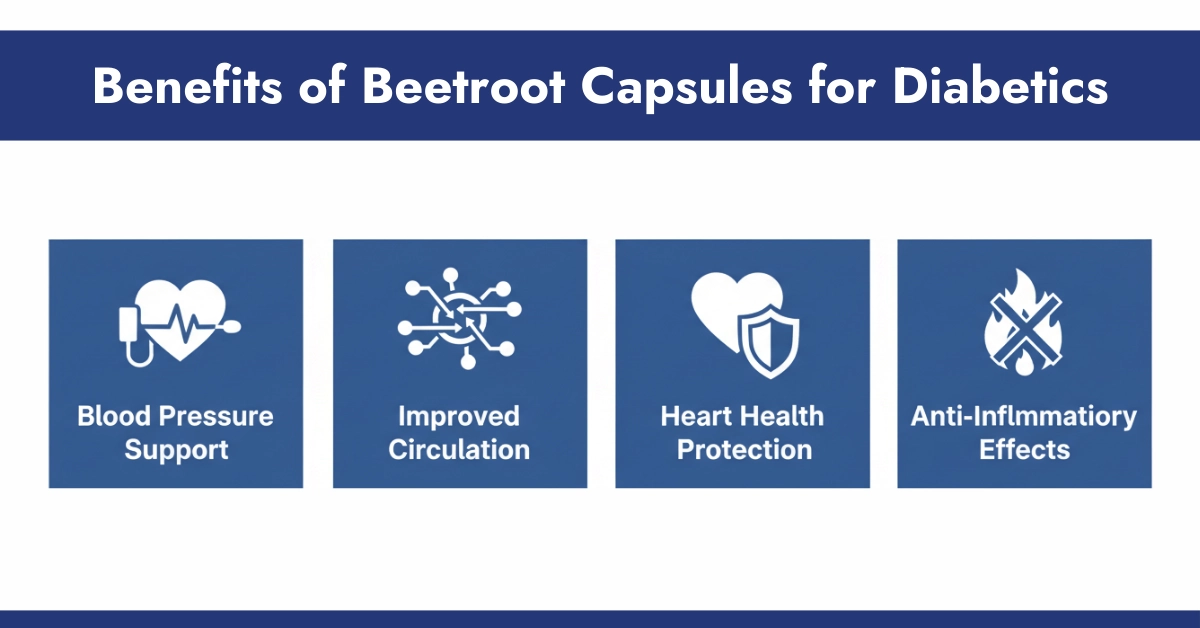
Benefits of Beetroot Capsules for Diabetics
Many diabetics search for supplements for cardiovascular protection, and this is where beetroot is helpful. Here are the common benefits of using beetroot
1. Blood Pressure Support
High blood pressure is common in diabetes. Beetroot nitrates relax blood vessels, lower systolic and diastolic blood pressure and improve endothelial health.
2. Improved Circulation
Poor circulation can lead to cold feet, slow wound healing and increased risk of ulcers. Nitric oxide in the beetroot improves microvascular blood flow, which may help reduce complications.
3. Heart Health Protection
Diabetics are at higher risk of heart disease, stroke and atherosclerosis. Beetroot antioxidants reduce oxidative stress and inflammation, both are the major contributors to cardiovascular damage.
4. Anti-Inflammatory Effects
Chronic inflammation worsens insulin resistance. Beetroot’s betalains reduce inflammatory markers and support metabolic function.
If you are concerned about eating beetroot capsules in raw form and do not know how it may impact blood sugar. It is recommended to use the Dexcom G7 Cgm sensor (Only for adults) to check blood sugar level before and after eating this supplement. By using you can fully maintain your blood sugar accordingly.
Managing Diabetes through Beetroot and Lifestyle Modifications
Though beetroot and other vegetables are helpful in diabetes prevention and management, diet habits are equally important for efficient control of diabetes. The factors which are vital include:
- Blood Sugar Monitoring: It is important to monitor blood sugar. Recent technologies such as Continuous Glucose Monitors (CGMs) make it simpler than ever. A CGM is a tiny sensor implanted under the skin, giving 24/7 glucose levels and assisting diabetics in making smart food and lifestyle choices.
- Daily Exercise: Daily exercise, like 30 minutes of walking, enhances insulin sensitivity and keeps blood sugar levels healthy.
- Balanced Diet: Consuming low-glycemic foods, high-fiber vegetables, and lean protein while restricting too much sugar helps avoid spikes in blood sugar levels.
Conclusion
Beetroot capsules offer an easy means to achieve the health benefits of beetroot, especially for diabetics. Although they are not a cure-all, their effect on insulin sensitivity, blood circulation, and inflammation makes beetroot capsules a valuable supplement. Nevertheless, diabetes management is only successful with a balanced strategy consisting of frequent blood glucose checks (easily possible with CGM sensors), physical exercise, and a well-balanced diet.
Frequently Asked Questions
How do beetroot capsules affect blood sugar levels in people with type 2 diabetes?
Beetroot capsules, containing nitrates and antioxidants, may help modestly lower post-meal blood sugar spikes and improve insulin sensitivity in some people with type 2 diabetes. Effects vary by individual, with certain studies showing small reductions in fasting glucose while others report little change.
How should individuals with diabetes take beetroot capsules safely?
Individuals with diabetes should start with the label-recommended dose, take them consistently, and check blood sugar regularly to track any impact. Combine with prescribed medications, a balanced diet, and routine medical follow-ups for safety. Avoid self-adjusting without professional guidance.
How do beetroot capsules interact with common diabetes medications?
Beetroot capsules have no major direct interactions with common diabetes drugs like metformin, but their blood-pressure-lowering nitrates may enhance effects of hypertension medications. This could cause dizziness if blood pressure drops too low. Inform your healthcare provider about all supplements to ensure safe monitoring.
What are the potential benefits of beetroot capsules for individuals with diabetes?
These capsules may support better blood flow, reduce oxidative stress, and help stabilize glucose metabolism, potentially lowering risks of diabetes complications like heart issues. They provide natural antioxidants that complement standard care without replacing it. Benefits are most noticeable when paired with healthy lifestyle habits.
What scientific evidence supports the use of beetroot capsules for diabetes management?
Scientific studies on beetroot juice or raw forms show potential drops in fasting blood sugar and HbA1c in type 2 diabetes patients over weeks of use, though capsule-specific trials are limited and results mixed. Nitrates appear key for benefits, but more research is needed. View them as supportive rather than proven primary therapy.
What is the recommended dosage of beetroot capsules for diabetics?
No diabetes-specific dosage exists; typical capsule amounts range from 500-1000 mg daily, often providing 300-500 mg nitrates for potential effects. Begin low, follow product labels, and adjust only under medical supervision based on your response.
Why might beetroot capsules be considered a complementary therapy for diabetes?
They offer natural nitrates that boost nitric oxide for vascular health and antioxidants that fight inflammation, making them a gentle add-on to diet, exercise, and medications. This complementary role supports overall wellness without interfering with core treatments. Many find them helpful for holistic blood sugar and blood pressure management.
When is the best time of day to take beetroot capsules for optimal effect on blood glucose?
Morning intake on an empty stomach or with breakfast may aid absorption and steady glucose control throughout the day, based on related nitrate research. Timing with meals can also help blunt post-meal rises. Consistency in your routine matters most for steady benefits.
Are there any specific dietary considerations when taking beetroot capsules for diabetes?
Keep overall carb intake in check, as beetroot has natural sugars, and pair capsules with high-fiber meals to slow absorption. Stay hydrated and avoid over-reliance on any single food. Monitor portions to fit your daily diabetes meal plan without spikes.
Who should avoid taking beetroot capsules, especially if they have diabetes?
People with kidney stones, low blood pressure, kidney disease, beet allergies, or iron overload conditions should avoid them. Diabetics on blood-pressure drugs or with unstable glucose need doctor approval first. Pregnant individuals or those with certain gut issues may also require caution.
Are organic beetroot capsules better for diabetics than non-organic options?
Organic versions may have fewer pesticides for overall purity, but no strong evidence shows they outperform non-organic for blood sugar effects if both are high-quality. Focus on reputable brands with tested nitrate content instead. Either option can work well when chosen carefully.
Disclaimer: Always speak with a doctor before adding new supplements to your regimen, particularly if you have diabetes and take medication.





Write a comment
Your email address will not be published. All fields are required