
Table of content
Sometimes, a Libre sensor just isn’t the right fit—and that’s okay. While it works well for many people, there are situations where it can cause more confusion than clarity. If someone needs constant automatic alerts for low blood sugar, struggles to scan the sensor regularly, has very sensitive skin, or deals with health conditions that affect reading accuracy. The experience may feel frustrating rather than helpful. In these cases, the smarter move is to pause, understand the limitation, and look for a glucose monitoring option that better matches daily needs and safety requirements. Not everyone uses sensors because of certain FDA restrictions.
In this guide, we will explore safety guidelines for using a Libre sensor, who should not use a Libre sensor, and what are the alternatives to Libre sensors.
General Safety Guidelines for Using a Libre Sensor
Libre sensors are designed to be easy to use. Everyone should follow basic Libre sensor safety precautions:
- Read all the instructions that are available with the sensor.
- Clean the site with soap and water on the back of the upper arm before placing the sensor, keeping 1 inch from the injection site.
- Don’t place a sensor on scars, moles, sweating places, or stretch marks.
- Check the proper adhesion. If it is loose, secure it again.
- Avoid high-dose vitamin C and salicylic acid.
- Remove the sensor before you go for MRI, CT, and Diathermy. Otherwise, it may affect the reading or damage the sensor completely.
Some users may experience Libre sensor side effects like mild redness, itching, or irritation where the sensor touches the skin. These are usually minor, but if irritation gets worse, remove the sensor and talk to your healthcare provider.
According to Abbott’s safety information, don’t ignore symptoms that don’t match your readings, and you can verify it with the traditional blood glucose meter.
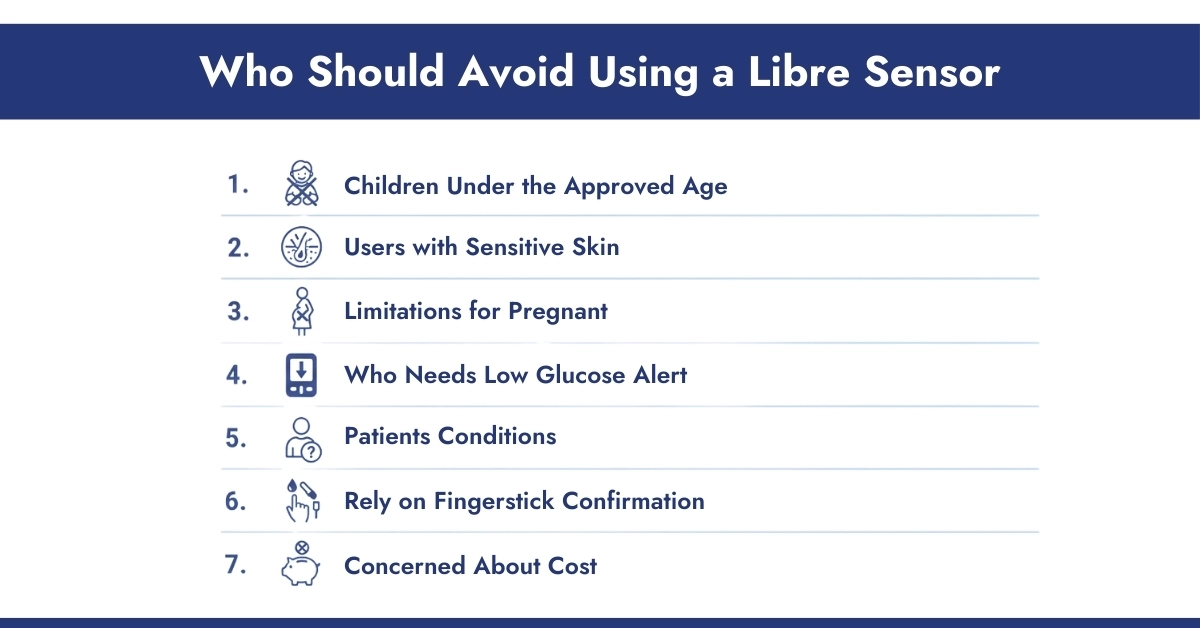
Who Should Avoid Using a Libre Sensor
Children Under the Approved Age
Most FreeStyle Libre sensors are not approved for every young child
- Libre 2 sensor = 4+
- Libre 3 sensor = 4+
- Libre 2 plus sensor = 2+
- Libre 3 plus sensor = 2+
Users with Sensitive Skin
The people who have skin allergies to medical adhesives or have very sensitive skin. The sensor patch causes reactions like rash, redness, blisters, and sometimes tears the layer of skin.
Limitations for Pregnant
Libre sensor warnings for pregnant women or breastfeeding vary by model. Because the system has not been fully evaluated in these groups.
Who Needs Low Glucose Alert
Libre sensors require scanning to view glucose levels and may not provide automatic alerts in all situations. If someone depends on instant warnings for severe hypoglycemia, another CGM like Dexcom G7 (10-day) with continuous alerts may be a safer choice.
Patients Conditions
Severe dehydration, poor blood circulation, or critical illness can impact interstitial glucose readings, increasing the risk of inaccurate results.
Rely on Fingerstick Confirmation
In situations where precise, immediate blood glucose confirmation is required, traditional blood glucose meters may still be necessary alongside or instead of a Libre sensor.
Concerned About Cost
Ongoing sensor replacement can be expensive because it needs to be replaced every 15 days. If insurance does not cover the system, the financial burden may outweigh the benefits. Check your eligibility here.
Also, those who can’t follow the proper guidelines that are on the Libre sensor safety precaution paper.
Alternatives for Those Who Cannot Use a Libre Sensor
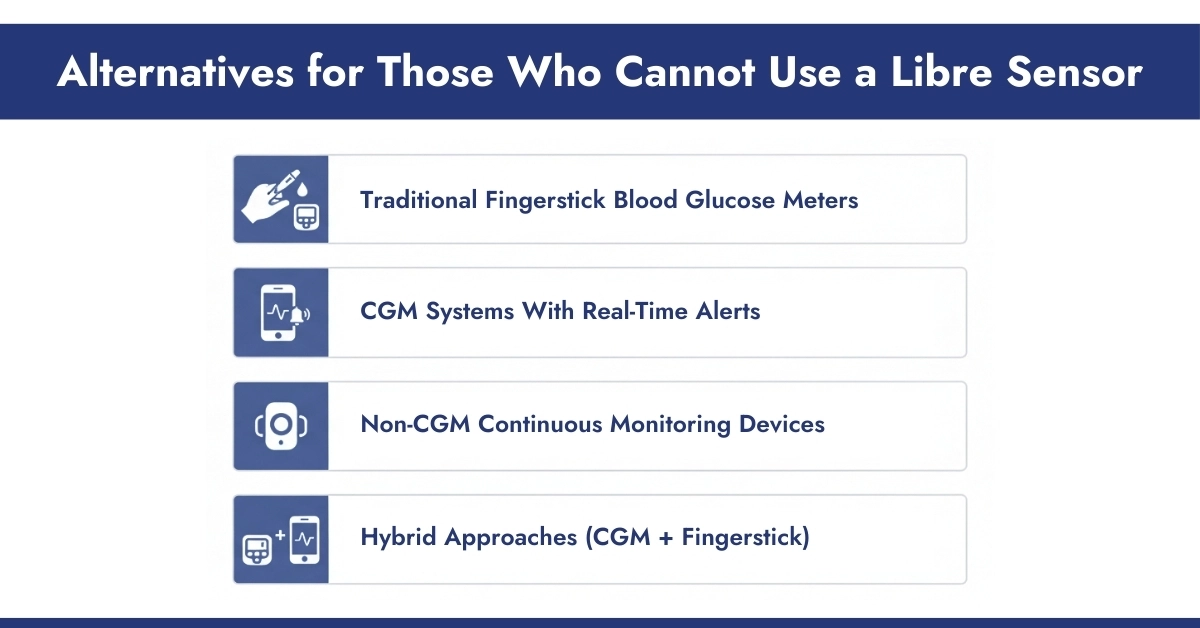
If a Libre sensor isn’t suitable, explore continuous glucose monitor alternatives like
1. Traditional Fingerstick Blood Glucose Meters
A reliable and widely used option, fingerstick meters provide direct blood glucose readings with each test. They’re simple, affordable, and don’t require wearables or scanning.
2. CGM Systems With Real-Time Alerts
Systems like Dexcom G6 and Newer G7 (15 days) and other real-time CGMs continuously transmit glucose data and automatically alert users about highs and lows. It is ideal for people who want proactive warnings without scanning.
3. Non-CGM Continuous Monitoring Devices
Certain advanced monitoring tools provide continuous glucose data with enhanced connectivity, alarms, and integration with health apps — useful if someone wants more insights without manual scanning.
4. Hybrid Approaches (CGM + Fingerstick)
Combining continuous monitoring with fingerstick verification in specific situations can offer greater accuracy and confidence in decision-making for insulin dosing or treatment changes
Advice: Discuss diabetes monitoring device precautions with your doctor to find the best fit, weighing ease, and accuracy.
Frequently Asked Question
Can everyone use a FreeStyle Libre sensor?
No, not everyone. Factors like age, medical conditions, and allergies determine suitability; always check with a healthcare provider.
Who cannot wear a Libre sensor?
Those under the approved age, on dialysis, critically ill, pregnant (for some models), or with severe skin sensitivities should avoid it.
Are there health conditions that prevent using a Libre sensor?
Yes, including dialysis, critical illness, severe dehydration, and certain implanted devices, consult a doctor for personalized advice.
What are the risks of using a Libre sensor incorrectly?
Inaccurate readings could lead to improper treatment, missed lows/highs, or skin issues. Follow guidelines to minimize risks.


Write a comment
Your email address will not be published. All fields are required