

Table of content
- Why Is Homemade Soup Better for Diabetics Than Store-Bought?
- Why Soup Can Be Both the Best and Worst Meal for Diabetes
- What Makes a Soup Diabetic-Friendly?
- A Quick Table: GI, Fiber & Carbs For Each Soup
- What Are the 10 Best Homemade Soups for Type 2 Diabetes?
- Which Soup Ingredients Should Diabetics Always Avoid?
- Can Eating Soup Every Day Help Manage Blood Sugar?
- Conclusion:
- Frequently Asked Questions
Managing type 2 diabetes through diet requires controlling how quickly carbohydrates raise blood sugar. Soup is one of the most effective meal formats for diabetes management because it combines:
- Hydration.
- Fiber-rich vegetables.
- Slow-digesting carbohydrates.
- Lean protein.
Research shows that legume-based, high-fiber soups improve post-meal glucose response and increase satiety, making them useful in diabetes-friendly diets.
This guide cuts through the confusion. You’ll find the 10 best diabetic-friendly soups, the science behind why they work, and what to avoid so every bowl you make actually supports your health.
Why Is Homemade Soup Better for Diabetics Than Store-Bought?
Most canned or processed soups are loaded with hidden sodium, added sugar, and refined starches, all of which can spike blood sugar fast. A single can of commercial tomato soup, for example, can contain over 800mg of sodium and added corn syrup.
Homemade soup gives you complete control over:
- Ingredients and portion sizes.
- Sodium levels (a real concern for diabetic heart health).
- Glycemic load of every bowl.
Cooking at home gives you full control over glycemic load, sodium levels, and fiber content, the three variables that determine whether a soup helps or harms blood sugar management.
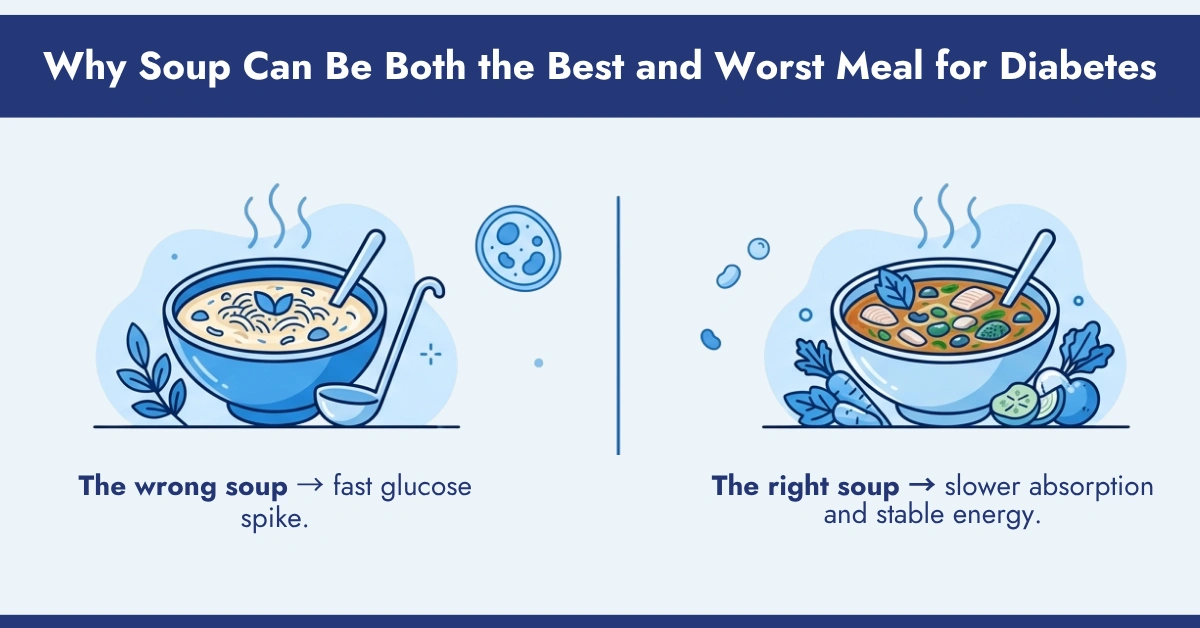
Why Soup Can Be Both the Best and Worst Meal for Diabetes
Soup is unique because it digests faster than solid food. This means:
- The wrong soup → fast glucose spike.
- The right soup → slower absorption and stable energy.
Studies show that fiber-rich soups with legumes reduce post-meal glucose and insulin response significantly due to slower carbohydrate absorption and improved satiety.
However, many “healthy soups” fail because they contain:
- White pasta.
- Potatoes.
- Flour thickeners.
- Hidden sugar.
- High sodium broth.
Even lentil soup can spike glucose depending on portion size and ingredients.
What Makes a Soup Diabetic-Friendly?
Not every “healthy” soup is safe for blood sugar. The key factors are fiber content, low glycemic index (GI), and protein balance.
A diabetes-friendly soup should include:
| Element | Why It Helps | Examples |
| High-fiber vegetables | Slows sugar absorption | Spinach, broccoli, kale |
| Low-GI legumes | Steady energy, no spikes | Lentils, chickpeas, black beans |
| Lean protein | Improves insulin sensitivity | Chicken, turkey, tofu |
| Whole grains (optional) | Slow-digesting carbohydrates | Barley, quinoa |
| Low-sodium broth | Supports heart health | Homemade or low-sodium stock |
Avoid:
White pasta, sugar, white rice, cream bases, and any soup that uses flour as a thickener. These are high-glycemic ingredients that work against blood sugar control.
A Quick Table: GI, Fiber & Carbs For Each Soup
| Soup | Approx. GI | Fiber/Serving | Net Carbs/Serving |
| Lentil soup | 32 | 16 g | 24 g |
| Split pea soup | 25 | 8 g | 21 g |
| Barley vegetable | 28 | 6 g | 26 g |
| Black bean soup | 30 | 15 g | 20 g |
| Broccoli & spinach | <15 | 5 g | 8 g |
| Minestrone (bean-based) | 40 | 9 g | 28 g |
| Chickpea & tomato | 33 | 7 g | 22 g |
| Chicken & vegetable | ~35 | 4 g | 12 g |
| Miso with tofu | <20 | 2 g | 6 g |
| Pumpkin (no sugar added) | 50 | 3 g | 15 g |
Values are estimates based on standard serving sizes (~1.5 cups). Individual glucose response varies.
What Are the 10 Best Homemade Soups for Type 2 Diabetes?
1. Lentil Soup (The Gold Standard)
Lentils are the most studied legume for blood glucose management. One cup of cooked lentils delivers roughly 16 g of fiber and ranks GI ≈ 32, well below the threshold for a low-GI food. Soluble fiber forms a viscous gel in the gut that physically slows carbohydrate absorption.
Quick recipe (4 servings):
- 1.5 cups red lentils, rinsed.
- 1 can diced tomatoes (no salt added).
- 1 medium onion, 3 garlic cloves, 1 tsp cumin, 1 tsp turmeric.
- 4 cups low-sodium vegetable broth.
Sauté onion and garlic, add remaining ingredients, simmer 25 minutes, and season with lemon juice.
2. Chicken and Vegetable Soup
Lean chicken provides complete protein that supports insulin sensitivity without adding significant carbohydrates. Use carrots, celery, zucchini, and spinach; skip the noodles or substitute a small amount of barley for texture without a glycemic penalty.
3. Minestrone (Bean-Based)
Cannellini beans anchor this soup’s blood sugar benefits. Beans consistently rank among the lowest-GI carbohydrate foods available. Use whole-grain pasta in a small quantity or omit it; the beans carry the dish.
4. Broccoli and Spinach Soup
Both vegetables sit near the bottom of the glycemic scale. Broccoli contains sulforaphane, a compound studied for potential insulin-sensitizing effects. Blended with low-sodium broth and a tablespoon of olive oil, this produces a creamy texture without cream.
Note: Blending vegetables raises their GI slightly compared to leaving them roughly chopped. Keep the blend partial for maximum fiber benefit.
5. Barley Vegetable Soup
Beta-glucan, the soluble fiber in barley. It is one of the few dietary compounds with strong clinical evidence for reducing post-meal blood sugar spikes. Barley’s GI of approximately 28 makes it the safest whole grain for low-glycemic soup recipes.
6. Black Bean Soup
Black beans combine high fiber (~15 g/cup) with plant-based protein and magnesium, a mineral that plays a direct role in glucose metabolism. Season with cumin, garlic, and lime — no added sugar needed.
7. Miso Soup with Tofu
Low in carbohydrates, rich in gut-supportive probiotics, and protein-dense when paired with silken tofu. Use low-sodium miso paste (under 2 tbsp per serving) to keep sodium at a safe level.
8. Tomato and Chickpea Soup
Tomatoes are low-GI and rich in lycopene, an antioxidant associated with reduced cardiovascular risk, important because people with Type 2 diabetes face elevated heart disease risk. Chickpeas add fiber and staying power.
9. Split Pea Soup
With a GI around 25 and high fiber-plus-protein content, split pea soup is one of the most blood-sugar-stable options available. It is also one of the most filling, making portion control easier.
10. Pumpkin Soup (No Sugar Added)
Pumpkin has a moderate GI in normal portions and provides fiber alongside beta-carotene. Use low-sodium broth or light coconut milk as the base. Cinnamon makes a functional addition, some studies link it to modest improvements in insulin sensitivity, though evidence remains preliminary.
Which Soup Ingredients Should Diabetics Always Avoid?
Avoid these completely:
- White potatoes in large amounts (high GI spikes).
- Cream and full-fat dairy bases (worsen insulin resistance).
- Instant noodles/white pasta.
- Sugary canned soups.
- High-sodium broth.
- Flour/cornstarch thickeners.
Can Eating Soup Every Day Help Manage Blood Sugar?
Yes, if it’s the right kind. Research consistently shows that high-fiber, low-GI meals help reduce HbA1c levels over time. Eating a nutrient-dense soup before a larger meal can also reduce overall meal glycemic load, meaning your blood sugar rises more slowly.
Two simple tricks that lower GI:
Cool and reheat your legume soups. When cooked beans and lentils are cooled and then reheated, they form resistant starch, a fiber the body digests slowly. This lowers the glycemic impact.
Add a squeeze of lemon or a splash of vinegar. Acidity slows gastric emptying and blunts the glucose response to a meal.
Every person with Type 2 diabetes responds differently to the same meal. Stress levels, activity, medication, and gut microbiome all influence blood glucose outcomes. Continuous glucose monitors (CGMs) such as FreeStyle Libre or Dexcom devices provide real-time data that shows exactly how your body responds to each soup, removing the guesswork from meal planning. Get these devices from CGM Monitors with insurance coverage.
Conclusion:
The best soup for Type 2 diabetes is not complicated to make; it just requires the right starting ingredients. Lentils, black beans, barley, non-starchy vegetables, lean protein, and low-sodium broth form the foundation of every soup on this list.
And if you want to stop guessing and start knowing exactly how your body responds to every bowl you eat, a CGM is the clearest path to that answer. Explore Abbott Freestyle Libre and Dexcom options with insurance support at CGM Monitors, with free delivery, monthly refills, and a team that handles the insurance process for you.
Your blood sugar doesn’t have to be a mystery. Start with a good soup. Then get the data that confirms it’s working.
Disclaimer:
This content is for informational purposes. It doesn’t replace medical advice. Always consult your healthcare provider or a registered dietitian before making significant changes to your diet, especially when managing Type 2 diabetes. Images shown in this content are generated by AI tools.
Frequently Asked Questions
Can you eat soup if you have diabetes?
Yes. Homemade soups made with legumes, non-starchy vegetables, and lean protein are among the most blood-sugar-friendly meals for Type 2 diabetes. Avoid cream-based, noodle-heavy, or canned versions with hidden sodium and added sugar.
Which soup is best for Type 2 diabetes?
Lentil soup ranks highest based on evidence: low GI (≈32), high soluble fiber, and documented reductions in post-meal glucose response. Black bean, split pea, and barley soups are equally strong diabetic soup recipes.
Can soup raise blood sugar?
Yes. Potato soup, cream-based soups, white-noodle soups, and flour-thickened soups can cause significant spikes. Low-glycemic soups made with legumes and fiber-rich vegetables have the opposite effect.
How do I thicken diabetic soup without flour?
Blend a portion of the soup itself, or stir in pureed white beans, lentils, or cauliflower. These methods add body and fiber rather than refined carbohydrates.
Is vegetable soup always blood sugar-friendly?
Not necessarily. Spikes still occur with large portions, fully blended textures (which digest faster), or soups missing protein and fat to slow absorption. The fiber-protein balance matters as much as the ingredients.
Is miso soup good for diabetics?
Yes, when prepared with low-sodium miso paste (under 2 tbsp per serving). It is low in carbohydrates, contains beneficial probiotics, and adding tofu provides protein that helps stabilize glucose.
Are homemade soups better than canned for diabetes?
Significantly. Homemade soups allow precise control over sodium, carbohydrates, added sugars, and thickeners. If using canned soup, the FDA defines “low sodium” as ≤140 mg per serving; use that as your benchmark.
What is the best grain to add to a diabetic soup?
Barley, with a GI of approximately 28, is the best choice. Its beta-glucan fiber has the strongest clinical support for reducing post-meal blood sugar among all commonly used grains.





Write a comment
Your email address will not be published. All fields are required