

Table of content
You ate clean with no candy, soda, or junk. But your CGM just showed a sharp spike.
This is one of the most common and most frustrating experiences for people using Continuous Glucose Monitoring (CGM). The problem is not always sugar. Some carry labels like “natural,” “whole grain,” or “sugar-free,” which can cause glucose levels to rise faster than expected.
This guide gives you the 10 foods that are confirmed blood sugar spikers, what’s actually safe to eat, and one simple meal strategy that cuts spikes without changing what you eat.
Why Does Blood Sugar Spike After Eating?
When you eat carbohydrates, your body breaks them down into glucose and releases it into your blood. Fast-digesting carbs, refined grains, added sugars, and starchy foods flood your bloodstream quickly. The real issue is not carbs alone, but how fast they absorb and whether they were paired with fiber, protein, or fat.
Two numbers worth knowing:
- Glycemic Index (GI): How fast a food raises blood sugar.
- Glycemic Load (GL): GI combined with portion size is the more practical, real-world measure.
Your CGM response is uniquely yours. A 2026 Stanford Medicine study confirmed that two people eating the exact same meal can have dramatically different glucose responses, driven by gut microbiome, genetics, and lifestyle. That’s precisely why a CGM beats any food chart.
For users actively tracking glucose trends, CGMs provide real-time feedback on how each meal impacts their body, making it easier to identify personal spike foods in daily life. You get all the latest CGM devices and patches from CGM monitors.
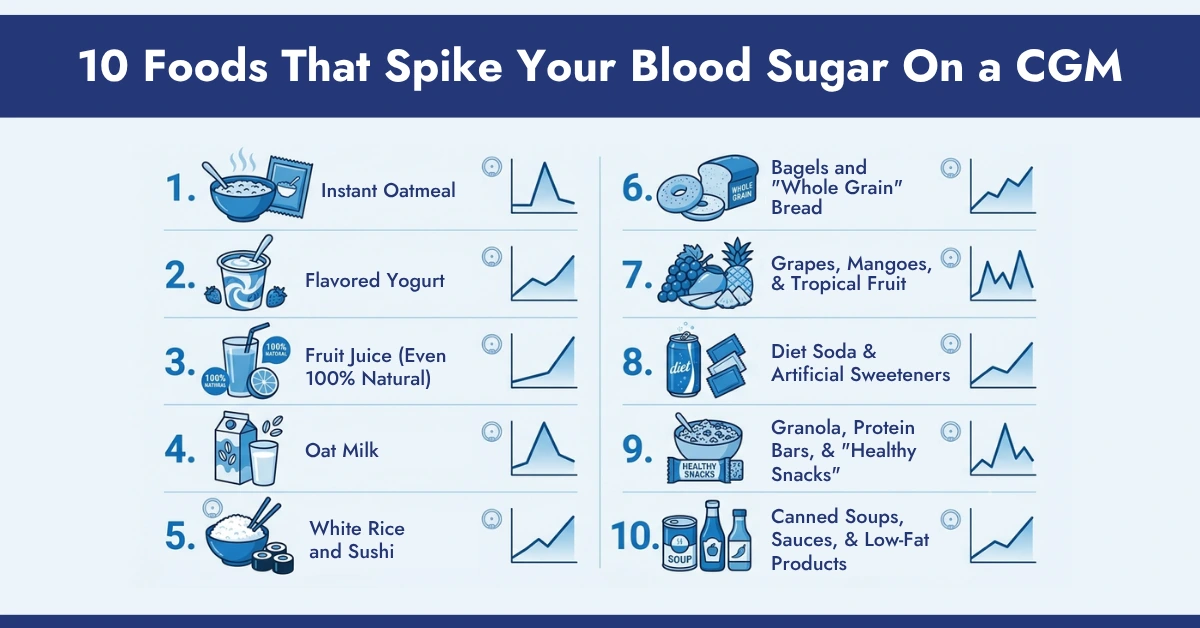
10 Foods That Spike Your Blood Sugar On a CGM
1. Instant Oatmeal
Oats have a healthy reputation, but instant oatmeal is highly processed. The oat structure is broken down during manufacturing, so your digestive system barely has to work. Result: a sharp, fast glucose rise.
The fix: Switch to steel-cut oats or whole rolled oats. Cook them longer. Add chia seeds, nut butter, or an egg on the side to slow absorption.
2. Flavored Yogurt
Plain yogurt is actually blood sugar-friendly. But flavored yogurts? Research shows they contain nearly double the sugar of unflavored versions. That “peach” or “strawberry” yogurt cup can hit 20-30 grams of sugar per serving.
The fix: Buy plain Greek yogurt and add your own fresh berries. You control the sugar.
3. Fruit Juice (Even 100% Natural)
Whole fruit has fiber that slows glucose absorption. Juice removes that fiber completely. What’s left is liquid sugar your body absorbs in minutes, as fast as regular soda on a CGM. One glass of orange juice can spike blood sugar just as sharply as a can of Coke for many people with diabetes.
Fix: Eat the whole fruit. If you want juice, dilute it 50/50 with water and pair it with protein.
4. Oat Milk
Oats are a starchy grain. Oat milk is essentially liquefied carbohydrates with the fiber stripped out. CGM data consistently show it causes a much higher glucose rise than almond or soy milk, yet it’s marketed as the healthy dairy alternative.
Fix: Unsweetened almond milk or soy milk. Neither meaningfully moves blood sugar.
5. White Rice and Sushi
People assume sushi is safe because of the fish. The fish is fine. The white rice underneath is a refined starch that digests almost instantly. According to the American Medical Association, starchy foods without any sweetness at all can raise blood glucose more than sugary foods in some people. This is exactly why sushi surprises CGM users.
Fix: At home, cook rice, refrigerate overnight, then reheat. Cold-cooked rice forms resistant starch, which digests more slowly.
6. Bagels and “Whole Grain” Bread
One average bagel contains the carbohydrates of 4-5 slices of bread. Both white and most whole-grain breads carry a high GI because refined wheat flour, even in “healthier” versions, digests fast.
Fix: Sprouted grain bread (like Ezekiel), almond flour bread, or high-fiber flax crackers. Always pair any bread with protein and fat to flatten the glucose curve.
7. Grapes, Mangoes, & Tropical Fruit
Whole fruit is always better than juice, but not all fruits behave the same on a CGM.
Grapes pack 15-20 grams of sugar per cup. Mangoes, bananas, and pineapple are similarly high glycemic. Eaten alone on an empty stomach, they spike your blood sugar.
Fix: Low-sugar berries, strawberries, raspberries, blackberries, and watermelon have roughly half the sugar. Always pair any fruit with protein or healthy fat.
8. Diet Soda & Artificial Sweeteners
Zero calories don’t mean zero metabolic effects.
Artificial sweeteners alter gut bacteria in ways that affect insulin sensitivity over time. A 2025 ADA study found that women with type 2 diabetes who replaced diet drinks with water had significantly better long-term diabetes outcomes. Meanwhile, caffeine in diet sodas and coffee can raise blood sugar in some people with diabetes, even with no sugar added.
Fix: Sparkling water with fresh lemon or lime. Zero blood sugar impact, still satisfying.
9. Granola, Protein Bars, & “Healthy Snacks”
Granola is oats, oil, and sugar baked together. Most protein bars pack 20-30 grams of sugar behind labels saying “organic,” “natural,” or “high protein.” Your CGM reads the sugar. It doesn’t read the marketing.
Fix: Read nutrition labels, not the front of the package. Choose options under 5g of sugar per serving. A handful of mixed nuts and a hard-boiled egg beat any bar.
10. Canned Soups, Sauces, & Low-Fat Products
Canned tomato soup, teriyaki sauce, BBQ sauce, ketchup, and reduced-fat peanut butter are all loaded with hidden added sugar. Manufacturers replace fat with sugar to maintain flavor. A single can of condensed tomato soup can carry 20+ grams of sugar. Reduced-fat peanut butter often has more sugar than the regular version.
Fix: Make broth-based soups at home. Check sauce labels; under 4g of sugar per serving is the target. Choose regular peanut butter over reduced-fat versions.
Foods That Rarely Spike Blood Sugar
| Safe to Eat Freely | Why It Works |
| Eggs | Pure protein, minimal glucose impact |
| Non-starchy vegetables (spinach, broccoli, peppers) | High fiber, very low carb |
| Fish and lean proteins | Fat + protein slows any glucose rise |
| Avocado | Healthy fat, almost zero carbs |
| Almonds and mixed nuts | Fiber + fat = flat CGM line |
| Low-sugar berries | Lower sugar than most fruits |
| Plain Greek yogurt | Protein-rich, low sugar when unflavored |
| Lentils and chickpeas | Fiber slows digestion significantly |
Research consistently shows that protein, fiber, and fat reduce post-meal glucose spikes significantly.
One Meal Strategy That Lower Spikes Without Changing Your Food
Eating the same food in a different order produces a dramatically different CGM result.
Research published in Diabetes Care found that eating vegetables and protein before carbohydrates at the same meal reduced post-meal glucose by up to 37%, same food, same calories, different sequence.
The rule: Greens and protein first, and carbs last. Try it tonight.
Two more moves that work:
- Walk for 10-15 minutes after eating.
- Stay hydrated.
- Avoid a carb-only meal.
- Eat slowly.
Even CGM community data shows spike severity changes based on hunger level, sleep quality, and stress, highlighting that glucose is not only about food.
What Non-Diabetics Should Know About CGM & Food Spikes
In 2026, the FDA cleared the first over-the-counter CGM for people without diabetes, a landmark shift. The US CGM market hit $7.43 billion in 2026 and is growing over 18% annually, with non-diabetic wellness use as a major driver.
Johns Hopkins researchers note that even without diabetes, large glucose spikes cause short-term fatigue and brain fog, and repeated spikes over the years drive metabolic dysfunction. Wearing a CGM for even a few weeks teaches you which foods affect your body, information no generic chart can give you.
Conclusion
Your CGM doesn’t lie. If a food spikes your readings, it spikes them, regardless of what the label says. The 10 foods on this list aren’t all junk. Some are things you’ve eaten for years, believing they were helping you. Real glucose data tells a different story, and the fix for every single one is practical, not a complete diet overhaul.
Start with one swap this week. Test it on your CGM. Let the data guide the next one. That’s exactly how lasting control is built, one informed meal at a time.
CGM Monitors is an FDA-approved DME supplier with full insurance support and fast nationwide shipping. Trusted by 50,000+ patients across the US. Follow us on Instagram and Facebook to get the latest updates.
Disclaimer:
This content is for informational purposes only and doesn’t replace professional medical advice. Always consult your healthcare provider or certified diabetes educator before making changes to your diet or treatment plan. Individual glucose responses vary.
Frequently Asked Questions
What food spikes blood sugar the fastest?
Fruit juice and white bread are absorbed within 15-30 minutes because they contain rapidly digested carbs with no fiber to slow them down.
Does oatmeal raise blood sugar in diabetics?
Instant oatmeal does. Steel-cut oats paired with protein or fat are significantly slower to digest and safer for blood sugar management.
Why does my blood sugar spike even when I eat healthy?
Because the glucose response is individual. CGM data and 2026 Stanford research confirm that the same food can spike one person and barely affect another, based on gut microbiome, genetics, and lifestyle.
What is a normal blood sugar level after eating?
The American Diabetes Association recommends staying below 180 mg/dL one to two hours after a meal, with ideally no more than a 50 mg/dL rise from your pre-meal baseline.
Does skipping breakfast raise blood sugar?
Yes. The CDC notes that skipping breakfast can increase blood sugar after both lunch and dinner; the spike doesn’t just come from what you eat, but also from when you eat.
Can non-diabetics benefit from tracking food with a CGM?
Yes. The FDA cleared the first OTC CGM in 2026. Even without diabetes, CGMs reveal personal spike foods, energy patterns, and metabolic responses that help anyone eat smarter.
What lowers blood sugar quickly after a meal?
A 1-15 minute walk is the most effective non-medication method. It helps muscles absorb glucose directly without requiring additional insulin.


Write a comment
Your email address will not be published. All fields are required