
Table of content
- What Is Type 2 Diabetes & Why Does It Happen?
- What Are the Early Signs of Type 2 Diabetes?
- What’s the Difference Between Prediabetes and Type 2 Diabetes?
- What Causes Type 2 Diabetes in the First Place?
- Can Type 2 Diabetes Be Reversed?
- How Do You Lower A1C Naturally?
- What Are the Best Diet & Treatment Options for Type 2 Diabetes
- Do You Need a CGM If You’re Not on Insulin?
- Conclusion:
- Frequently Asked Questions
Type 2 Diabetes is now the most searched health condition in the United States, and yet millions of people live with it for years before getting a diagnosis. The classic warning signs go unnoticed. The treatment options available in 2026 are dramatically different from even two years ago. And one critical tool, continuous glucose monitoring, is now proven to work even for people who don’t use insulin.
This guide explains everything you need to know about Type 2 Diabetes symptoms, causes, treatment options, A1C control, diet strategies, and modern CGM-based monitoring.
What Is Type 2 Diabetes & Why Does It Happen?
Type 2 Diabetes is a long-term condition where the body becomes resistant to insulin or does not produce enough insulin to maintain normal blood sugar levels. This leads to high glucose buildup in the bloodstream, known as hyperglycemia.
Over time, this condition is strongly linked with insulin resistance, impaired fasting glucose, and weight gain, which increases the risk of complications such as nerve damage, kidney disease, and heart issues.
Common causes include:
- Poor diet and high sugar intake.
- Sedentary lifestyle.
- Genetics and family history.
- Obesity and abdominal fat.
- Hormonal and metabolic imbalance.
Understanding the root cause is essential for early prevention and control.
What Are the Early Signs of Type 2 Diabetes?
The most common early signs of Type 2 Diabetes are frequent urination, unusual thirst, persistent fatigue, blurred vision, and slow-healing cuts, but many people have no symptoms at all for years, which is why early blood sugar testing matters.
One of the earliest signs is post-meal brain fog, mental sluggishness 60-90 minutes after eating caused by blood sugar spiking and crashing. People blame stress or poor sleep. It’s actually a glucose signal.
Signs of diabetes in women:
- Recurrent yeast or urinary infections.
- Dark skin patches (acanthosis nigricans) on neck or armpits.
- Tingling or numbness in toes that comes and goes
- Unexplained mood changes or irritability tied to blood sugar swings
Women with a history of gestational diabetes have a 10× higher lifetime risk of Type 2 Diabetes. That risk is almost never explained clearly in mainstream health content.
What’s the Difference Between Prediabetes and Type 2 Diabetes?
Prediabetes is defined as:
Fasting glucose: 100-125 mg/dL.
HbA1c: 5.7%-6.4%.
Type 2 Diabetes is diagnosed when:
- Fasting glucose ≥126 mg/dL.
- HbA1c ≥6.5% (confirmed twice).
Even in prediabetes, early damage to blood vessels, kidneys, and nerves can begin silently. That is why early detection is critical.
Prediabetes symptoms are almost invisible, which is why only 20% of the 96 million Americans with prediabetes know they have it, according to the CDC. Regular HbA1c testing is the only reliable way to catch it.
What Causes Type 2 Diabetes in the First Place?
Type 2 Diabetes is caused by insulin resistance, where the body’s cells stop responding to insulin properly, combined with the pancreas gradually losing its ability to compensate by producing more insulin. This develops over years, not overnight.
The risk factors that accelerate insulin resistance:
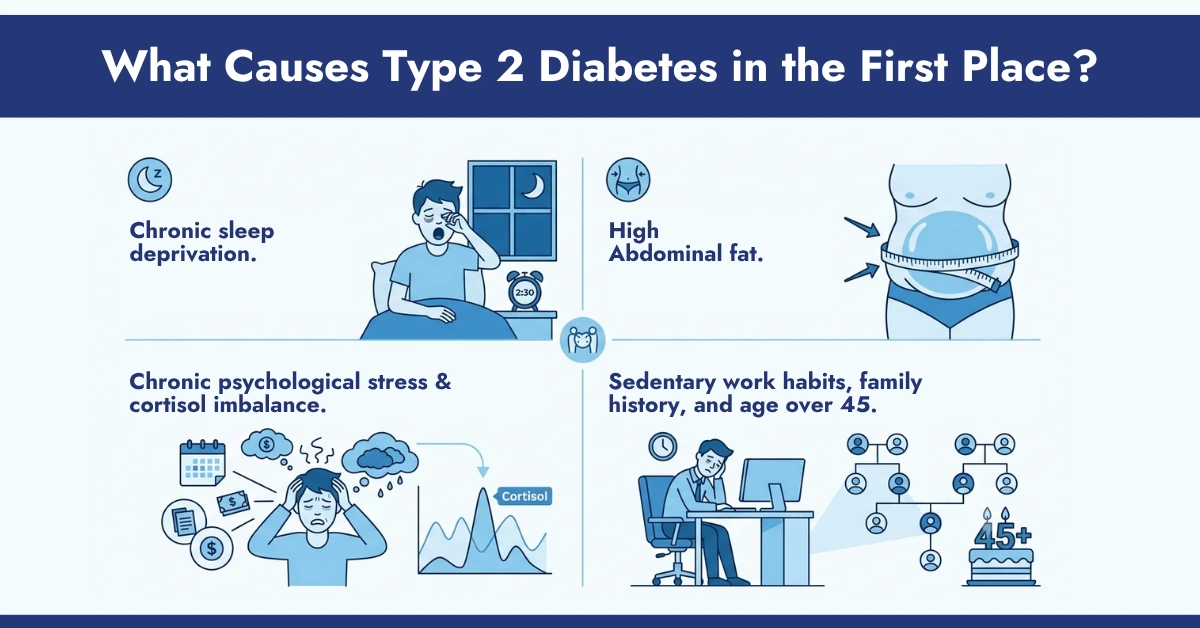
- Chronic sleep deprivation.
- High Abdominal fat.
- Chronic psychological stress & cortisol imbalance.
- Sedentary work habits, family history, and age over 45.
One important but often ignored factor is stress-related blood sugar elevation, which can increase HbA1c even without major dietary changes.
Can Type 2 Diabetes Be Reversed?
Yes, but “reversed” is medically defined as remission: an HbA1c below 6.5% for at least 3 months after stopping glucose-lowering medication. It is achievable, not guaranteed, and requires specific conditions.
Evidence-based approaches include:
- Bariatric surgery: Achieves remission in up to 75% of patients, though it’s invasive and not first-line.
- Very low-calorie diets (under 800 calories/day, medically supervised): The DiRECT trial achieved 50%+ remission after one year.
- 10-15% sustained weight loss: The single most consistent predictor across all approaches.
- GLP-1 receptor agonists like semaglutide: Showing remission potential in 2025-2026 clinical trials alongside lifestyle changes.
Remission is not a permanent cure. HbA1c must be monitored regularly to stay in range. Diabetes is a progressive condition, and vigilance must continue even after remission is achieved.
How Do You Lower A1C Naturally?
You can lower A1C by 0.5-1.5% through lifestyle changes alone, specifically through regular aerobic exercise, dietary changes, and sleep improvement.
How to lower A1C naturally in order of impact:
- 150+ minutes of moderate exercise per week
- Walking after meals (reduces post-meal glucose by 20-30%).
- Reducing ultra-processed carbohydrates.
- Improve sleep quality (7-8 hours per night).
- Managing stress level.
For how to lower fasting blood sugar specifically: A high-protein, low-carb dinner and avoiding late-night eating have the most impact on morning readings.
What Are the Best Diet & Treatment Options for Type 2 Diabetes
There is no single perfect diet, but research supports:
Recommended patterns:
- A Mediterranean diet pattern; vegetables, legumes, fish, olive oil, limited refined carbs.
- Lower-carbohydrate eating for those who respond well to it.
- Consistent meal timing to avoid glucose swings.
Medical Treatments:
- Metformin (first-line medication).
- GLP-1 receptor medications for weight and glucose control.
- SGLT2 inhibitors in modern guidelines.
- Insulin therapy in advanced cases.
Meal timing matters as much as food choice. Eating the same foods earlier in the day (front-loading calories before 3 PM) consistently lowers post-meal glucose spikes compared to evening-heavy eating.
Do You Need a CGM If You’re Not on Insulin?
Yes, and this is the most underreported fact in Type 2 Diabetes care right now.
A 2024 Scientific Reports study found that CGM use in primary care reduced HbA1c by 0.62% in T2D patients not on bolus insulin, comparable to adding a second oral medication. A separate analysis of 52,000+ patients found CGM combined with GLP-1 medications lowered A1C an additional 0.45% versus medication alone.
Benefits of CGM for Type 2 Diabetes:
- Real-time glucose tracking 24/7.
- Early detection of high or low blood sugar.
- Better understanding of food impact.
- Improved HbA1c control.
- Reduced risk of complications.
Top CGM systems used today:
At CGM Monitors, we provide trusted systems including:
- Dexcom G7 Sensor: High-accuracy real-time CGM.
- FreeStyle Libre 3 Plus Sensor: Long wear, strong affordability option.
- Dexcom Stelo CGM: OTC CGM for lifestyle glucose tracking.
- Medtronic Guardian Sensor 4: Advanced insulin pump integration system.
These devices help patients understand glucose patterns beyond lab tests.
At CGM Monitors, we also handle:
- Insurance verification.
- Prior authorization.
- Eligibility checks with major U.S. plans (BCBS, Medicaid, etc.), so patients can access CGM without administrative stress.
Conclusion:
Type 2 Diabetes is a progressive but manageable condition when detected early and treated properly. Understanding early signs of diabetes, controlling HbA1c levels, following a structured diet, and using CGM technology can significantly improve long-term health outcomes.
The biggest shift in 2026 is clear: real-time glucose data is more powerful than occasional lab tests.
With CGM systems available through CGM Monitors, patients can now track their glucose in real time, understand patterns, and take control of their health more confidently than ever before.
Disclaimer:
This content is for general educational purposes only and should not be taken as medical advice. Always consult a qualified healthcare professional before making any health decisions. CGM Monitors does not replace professional diagnosis or treatment. Graphics are generated from AI tools, not real images.
Frequently Asked Questions
What is the best CGM for Type 2 Diabetes in 2026?
The best CGMs for Type 2 Diabetes include Dexcom G7, Dexcom Stelo, FreeStyle Libre 3 Plus and Medtronic MiniMed 780G System. The right choice depends on lifestyle, accuracy needs, and insurance coverage. CGM Monitors helps patients select the best option.
What are the 10 warning signs of diabetes?
The most clinically significant are: frequent urination, excessive thirst, unexplained fatigue (especially after meals), blurred vision, slow wound healing, recurring infections, brain fog, tingling in hands or feet, dark skin patches on the neck or armpits, and unintended weight loss. Women may also experience more frequent yeast infections as an early sign.
What blood sugar level confirms Type 2 Diabetes?
A fasting glucose of 126 mg/dL or higher on two separate tests, or an HbA1c of 6.5% or above, confirms Type 2 Diabetes according to ADA diagnostic criteria.
Is Type 2 Diabetes reversible?
Remission, defined as HbA1c below 6.5% for 3+ months without glucose-lowering medication, is achievable through significant weight loss, very low-calorie diets, or bariatric surgery. It is not a cure, and vigilance must continue.
How long does it take to lower A1C?
HbA1c reflects 3 months of average blood sugar. Meaningful reductions (0.5-1.0%) are measurable within one testing cycle (3 months) with consistent lifestyle or medication changes.
Can a CGM help with prediabetes?
Yes. Seeing real-time glucose spikes after specific foods motivates behavior change faster than lab numbers reviewed every 3 months. Several insurers now cover CGMs for prediabetes.
How often should Type 2 diabetics check their blood sugar?
It depends on treatment, insulin users often check several times daily, while those managing with diet or oral medication check less. A CGM removes this guesswork entirely.
Does insurance cover a CGM for Type 2 diabetes?
Many commercial plans and Medicare now cover CGMs for insulin users and non-insulin users with a history of low blood sugar episodes, with coverage expanding further in 2026. CGM Monitors can check your specific eligibility for free.
Can prediabetes turn into Type 2 diabetes?
Yes, without intervention, but it’s also one of the most reversible stages, with most people able to bring numbers back to normal through consistent lifestyle changes.



Write a comment
Your email address will not be published. All fields are required