
Table of content
- What Does an Insulin Pump Actually Cost in 2026?
- Does Choosing Tubeless or Tubed Change What You Pay?
- How Much Do You Pay When Insurance Covers Your Pump?
- What Is Prior Authorization & Why Does It Affect Your Bill?
- What’s the Real Price Without Insurance?
- Are There Programs That Can Bring the Price Down?
- Which Pump Brand Costs the Most & Which Costs the Least?
- What Hidden Ongoing Costs Do Most People Forget?
- How Does Pairing a Glucose Sensor Add to Your Total?
- How Does a DME Supplier Simplify Your Costs?
- Is an Insulin Pump Worth the Investment?
- Conclusion:
- Frequently Asked Questions
Insulin pumps are life-changing for many people with diabetes, especially type 1, because they deliver insulin continuously and can pair with continuous glucose monitors (CGMs) for automated glucose control. But seeing a $6,000 price tag on an insulin pump is one of the biggest hurdles for patients and caregivers alike. But that number tells only half of the story. The real cost depends on your insurance, your pump brand, and how you get it.
This guide breaks down exactly what you pay in 2026 with and without insurance coverage. So, you can plan with confidence and stop guessing.
What Does an Insulin Pump Actually Cost in 2026?
Most insulin pumps cost between $4,500 and $9,000 without insurance. With insurance, your out-of-pocket cost for the device drops to $0-$1,000, sometimes even less.
But the device is just the starting point. You also pay for infusion sets, reservoirs, and sensors every month. Your first-year total, including all supplies, usually falls between $3,000 and $6,000 with insurance.
Does Choosing Tubeless or Tubed Change What You Pay?
Yes, and it’s worth knowing before you decide.
- Tubeless pumps like the Omnipod 5 have no tubing. So, you can replace the pod every three days. Each pod costs money, and that adds up monthly.
- Tubed pumps like the Tandem t:slim X2 or Medtronic 780G use infusion sets and reservoirs. These cost less per unit but still need replacing every two to three days.
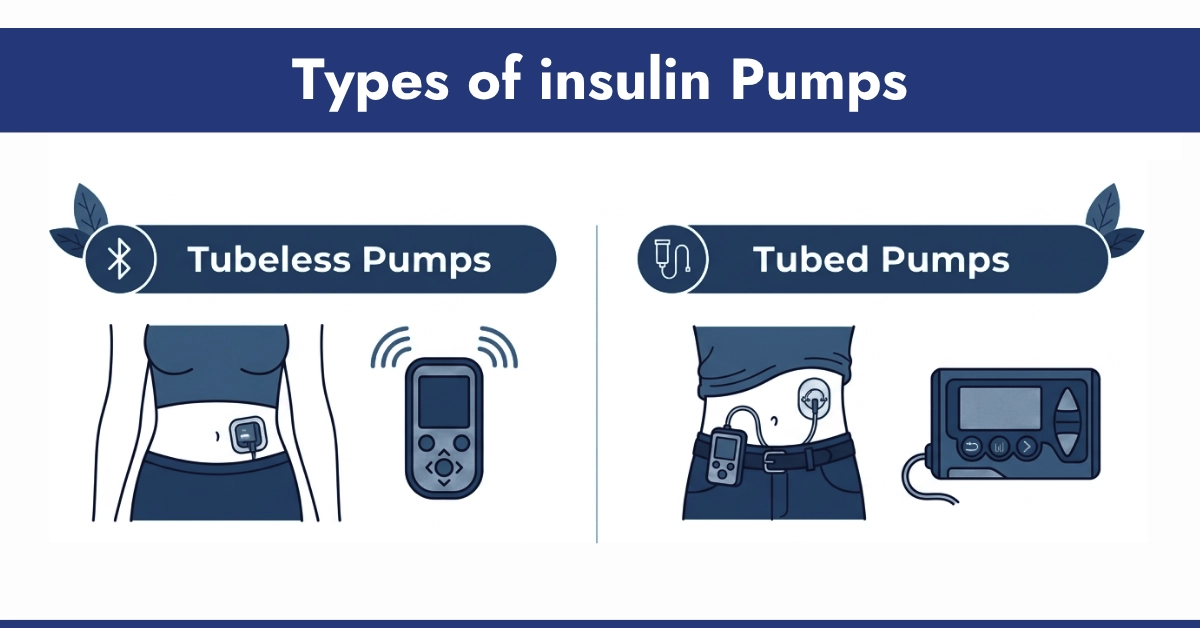
Over a year, tubeless pump supply costs tend to run roughly $300-$500 more than tubed options. But many people prefer the freedom of no tubing. It’s a personal trade-off.
Real users also note that overall costs vary by insurance, with some paying very little monthly and others paying supply costs out of pocket.
How Much Do You Pay When Insurance Covers Your Pump?
With insurance, most people pay a small fraction of the full pump price. Here’s what typically happens:
- Device cost: $0-$1,000 after your deductible.
- Monthly supplies: $50-$300 depending on your plan.
- First-year total: $3,000-$6,000, including everything.
Medicare covers insulin pumps as durable medical equipment under Part B, but you may pay 20% coinsurance after meeting your deductible. Part D may cover some patch pumps and insulin supplies.
Medicaid coverage varies by state, but it often covers the pump with little or no cost-sharing.
Commercial plans like BlueCross BlueShield usually cover pumps, too, but the amount you pay depends on your deductible plan details.
What Is Prior Authorization & Why Does It Affect Your Bill?
Before your insurance pays for a pump, they require prior authorization. It’s their way of confirming that you medically need the device.
Your doctor submits your records, diagnosis, and prescriptions. The insurance company reviews everything and approves or denies coverage.
This step sounds simple, but it can take weeks. If it’s not handled correctly, your coverage gets delayed, and you end up paying more out of pocket. Working with a supplier that manages prior authorization for you removes this stress completely.
What’s the Real Price Without Insurance?
Without any coverage, insulin pumps are expensive. Here’s an honest look:
- Device alone: $4,500-$9,000 upfront.
- Monthly supplies: $300-$700 per month.
- Annual supply cost: $3,600-$6,000.
- First-year total: $8,000-$15,000.
These figures include infusion sets, reservoirs, CGM sensors, adhesive, and other recurring consumables. These numbers are high. But you don’t have to face them alone.
Are There Programs That Can Bring the Price Down?
Yes. All major pump makers offer assistance programs for people without insurance or those who can’t cover the full cost.
- Insulet (Omnipod): Income-based assistance for Omnipod 5.
- Tandem Diabetes Care: Financial support for qualifying patients.
- Medtronic: Direct financial assistance through their support team.
- Beta Bionics (iLet): Works with patients individually on pricing.
Call the manufacturer directly before assuming you can’t afford it.
Which Pump Brand Costs the Most & Which Costs the Least?
Here’s a clear side-by-side look at the top pumps available in 2026:
| Pump | Without Insurance | With Insurance (Est.) | Type |
| Omnipod 5 | $5,000-$6,000 | $0-$500 | Tubeless/Patch pump |
| Tandem t:slim X2 | $4,500-$5,500 | $0-$1,000 | Tubed, smart tech |
| Medtronic 780G | $7,000-$8,500 | $0-$1,000 | Tubed, advanced automation |
| iLet Bionic Pancreas | $5,000-$5,500 | Varies by plan | Tubed/hybrid |
The Medtronic 780G sits at the higher end because of its advanced automated delivery technology. The Omnipod 5 is popular for its tubeless design and wide insurance coverage. The iLet is newer and coverage is still growing across plans.
One important thing:
Once you pick a pump, you’re committed to that brand’s supplies for about four years. So always look beyond the device price and compare supply costs too.
What Hidden Ongoing Costs Do Most People Forget?
Most people focus on the pump price and forget everything that comes after. Here’s what you’ll spend every month on top of the device:
- Infusion sets or pods: $100-$250/month.
- Reservoirs or cartridges: $30-$60/month.
- Glucose sensor (if integrated): $80-$200/month.
- Adhesive patches: $15-$40/month.
- Prep wipes and inserters: $20-$40/month.
Your real monthly supply cost lies between $200 and $450, depending on your pump and glucose monitoring system.
Over 12 months, that’s $2,400-$5,400 in supplies alone, before the device costs.
How Does Pairing a Glucose Sensor Add to Your Total?
Most modern pumps pair with a continuous glucose monitoring system. The sensor reads your glucose and tells the pump how much insulin to deliver. It’s what makes automated delivery work.
But sensors are a separate cost. Dexcom G7 sensors run $80-$200 per month without insurance. Freestyle Libre sensors are similar. If you’re pairing a pump with a sensor, build that into your budget from day one. Many insurance plans cover both together, especially when you order through a medical equipment supplier.
How Does a DME Supplier Simplify Your Costs?
Getting your pump through a durable medical equipment supplier is often the smartest financial move, and most people don’t even know if this option exists.
A supplier like CGM Monitors handles your insurance check, prior authorization, and all the paperwork from start to finish. You don’t file claims, chase approvals, or figure out coverage on your own.
CGM Monitors carries pumps and accessories from trusted brands including Omnipod, Medtronic, Tandem, and Beta Bionics (iLet). They work with major plans like BlueCross BlueShield, Medicare, and Medicaid across multiple states.
If insurance doesn’t cover everything, you can pay safely by debit or credit card. Monthly refills for sensors and supplies ship automatically, so you never run out.
Do you want to know if your pump is covered? CGM Monitors offers a free benefits check with no obligation.
Is an Insulin Pump Worth the Investment?
For most people managing type 1 diabetes and many with type 2, a pump makes daily life much easier. It removes the need for multiple daily injections and helps keep blood sugar steadier around the clock.
The upfront cost is real. But with insurance coverage, a supplier managing your paperwork, and manufacturer programs available; the pump you need is often far more affordable than it first appears.
Know your options before you pay anything out of your pocket.
Conclusion:
Managing diabetes is already so demanding in these days. The cost of a pump doesn’t have to add to that burden. Explore the range of insulin pumps and supplies at CGM Monitors and let our team handle the insurance process, so you don’t have to worry.
Follow CGM Monitors on Facebook and Instagram for the latest updates on devices, coverage tips, and diabetes management support.
Disclaimer:
The information in this article is for informational purposes and is not medical, financial, or legal advice. It is based on multiple public resources and written in our own wording to help you understand insulin pump costs. CGM monitor is a DME supplier that provides devices, support, and insurance benefit checks. But the coverage and costs vary by individuals and brands. Always consult a qualified healthcare provider or professional before making health and device decisions. Images in this article may be created from AI tools for illustration purposes only.
Frequently Asked Questions
Does Medicare cover insulin pumps in 2026?
Yes. Medicare covers insulin pumps as durable medical equipment under Part B. You must have diabetes, use insulin, and meet the clinical criteria set by CMS. Your doctor provides the prescription and records, and a CGM monitor handles authorization and billing for you.
How long does an insulin pump last before you need a new one?
Most insulin pumps are designed to last 3-5 years. After that, insurance typically allows for a replacement. During those 4-5 years, you pay monthly supply costs but don’t buy the device again, unless it’s damaged or discontinued.
Can you switch pump brands after you start?
You can, but it usually means restarting the insurance approval process. Supplies are brand-specific, like infusion sets, pods, and reservoirs, which only work with their matching pump. Research your options carefully before your first purchase to avoid costly switching later.
What is the most affordable way to get an insulin pump in the USA?
The most affordable route that combines insurance coverage with a CGM monitor is a DME supplier that manages prior authorization for you. If you’re uninsured, manufacturer assistance programs and Medicaid. If you qualify, you can significantly reduce or remove out-of-pocket costs.



Write a comment
Your email address will not be published. All fields are required