

Table of content
You searched “can diabetics use Epsom salt?” and want a straight answer now. Here it is: Most diabetics should skip Epsom salt foot soaks completely. That soothing soak tempts you after a long day. But for diabetics, it hides real danger. It dries skin fast. Cracks form easily. Infections sneak in. Worst part? Nerve damage means you feel nothing. A burn happens. You don’t notice. Healing takes forever. Half of diabetics face this nerve issue.
Diabetes and Epsom salt seem harmless together. High blood sugar hurts nerve sensitivity, blood flow, and skin healing. Even short soaks risk foot ulcers. Ulcers lead to hospital stays. Sometimes amputation. You crave relief. We get it. This guide shows safe ways. It ties in glucose control. That’s key to foot health.
What Exactly Is Epsom Salt?
Epsom salt, also known as magnesium sulfate, is a mineral that goes in warm baths and foot soaks. People use it for sore muscles and swollen feet. It promises relaxation too. Sounds perfect, right? For regular people, maybe. But for diabetes, it changes the game completely.
Many swear it boosts magnesium right through your skin. Not true at all. Your skin barely lets any in.
If diabetes runs you low on magnesium – which it often does – eat the good stuff instead. Grab some spinach or kale. Toss in pumpkin seeds. Slice up an avocado. Whole grains help too. Talk to your doctor before you start, though.
Why Can’t Diabetics Use Epsom Salt?
The three main problems make Epsom salt risky when you have diabetes. We know that patients struggle with these exact issues.
Nerve Damage Makes Heat Invisible
Diabetic peripheral neuropathy affects up to 50% of people with diabetes over time. It gradually reduces sensation in your feet. You may not feel if the water is too hot. Burns can happen silently, and by the time you notice redness or blistering, the damage is already done.
Soaking Dries Out Already Vulnerable Skin
High blood sugar pulls moisture away from the skin over time. Diabetic skin is already dry and prone to cracking. Epsom salt baths for diabetes make this worse prolonged soaking strip skin of its natural protective oils. Cracked skin becomes an open door for bacteria.
Wounds Heal Slower Than You Expect
Poor circulation is a common complication of long-term diabetes. When skin gets irritated or broken during a soak, healing takes far longer than it would in a healthy person. A tiny crack can quietly escalate into a diabetic foot ulcer, one of the leading causes of hospitalization and, in severe cases, amputation.
Does Your Level of Diabetes Control Change the Risk?
Yes, but the risk never fully disappears. People with well-controlled blood sugar, no neuropathy, and healthy circulation face a lower risk. However, most podiatrists advise all diabetics to avoid foot soaks, regardless of how well-managed their condition is.
Type 1 vs. Type 2: Is the Risk the Same?
Both types carry identical threats from foot soaks because neuropathy, dry skin, and slow healing creep across Type 1 and Type 2 diabetes without picking favorites. Years lived with the condition weigh heaviest alongside how consistently glucose is managed over time.
The HbA1c and Foot Healing Connection
HbA1c level, which tracks your three-month blood sugar average, directly controls how fast skin heals because high readings cripple wound recovery, weaken immune response, and opens doors wide to infection risk. Drop that number through steady monitoring, and feet start bouncing back noticeably faster every time.
Real-time blood glucose tools make a huge difference here with CGM Monitors supplying trusted brands like Abbott, Dexcom, and Medtronic that help stay in control daily, plus free delivery across the USA.
Warning Signs You Should Never Ignore
These signs need your immediate attention. Never brush them off.
Check your feet before any wash or contact:
- Open cuts, blisters, sores
- Strange color or stuck redness
- Unusual discoloration
- Swelling in one or both feet
- Skin that feels tight, cracked, or extremely dry
Watch carefully after any foot contact:
- New redness or warmth that does not fade within an hour
- Skin that feels more irritated or cracked than before
- Numbness or tingling that is new or worsening
- Signs of infection, unusual odor, discharge, or darkening skin
If you notice any of these, call your doctor the same day. Do not wait and do not treat it at home.
If Your Doctor Has Already Approved a Soak
This section is for one specific situation only: diabetics with no active neuropathy, no open wounds, and explicit doctor approval.
Follow these steps:
- Test water temperature using your elbow, never your feet.
- Keep it for under 5 minutes.
- Dry immediately and thoroughly.
- Apply a thick natural fragrance-free moisturizer right away.
- Inspect both feet carefully before and after.
Can diabetics soak their feet in Epsom salt even with approval? No. Plain water only, the salt adds unnecessary risk without any proven benefit.
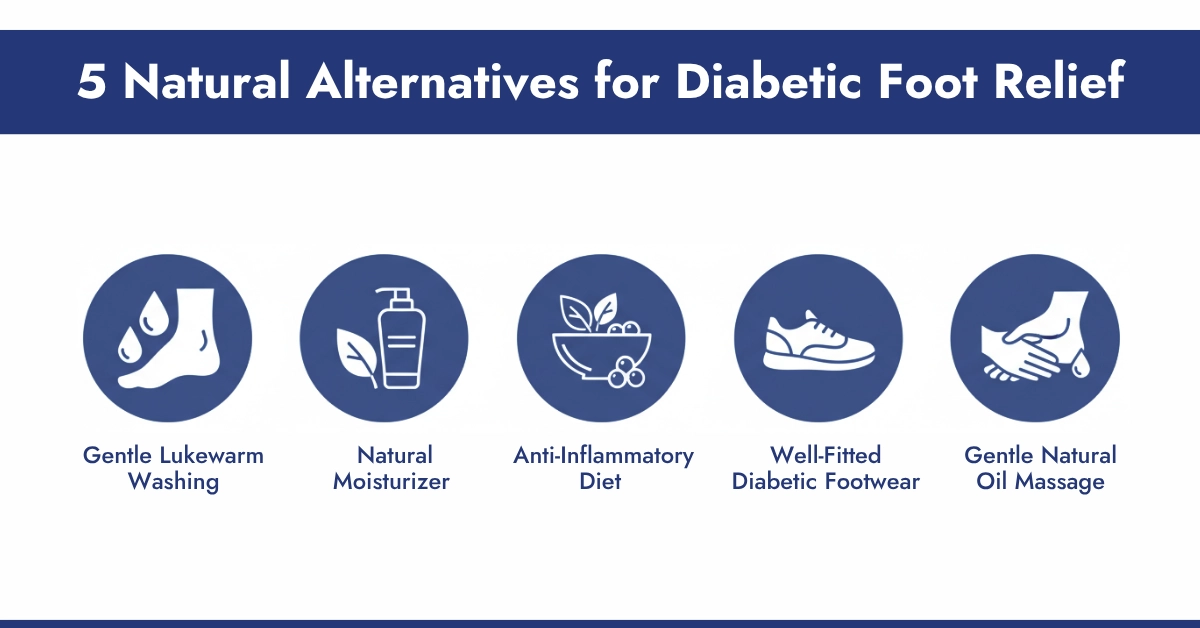
5 Natural Alternatives for Diabetic Foot Relief
You do not need Epsom salt. These natural, lifestyle-based options are far safer and genuinely effective.
- Gentle Lukewarm Washing: Using mild soap and lukewarm water hits all feet that need daily cleaning while staying completely safe for diabetic skin long term.
- Natural Moisturizer: Thick, natural creams (shea butter or coconut oil-based) keep your skin soft and prevent cracking. Apply after every wash, avoiding between the toes.
- Anti-Inflammatory Diet: What you eat directly impacts circulation and skin health. Omega-3-rich foods like walnuts and flaxseeds support nerve health. Berries and leafy greens combat oxidative stress. Magnesium-rich foods like pumpkin seeds and dark chocolate support muscle and nerve function naturally.
- Well-Fitted Diabetic Footwear: Proper shoes eliminate pressure points, friction, and blisters before they start. This single habit prevents more foot complications than any foot soak ever could.
- Gentle Natural Oil Massage: Soft self-massage strokes using coconut or olive oil spark circulation and ease tension safely when you inspect skin carefully before, during, and after every session.
Your Simple Daily Diabetic Foot Routine
Consistency beats every remedy. This quick daily habit prevents most diabetic foot complications long-term.
Morning Routine:
Check both feet completely, top, sole, heels, and between every toe. Look for cuts, redness, blisters, or swelling. Use a handheld mirror for your soles. Catching problems early changes everything.
Evening Routine:
- Wash briefly with lukewarm water and mild soap.
- Dry thoroughly, especially between toes.
- Apply natural moisturizer on heels and dry areas.
- Wear clean, breathable, soft socks to bed every night.
This two-step routine does more for long-term foot health than any Epsom salt bath and diabetes remedy ever will.
Conclusion:
Can diabetics use Epsom salt for foot soaks? For most people with diabetes, absolutely not. Neuropathy, dry skin, and slow wound healing make it a genuine risk, even when it feels completely harmless in the moment. The best diabetic foot care is also the simplest. Daily inspection, gentle washing, natural moisturizing, a circulation-supporting diet, and keeping your blood sugar consistently in a healthy range; these habits protect your feet more powerfully than any remedy. Keeping your glucose in range is the foundation of everything. A reliable CGM device makes that easier than ever.
Explore top-rated CGM devices at CGM Monitors with insurance support, free delivery, and monthly refills across the USA.
Follow CGM Monitors on Facebook and Instagram for practical diabetes care tips and guides every week.
Disclaimer:
This content is for informational purposes only. Always consult your healthcare provider before making changes to your foot care routine. Some visuals are AI-generated for informational purposes.
Frequently Asked Questions
Can a diabetic soak their feet in Epsom salt if they feel completely fine?
Feeling fine does not mean your nerves and circulation are undamaged. Diabetic neuropathy develops silently; many people have significant nerve damage long before they notice any symptoms. That is precisely why doctors advise against soaks even when you feel perfectly healthy.
Can Epsom salt directly cause a diabetic foot ulcer?
Not always directly, but it creates the exact conditions where ulcers develop. By drying skin, masking burns, and causing micro-cracks in already vulnerable skin, it opens the path for serious complications that are difficult to reverse.
Does an Epsom salt bath for diabetes affect blood sugar levels?
Epsom salt itself does not directly raise or lower blood sugar. However, the stress response from an unnoticed burn or skin infection absolutely can cause blood sugar to spike significantly. This is another reason diabetes and Epsom salt baths are a risky combination that goes beyond just skin safety.
What is the safest water temperature for diabetic feet?
Between 98-100°F. Always test with your elbow or a bath thermometer, never your foot. If you have neuropathy, ask a family member to help check the temperature before any contact.
What natural foods actively support diabetic foot health?
Focus on anti-inflammatory foods daily. Omega-3-rich walnuts and flaxseeds protect nerve function. Berries and spinach fight the oxidative stress that damages circulation. Magnesium-rich foods like pumpkin seeds and avocado support healthy nerve and muscle function naturally and effectively.
How long is too long for a plain water foot soak in diabetes?
Anything beyond 5 minutes increases the risk of skin drying and cracking, even in plain water. The shorter the better. A thorough wash and dry routine is always safer, simpler, and more protective than any soak, plain water, or otherwise.





Write a comment
Your email address will not be published. All fields are required