
Table of content
- Does Alcohol Raise or Lower Blood Sugar in Diabetics?
- Why Is Alcohol-Related Low Blood Sugar So Hard To Notice?
- The Hidden Risk That Hits You While You Sleep
- Which Drinks Are Safer for People With Diabetes?
- Which Diabetes Medications Make Drinking More Dangerous?
- How Do You Drink Safely if You Have Diabetes?
- Does Alcohol Cause Long-Term Problems Beyond Blood Sugar?
- Who Should Avoid Alcohol Entirely With Diabetes?
- How a CGM Device Changes Everything
- Conclusion:
- Frequently Asked Questions
You have diabetes, and you want to enjoy a drink at dinner, a wedding, or just a Friday night without spending the whole time anxious. That’s completely fair, and you deserve a straight answer, not a list of warnings that leaves you more confused than when you started.
The truth is: alcohol and diabetes can coexist, but only when you understand exactly what alcohol does inside your body. Most people with diabetes never see the full picture. All they get is the advice ‘drink in moderation, and that’s it. This guide fixes these.
Does Alcohol Raise or Lower Blood Sugar in Diabetics?
Most people expect alcohol to raise blood sugar like a sugary snack. For diabetics, the opposite usually happens, and understanding why is everything.
Why this happens
Your liver helps control blood sugar. It:
- Stores sugar for later use.
- Releases sugar when your level drops.
But when you drink alcohol:
- Your liver becomes busy breaking down alcohol.
- It slows or stops releasing sugar into your blood.
What this means
- Blood sugar can drop too low.
- Risk is higher if you take insulin or diabetes medicines.
- The effect can last for hours.
So even if you feel fine after drinking, your blood sugar may still drop later.
According to ADA recommendations, women drink up to 1 glass per day, but men drink up to 2 glasses per day.
1 Glass: 12 ounces of beer, 5 ounces of wine, and 1.5 ounces of liquor.
Why Is Alcohol-Related Low Blood Sugar So Hard To Notice?
Low blood sugar and being drunk feel almost identical.
Both cause:
- Slurred speech.
- Blurred or double vision.
- Confusion and disorientation.
- Dizziness and shakiness.
- Sweating.
- Poor coordination.
If your blood sugar drops at a social event, you might assume it’s alcohol. The people around you will almost certainly think the same thing.
No one reaches for glucose. No one calls for help. The situation quietly worsens.
This is how alcohol-related hypoglycemia becomes a crisis, not dramatically, but silently, in plain sight.
The Hidden Risk That Hits You While You Sleep
Alcohol’s effect on your liver doesn’t stop when you stop drinking. The glucose suppression can last up to 24 hours.
You can feel completely fine going to bed and wake up dangerously low at 2 or 3 a.m., hours after your last drink. Even the next morning, after a full night’s sleep, your liver may still be recovering. Skipping breakfast or going for an early walk without eating can push your levels dangerously low before noon.
The habit that protects you:
Always eat breakfast the morning after drinking, check your levels when you wake up, and don’t assume you’re back to normal just because you feel okay.
Which Drinks Are Safer for People With Diabetes?
Not all alcohol behaves the same way. Sweet cocktails spike your blood sugar first, then drop it hard. Spirits on an empty stomach deliver a fast, steep fall with nothing to soften it.
| Drink | Blood Sugar Effect | Risk Level | Notes |
| Dry red or white wine | Moderate lowering | Low-Medium | Best with food; small glass |
| Light beer | Slight rise, then drop | Low-Medium | Lower carbs than regular |
| Regular beer | Initial spike, then drop | Medium | Watch portion size |
| Spirits (neat or on ice) | Sharp lowering | High | Fast-acting without food |
| Sweet cocktails/sugary mixers | Spike then crash | Very High | Most unpredictable, avoid |
Dry wine and light beer are the most manageable options for most diabetics. They have less sugar than others.
Sweet cocktails: Margaritas, daiquiris, rum and coke, are the most dangerous because the sugar masks the drop that comes after.
If you choose spirits, always eat food with them. Never use diet mixers as your only companion; they provide zero glucose to catch a falling level.
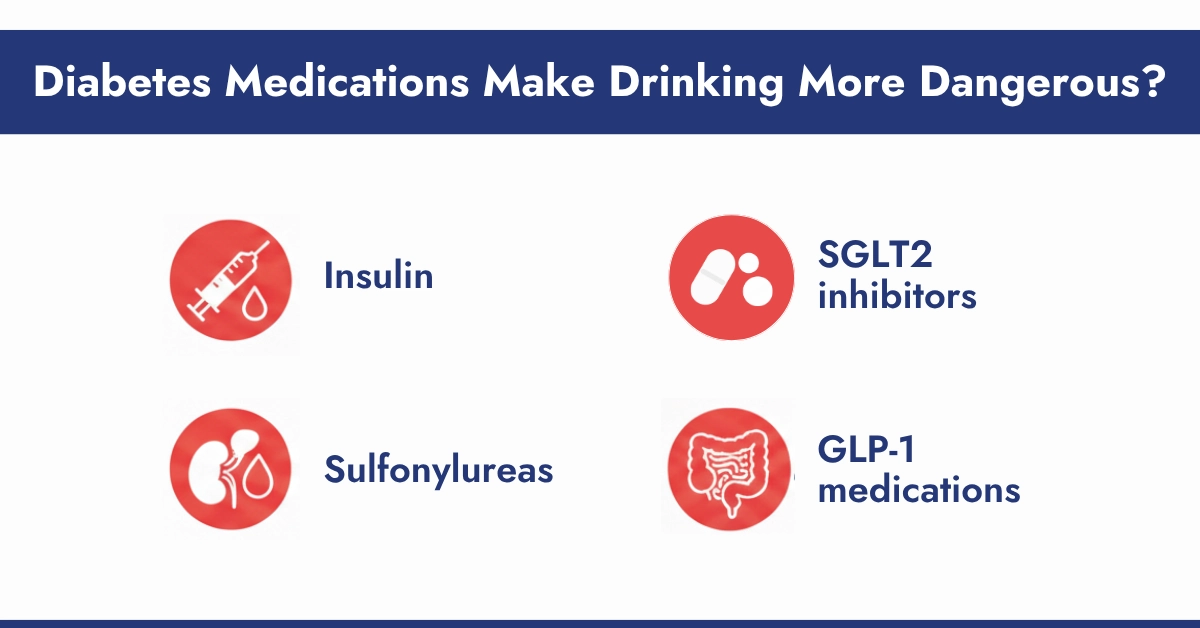
Which Diabetes Medications Make Drinking More Dangerous?
The advice ‘check with your doctor about your medications’ is too general to be helpful. Here is what you actually need to know:
1. Insulin:
- Continues lowering blood sugar.
- Liver stops releasing glucose.
- Highest hypoglycemia risk.
2. Sulfonylureas (e.g., glipizide):
- Increase insulin production.
- Combine with alcohol → severe drops.
3. SGLT2 inhibitors:
- Increase risk of ketoacidosis.
- Alcohol adds extra stress.
4. GLP-1 medications:
- Slow digestion.
- Can cause unpredictable sugar changes.
The Takeaway:
Your medication specifically determines your risk level, not just the fact that you have diabetes.
How Do You Drink Safely if You Have Diabetes?
The goal here isn’t to make you feel like drinking is off-limits. It’s to give you a real, workable plan.
6 Rules That Actually Protect You
- Eat before drinking.
- Never drink on an empty stomach.
- Check glucose before drinking.
- Monitor every 1-2 hours.
- Check again before sleep.
- Keep fast sugar with you.
Important safety tip:
If your blood sugar is below 100mg/dL, eat first; don’t drink it yet.
Does Alcohol Cause Long-Term Problems Beyond Blood Sugar?
Yes, and this is the section almost no competitor covers properly.
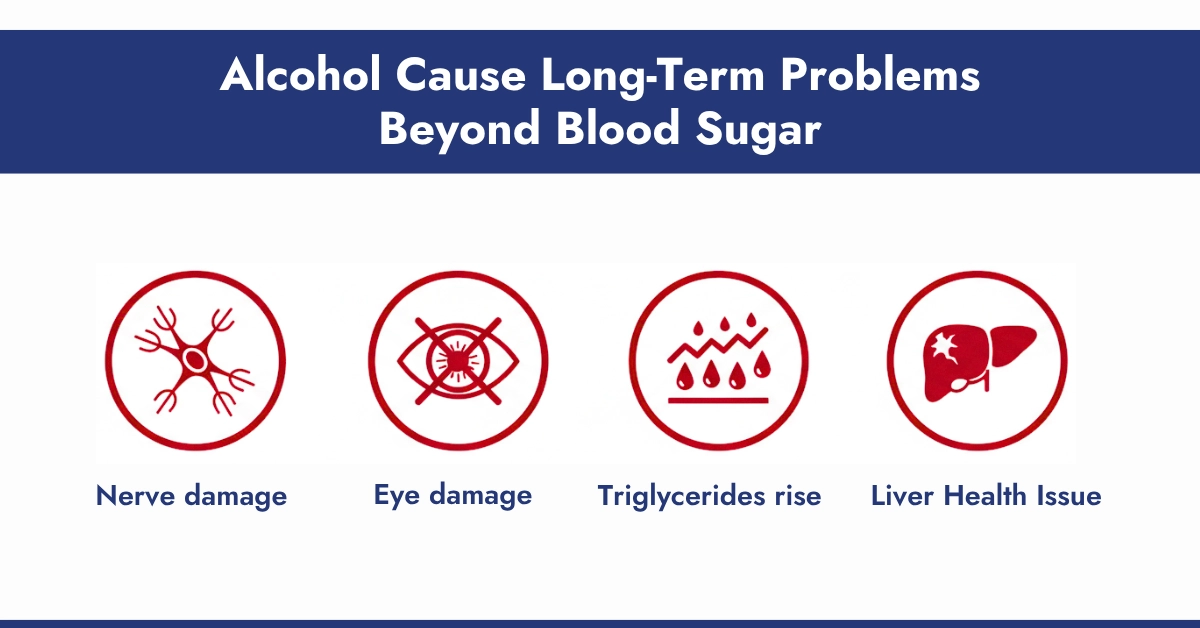
- Nerve damage (neuropathy) is already one of the most common diabetes complications. Alcohol damages nerves and also speeds up complications like numbness, tingling, and burning in the hands and feet, which worsen noticeably with regular drinking.
- Eye damage (retinopathy) is closely tied to blood pressure. Alcohol raises blood pressure, and sustained high blood pressure is one of the primary drivers of diabetic eye disease over time.
- Triglycerides rise with regular alcohol use. For diabetics already managing cholesterol and cardiovascular risk, this adds to an already difficult picture.
- Liver health deserves a mention too. Fatty liver disease is more common in Type 2 diabetes. Alcohol adds directly to that load.
Who Should Avoid Alcohol Entirely With Diabetes?
For some people with diabetes, there is no safe way to drink, and the honest answer is that abstaining is the right choice. You should avoid alcohol entirely if you:
- Frequent or severe hypoglycemic episodes.
- Have diabetic neuropathy, retinopathy, high triglycerides, pancreatitis, or liver disease.
- Are you pregnant or planning a pregnancy.
- Take high-risk medications.
- Struggle with alcohol use disorder.
None of this is meant to make life feel smaller. It’s meant to help you decide with full information, not half of it.
How a CGM Device Changes Everything
A Continuous Glucose Monitor (CGM) makes every one of these steps easier and more reliable. Devices like the Dexcom G7 and FreeStyle Libre 3 let you set a custom low-glucose alarm, so even if you’re asleep and your levels start dropping after a night of drinking, your phone alerts you or a family member before it becomes a crisis.
At CGM Monitors, we supply the full Dexcom, FreeStyle Libre, Medtronic, and Omnipod range, genuine devices, covered by most major insurance plans, with free nationwide delivery and monthly sensor refills so you never run out. Our team handles the insurance paperwork for you. [Check your eligibility here]
Conclusion:
Managing diabetes while navigating real life takes more than willpower; it takes the right tools and the right information. Alcohol and blood sugar management can coexist, but only when you know exactly what’s happening inside your body and you have something watching your levels when you can’t.
A CGM device from CGM Monitors gives you real-time visibility into your blood sugar around the clock, including on the nights when you choose to drink. Visit CGM Monitors to check your insurance coverage, explore Dexcom and FreeStyle Libre devices, and let our team handle the paperwork so you can focus on staying healthy.
Disclaimer:
This blog is written for informational purposes only. It isn’t professional medical advice, diagnosis, or treatment. Please always consult with your doctor before making any decisions about your health, medication or lifestyle. We do our best to provide accurate and up-to-date information, but every individual may respond differently. We are not responsible for any actions taken based on this content. Images in this blog are created using AI tools; these are not real-life images.
Frequently Asked Questions
Can drinking alcohol cause low blood sugar even hours later?
Yes. Alcohol keeps the liver from releasing stored glucose long after your last drink, sometimes for up to 24 hours. You can go to bed feeling fine and wake up with dangerously low blood sugar in the middle of the night.
What is the safest type of alcohol for a diabetic to drink?
Dry red or white wine and light beer are the most predictable options. They contain less sugar and cause smaller fluctuations than spirits or sweet cocktails. Always drink with food and keep portions small.
How do I know if I'm going low or just feeling the alcohol?
You often can’t tell the difference, which is exactly the problem. The symptoms are nearly identical. The only reliable way to know is to check your blood sugar, either with a finger-prick meter or a CGM that shows you real-time readings without stopping in the evening.
Is it safe to exercise the day after drinking?
Use caution. Your liver may still be recovering from processing the alcohol and may not respond normally to the glucose demands of exercise. Check your blood sugar before any activity and eat a proper meal first.
How many drinks per day are considered safe with diabetes?
The American Diabetes Association recommends no more than one drink per day for women and two for men, and those are maximum limits, not daily targets. One drink equals 5 oz of wine, 12 oz of light beer, or 1.5 oz of spirits.
Should people on insulin avoid alcohol completely?
Not necessarily, but the risk is higher than with other medications. Insulin and alcohol together can create a dangerous, fast-moving drop in blood sugar with no natural brake. If you use insulin and choose to drink, a CGM with a low-glucose alert is one of the most important tools you can have.


Write a comment
Your email address will not be published. All fields are required