
Table of content
- What Is a CGM Adhesive Patch?
- Who Should Use a CGM Adhesive Patch?
- Why Do CGM Sensors Fall Off Early?
- How to Choose the Right CGM Adhesive Patch
- CGM Adhesive Patch vs Skin Tac vs Medical Tape
- Which One Is Right for You: With Cutout vs. Without Cutout
- How to Apply a CGM Adhesive Patch So It Actually Stays On
- How to Prevent Skin Irritation From CGM Adhesive Patches
- Conclusion:
- Frequently Asked Question
You spent over $100 on a CGM sensor. It should last 10 to 14 days. But by day 4, the edge is lifting, readings are unreliable, and the sensor is slowly peeling off your arm.
Sweat, showers, workouts, and warm skin all work against the original manufacturer’s adhesive, and most people don’t realize there’s a simple fix. That is why many CGM users add a CGM adhesive patch, also called a CGM overpatch, to help keep the sensor secure throughout its intended wear period.
This guide covers what a CGM adhesive patch actually does, why sensors really fall off, how to apply a patch correctly, and how to stop skin irritation before it starts.
Continuous glucose monitors provide ongoing glucose data that helps to support daily diabetes management decisions.
What Is a CGM Adhesive Patch?
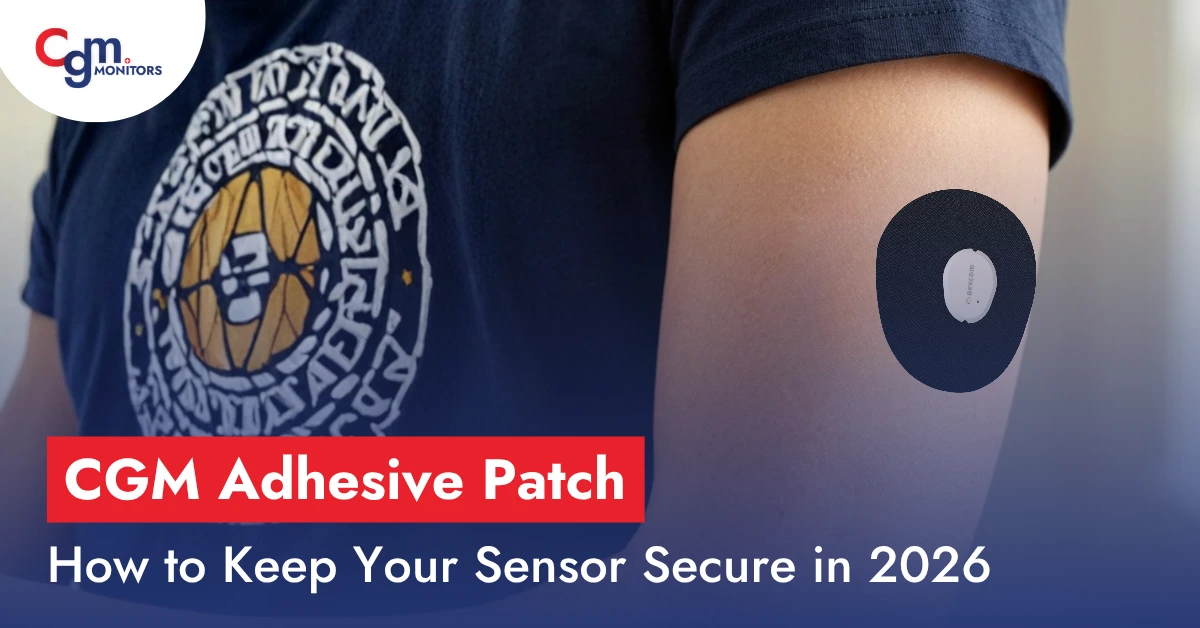
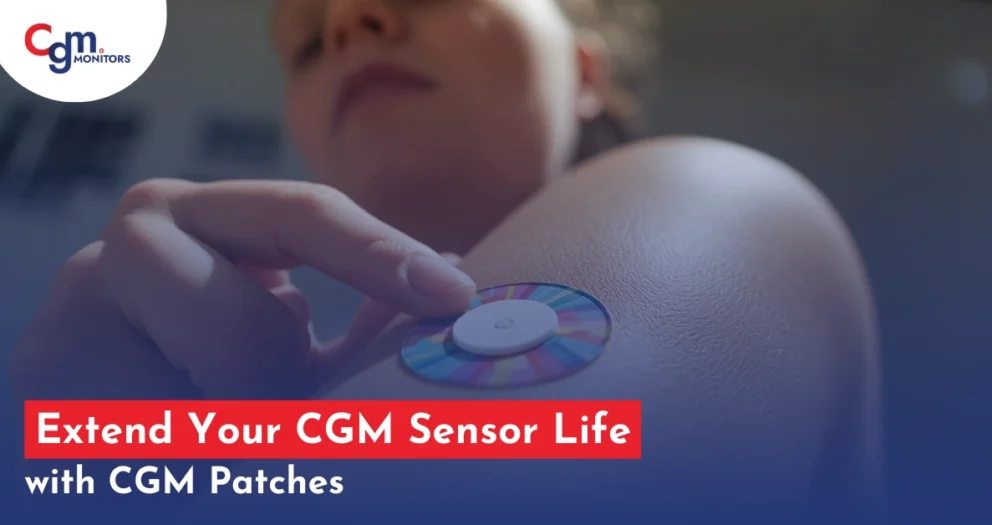
A CGM adhesive patch is a thin adhesive cover placed over your CGM sensor to hold it securely against your skin. It doesn’t monitor glucose or deliver insulin. Its only job is protecting your sensor from the forces that pull it off, sweat, water, movement, and friction.
Here is what it physically does:
- Reinforces the sensor’s original adhesive.
- Reduce edge lifting.
- Improve water resistance around the sensor edges.
- Reduce friction from clothing or movement.
- Support more consistent wear throughout the sensor session.
The consistent sensor adhesion directly affects the reliability of glucose data, and that data drives every diabetes management decision you make.
Who Should Use a CGM Adhesive Patch?
Not every CGM user needs extra adhesive support. However, adhesive overlays are especially popular among people who:
- Exercise regularly.
- Swim frequently.
- Sweat heavily.
- Live in hot or humid climates.
- Work physically demanding jobs.
- Have children wearing CGMs.
- Experience repeated sensor edge lifting.
- Need a stronger hold during travel or outdoor activities.
People with naturally oily skin or increased perspiration may also find that sensor adhesives loosen faster than expected. In these situations, an additional adhesive layer can help improve wear consistency.
Why Do CGM Sensors Fall Off Early?
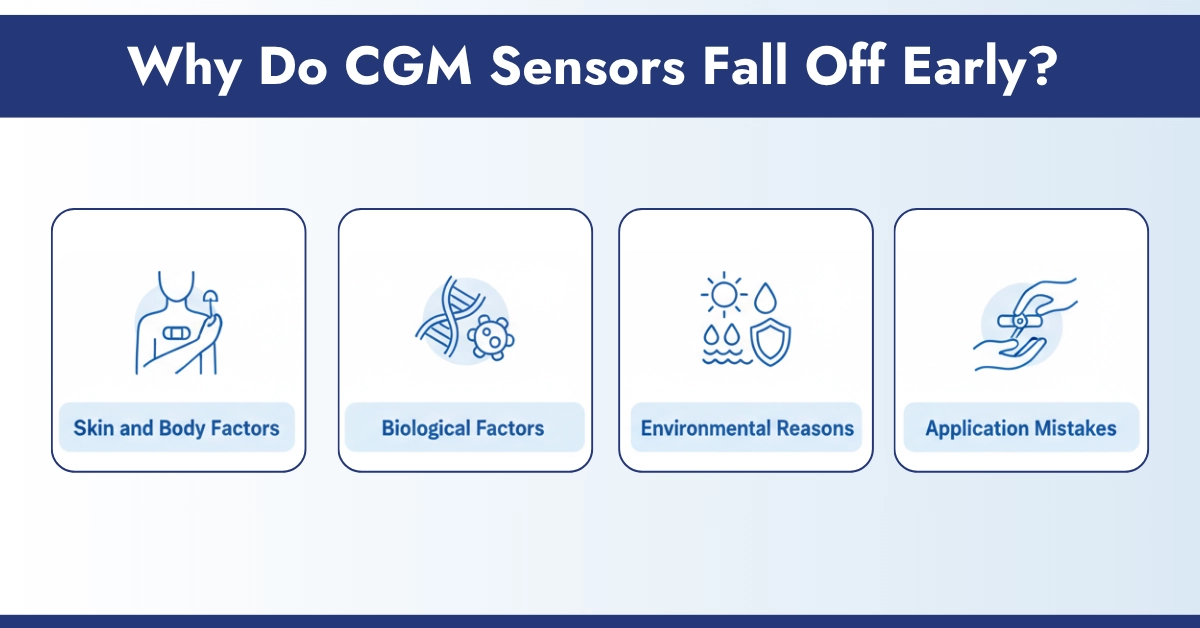
CGM sensors can loosen for several different reasons. In most cases, it’s a combination of skin conditions, environment, and application technique.
Skin and Body Factors
Your skin naturally produces oils and moisture throughout the day. Over time, these oils slowly weaken adhesive bonds around the sensor edges.
Other biological factors include:
- Increased sweating.
- Warm body temperature during exercise.
- Naturally oily skin.
- High skin movement around certain placement sites.
For some people, adhesive wear time varies significantly from one area of the body to another.
Environmental reasons:
Common causes of early peeling include:
- Hot showers.
- Swimming pools.
- Ocean water.
- Humid weather.
- Intense workouts.
- Friction from tight clothing.
- Repeated arm movement during exercise.
Warm, humid environments may shorten adhesive lifespan more quickly than cooler climates.
Application mistakes:
- Skin still had lotion, sunscreen, or soap residue on it.
- Alcohol wipe not fully dry before sensor placement, minimum wait is 60 seconds, not 10.
- Edges not pressed firmly enough after application.
This is why the same sensor lasts 14 days for one person and falls off in 3 days for another. Skin type, environment, and technique all play a role, and a good CGM patch compensates for all of them. Many CGM users report that sweat, humidity, workouts, and swimming are among the most common causes of adhesive failure.
How to Choose the Right CGM Adhesive Patch
Not all patches deliver the same results. Here is what actually matters:
| Feature | Why It Matters |
| Hypoallergenic, latex-free adhesive | May help reduce irritation and be better for sensitive skin. |
| Medical-grade adhesive strength | Holds through sweat, pools, and daily showers without residue. |
| Breathable cotton or polyurethane fabric | Prevents moisture buildup and skin breakdown underneath. |
| Pre-cut design with cutout option | Secures the sensor without pressing on the sensor dome. |
| 4-way stretch fabric | Moves with your body and stops edges from lifting during activity. |
| Split peel backing | Allows a bubble-free, centered application every time. |
The best patches for sensitive skin usually use breathable cotton blends, flexible polyurethane materials, latex-free adhesives, and hypoallergenic fabrics.
CGM Adhesive Patch vs Skin Tac vs Medical Tape
Many CGM users compare overpatches with adhesive wipes or traditional medical tape. Each serves a different purpose.
CGM Adhesive Patch
A dedicated overpatch is specifically designed to fit around or over a CGM sensor and provide extended adhesive support.
Best for:
- Long wear periods.
- Swimming.
- Sports.
- Daily sensor reinforcement.
Skin Tac
Skin Tac Adhesive Barrier Wipes are an adhesive barrier wipe applied to the skin before sensor placement.
It may help:
- Improve adhesive grip.
- Create a tackier surface.
- Support stronger initial bonding.
Many users combine Skin Tac with a CGM patch for additional hold.
Medical Tape
Traditional medical tape is sometimes used as a quick solution for lifting edges, but it is not always designed for multi-day wearable devices.
Medical tape may:
- Peel more quickly.
- Trap moisture.
- Causes uneven pressure.
- Feel less comfortable during movement.
Purpose-built CGM overpatches are generally more comfortable and secure for extended wear.
Which One Is Right for You: With Cutout vs. Without Cutout
This is one of the most searched questions among CGM users, and rarely answered clearly.
- With cutout: The patch has a hole in the center that leaves the sensor top exposed. Best for Dexcom G6/G7 users and anyone who scans or reads over the sensor.
- Without cutout: Full coverage over the sensor dome. Maximum hold for swimmers, athletes, and anyone in humid conditions.
CGM Monitors carries both options for every major sensor. Visit CGM patches today and get your patch that fits your CGM device.
How to Apply a CGM Adhesive Patch So It Actually Stays On
The wrong application is the most common cause of early sensor loss. Follow these steps exactly:
Prepare your skin:
- Wash the area with soap and water.
- Remove lotion, sunscreen, and body oils.
- Use an alcohol wipe if recommended.
- Allow the alcohol to fully evaporate before placement.
- Apply the sensor only on fully dry skin.
Apply your sensor, then the patch:
- Hold the overpatch in your palms for 15-20 seconds; body heat activates the adhesive.
- Peel the backing in sections rather than all at once.
- Center the patch before pressing; you only get one chance to align it.
- Press firmly from the center outward for 30-45 seconds, especially the edges.
Tip From CGM Monitors:
Apply your patch the evening before a planned swim or heavy workout. Eight hours of overnight curing creates a noticeably stronger bond than applying minutes before water exposure.
How to Prevent Skin Irritation From CGM Adhesive Patches
Skin irritation under a CGM overpatch is a common problem.
Common Causes:
- Allergic contact dermatitis.
- Sweat buildup under non-breathable materials.
- Repeated use of the same insertion site.
- Aggressive patch removal.
How to prevent it:
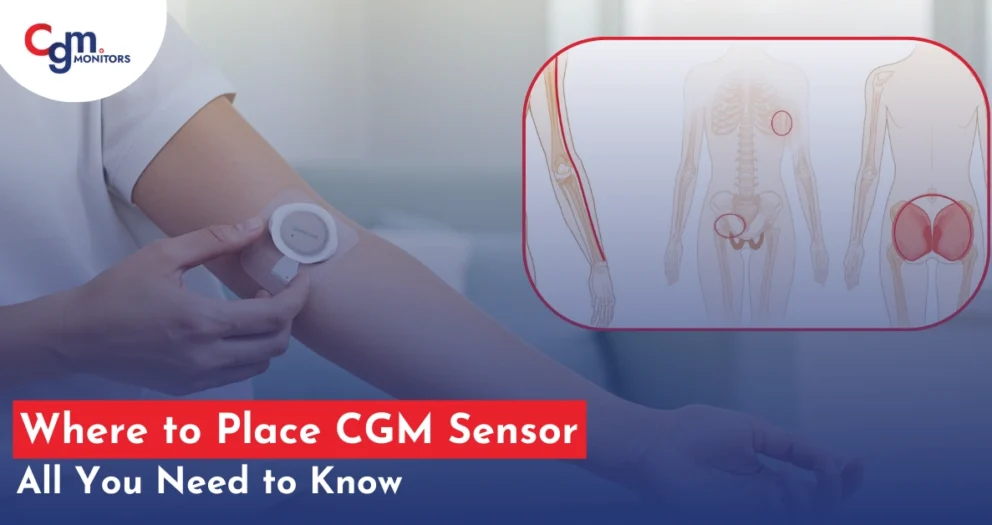
- Rotate insertion sites regularly.
- Avoid placing sensors on irritated skin.
- Use breathable materials when possible.
- Remove patches slowly.
- Loosen adhesive with warm water during removal.
- Consider barrier products before application.
- Use a skin barrier wipe (Cavilon or SkinTac).
If you experience blistering or a rash beyond mild redness, speak with your healthcare provider. In some cases, a formal patch test is needed to identify a specific adhesive allergy.
Conclusion:
A CGM adhesive patch is a small purchase that protects a large one. Every day your sensor stays secure is another day of accurate, continuous glucose data, and that data is the foundation of confident diabetes management.
CGM Monitors carries a full range of adhesive patches for every major CGM device, in both cutout and non-cutout options, designed for real diabetic life, workouts, pools, showers, and everything in between.
Browse the full CGM overlay/adhesive Patches collection at CGM Monitors and stop losing sensors before their time. Follow CGM Monitors on Facebook and Instagram for diabetes management tips and product updates.
Disclaimer
The information on this page is for educational purposes only and does not constitute medical advice. Always consult your healthcare provider before making changes to your diabetes management routine. CGM Monitors is a DME supplier; we don’t diagnose, treat, or prescribe. Product suitability may vary based on individual health needs. For sensor-specific concerns, contact your device manufacturer directly.
Frequently Asked Question
What is a CGM adhesive patch used for?
It is a pre-cut adhesive overpatch that holds your CGM sensor, like a Dexcom G7 or Freestyle Libre 3 Plus, securely against your skin for the full wear period. It protects against sweat, water, and movement.
Why does my CGM sensor keep falling off when I sweat?
Sweat dissolves the original sensor adhesive at the edges. A waterproof overpatch with medical-grade adhesive reinforces that bond and keeps the sensor in place through activity and humidity.
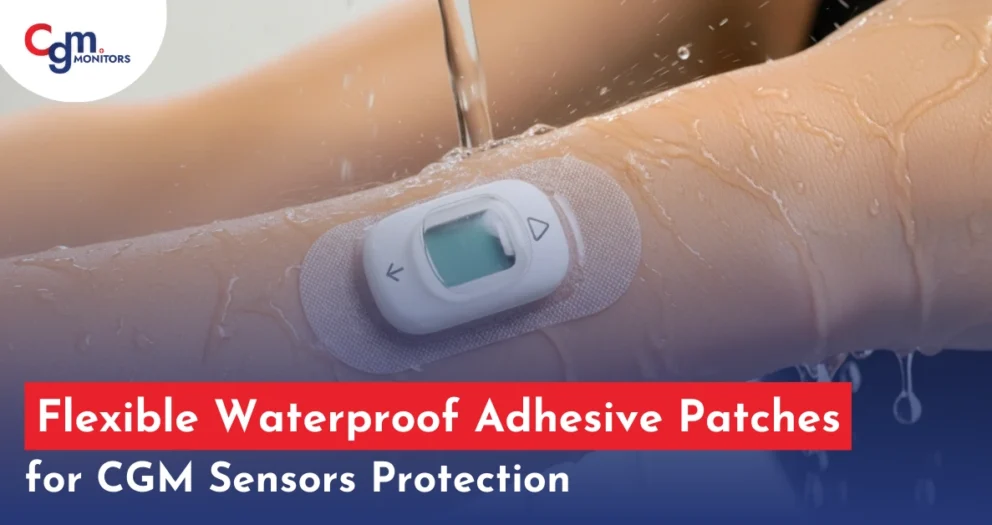
Can I swim with a CGM adhesive patch on?
Yes. Waterproof patches are designed for pools, showers, and ocean swimming. Apply the patch at least 30 minutes, ideally the night before, for maximum edge adhesion before water exposure.
Do CGM adhesive patches cause skin irritation?
Not when chosen correctly. Hypoallergenic, latex-free patches used on rotated sites rarely cause reactions. Remove slowly using warm water and never apply to the same site twice in a row.
Will a CGM adhesive patch affect my glucose readings?
No, when applied correctly. The patch sits over the sensor housing, not the filament that reads your glucose. Use the right cutout version for your sensor to avoid pressing the dome with unnecessary pressure.
Do CGM adhesive patches require a prescription or insurance?
No, Patches are purchased directly without a prescription. Many insurance plans don’t cover CGM adhesive patches; they are an affordable out-of-pocket supply.
Can I replace my overpatch without replacing the sensor?
Yes, many users replace only the adhesive patch while keeping the original CGM sensor in place.
How Long Should a CGM Adhesive Patch Last?
A high-quality CGM adhesive patch may last several days. The full sensor wear period depends on activity level, climate, skin type, water exposure, and exercise frequency. Heavy sweating, swimming, humidity, and friction may shorten adhesive lifespan.


Write a comment
Your email address will not be published. All fields are required