
Table of content
- Does Watermelon Raise Blood Sugar in Diabetics?
- How Many Sugar & Carbs Does Watermelon Contain in One Serving?
- How Does Watermelon Compare to Other Fruits?
- Can Diabetics Eat Watermelon Without Causing a Spike?
- What Nutrients in Watermelon Benefit Diabetics?
- What Is the Best Way to Eat Watermelon With Diabetes?
- Common Mistakes Diabetics Make With Watermelon
- How Can You Tell If Watermelon Is Affecting Your Blood Sugar?
- Conclusion:
- Frequently Asked Questions
Craving watermelon but scared it will spike your blood sugar? You are not alone. Most diabetics cut it out entirely based on one number, the glycemic index, without knowing the full picture. The truth is, one cup of watermelon contains less sugar than a banana and carries a glycemic load of just 5. With the right portion, timing, and pairing, watermelon fits safely into a diabetic diet. Here is exactly what the numbers mean for your blood sugar, and how to enjoy it without the guesswork.
Does Watermelon Raise Blood Sugar in Diabetics?
Yes, but only when you eat too much of it. A small serving raises blood sugar minimally. The confusion comes from people focusing on the wrong number.
Why GL Matters More Than GI for Diabetics
Watermelon’s glycemic index (GI) is around 72, which sounds alarming. But GI only measures how fast a food raises blood sugar, not how much it actually raises it in a realistic portion.
Glycemic load (GL) accounts for the actual amount of carbohydrates per serving. One cup of watermelon has a GL of just 4-5, which is considered low.
Think of it this way:
- GI = Speed of sugar absorption.
- GL = Total sugar impact.
How Many Sugar & Carbs Does Watermelon Contain in One Serving?
Watermelon contains less sugar than most people assume, and its 92% water content naturally dilutes that sugar impact in every bite.
| Serving Size | Sugar | Carbs | Calories |
| 1 cup diced (~150g) | ~9-10g | ~11-12g | ~46 |
| 1 wedge (~286g) | ~17-18g | ~21g | ~86 |
Sticking to one cup keeps carbohydrates lower than a medium banana (~27g) or a cup of grapes (~28g). Both common diabetic “safe” fruit choices actually carry more sugar.
How Does Watermelon Compare to Other Fruits?
| Fruit (1 cup) | Sugar | GL |
| Watermelon | ~10g | ~5 |
| Grapes | ~23g | ~11 |
| Mango | ~22g | ~8 |
| Banana (1 medium) | ~14g | ~11 |
At one cup, watermelon can be a reasonable fruit choice for blood sugar control because of its low GL and high-water content, especially compared with higher GL options like grapes, mango, and bananas.0
Other Diabetic-Friendly Fruits:
The fruits that have low sugar, high antioxidants, fiber-rich, slow sugar absorption, vitamin C, natural sweetness, low carbs, nutrient-dense, and low GL are the best choice for diabetics.
- Berries (strawberries, blueberries, raspberries).
- Apples (with skin).
- Pears.
- Oranges.
- Cherries.
- Pumpkin.
If you are interested in knowing which fruits to choose for maintaining your blood sugar, see our blog now [Selecting The Best Fruits For Diabetics Without Sugar Spikes]
Can Diabetics Eat Watermelon Without Causing a Spike?
Yes, with the right approach. Portion size and timing are the two variables that determine whether watermelon stays safe or triggers a significant blood sugar rise.
What is the safe serving size per day?
One cup of diced watermelon (~150g) per sitting is the safe, research-supported serving for most diabetics. Going beyond two cups significantly increases your carbohydrate and sugar intake.
The best time to eat watermelon:
- With a meal, eating watermelon alongside protein and healthy fat slows sugar absorption.
- After light exercise, muscles absorb glucose more efficiently post-activity, reducing the blood sugar spike.
- Avoid eating it alone on an empty stomach, as this produces the fastest glucose spike.
What Nutrients in Watermelon Benefit Diabetics?
Watermelon is not just sugar and water. It delivers a meaningful set of nutrients that directly support common diabetic health concerns.
- Vitamin A: Protects eye health.
- Vitamin C: Reduces oxidative stress.
- Vitamin B6: Supports nerve function and glucose metabolism.
- Potassium: Regulates blood pressure, a critical concern for Type 2 diabetics.
- Lycopene: A powerful antioxidant that may reduce cardiovascular risk.
Watermelon is one of the best-known natural sources of L-citrulline. Your body converts L-citrulline into L-arginine, which then produces nitric oxide, a molecule that relaxes and dilates blood vessels.
Research shows that L-citrulline may reduce blood pressure, arterial stiffness, and endothelial dysfunction in adults with cardiovascular risk factors, conditions that diabetics face at significantly higher rates.
What Is the Best Way to Eat Watermelon With Diabetes?
Pairing watermelon with the right foods is the single most effective way to enjoy it safely. Protein and healthy fat both slow gastric emptying, which reduces how quickly sugar enters your bloodstream.
Three food pairings that slow blood sugar spikes
- Watermelon, feta cheese, and pumpkin seeds.
- Watermelon and plain Greek yogurt.
- Watermelon and a small handful of almonds.
Avoid pairing watermelon with other high-GI foods like white bread, rice crackers, or sugary drinks. That combination stacks glucose load and turns a safe snack into a blood sugar problem.
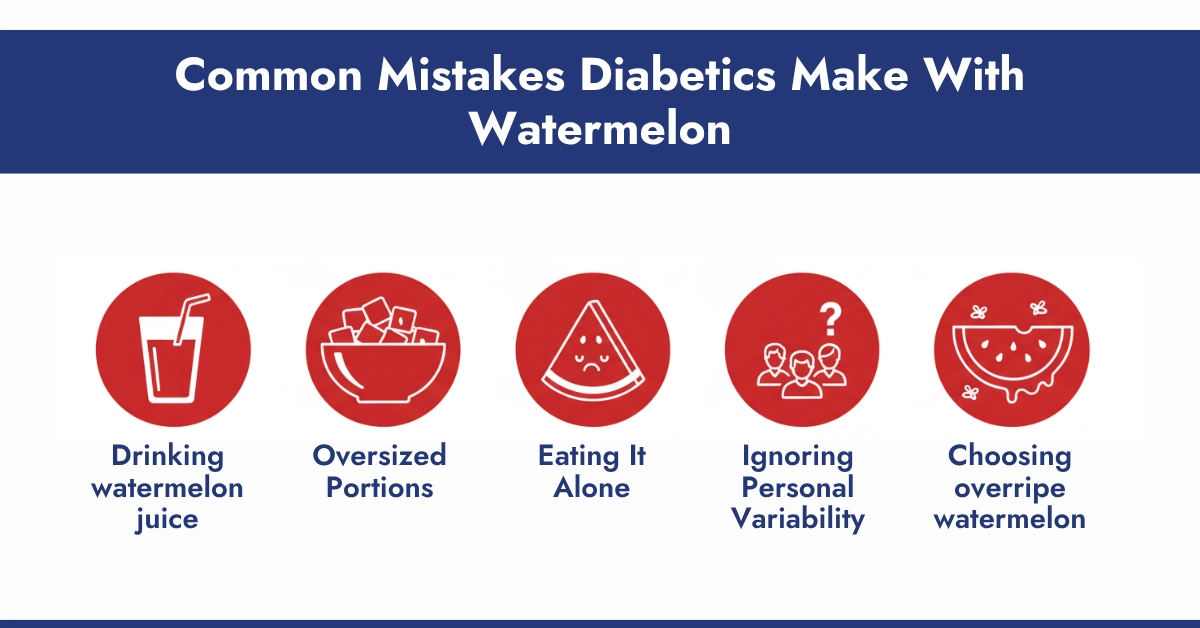
Common Mistakes Diabetics Make With Watermelon
- Drinking watermelon juice: Juicing removes structure and concentrates sugar. A single glass may contain over 20g of sugar without a fiber balance.
- Oversized Portions: Eating multiple cups converts a low glycemic load food into a high carbohydrate intake.
- Eating It Alone: Unpaired fruit absorbs faster and spikes glucose more quickly.
- Ignoring Personal Variability: Two people can have completely different responses to the same food.
- Choosing overripe watermelon: Very ripe fruit digests faster and may raise blood sugar more than less ripe fruit.
How Can You Tell If Watermelon Is Affecting Your Blood Sugar?
This is where generic advice fails diabetics. Two diabetics eating the same cup of watermelon can have completely different blood sugar responses, based on their insulin sensitivity, activity level, medication, and gut health.
The only way to know your personal response is to measure it in real time. A Continuous Glucose Monitor (CGM) like the FreeStyle Libre 3 or Dexcom G7 tracks your glucose every few minutes, showing you exactly how watermelon or any food affects your blood sugar in your body, not a population average.
Conclusion:
Watermelon is not a fruit diabetics need to fear; it is a fruit they need to understand. Portion size, timing, pairing, and ripeness turn a high-GI label into a low-risk snack. And with a CGM device tracking your real-time glucose response, you move from guessing to knowing exactly how your body handles it.
At CGM Monitors, we supply the leading CGM devices from Abbott, Dexcom, and Medtronic with free delivery across the USA, insurance coverage support, and monthly sensor refills, so you never run out. If you want to stop guessing and start knowing, check your CGM insurance eligibility with our free benefit check today.
Disclaimer:
This article uses information from trusted medical sources. We summarize the facts in our own words for clarity and accuracy. This is for education only, not a medical advice. CGM Monitors provides DME devices but does not diagnose or treat them. Some images are AI-generated for illustration by using AI tools.
Frequently Asked Questions
Can people with Type 1 diabetes eat watermelon?
Yes. People with Type 1 diabetes can eat watermelon in controlled portions. One cup contains about 11-12 g of carbohydrates, which should be counted in insulin dosing. Pairing it with protein and monitoring glucose levels helps reduce spikes.
Is watermelon better or worse than other fruits for blood sugar control?
In standard cup size portions, watermelon compares well with many fruits. Its glycemic load (~5 per cup) is lower than that of fruits like grapes, mangoes, and bananas, making it easier to manage when portion size is controlled.
Can I eat watermelon at night if I have diabetes?
It is better avoided late at night. Physical activity levels are lowest at night. Blood sugar spikes from evening carbohydrate consumption also tend to persist longer. If you want watermelon, earlier in the day, ideally with a meal or shortly after activity, it produces a more controlled blood sugar response.
How soon after eating watermelon should I check my blood sugar?
For a standard fingerstick test, check 1-2 hours after eating, when post-meal blood sugar typically peaks. With a CGM device, you can watch your glucose curve in real time and see exactly when and by how much it rises.
Does eating watermelon every day affect HbA1c levels?
One cup daily is unlikely to affect HbA1c when it replaces higher-carbohydrate snacks and is eaten with protein. HbA1c reflects average blood sugar over 2-3 months, so occasional spikes from a well-portioned, paired snack have minimal long-term impact.




Write a comment
Your email address will not be published. All fields are required