

Table of content
- Why Fish Is One of the Best Foods for Diabetes?
- What Makes a Fish Safe or Unsafe for Diabetics?
- Which Fish Is Good for Diabetes? The 8 Best Choices
- How Much Fish Should a Diabetic Eat Each Week?
- Best Cooking Method for Diabetic-Friendly Fish?
- Are There Any Fish or Seafood That Diabetics Should Avoid?
- Conclusion:
- Frequently Asked Questions
Managing diabetes through food feels overwhelming at first. You want to eat right, but every food choice feels like a risk. Fish seems healthy, but which type? How much? Does cooking method matter? Can the wrong seafood actually hurt your glucose levels?
You’re not alone asking these questions. Thousands of people with diabetes search for clear, honest answers every day. The truth is that fish is one of the best foods for blood sugar management when you know which ones to pick and how to prepare them.
This guide gives you exactly that: the 8 best seafood choices for diabetics, backed by nutrition science and practical advice you can use today.
Why Fish Is One of the Best Foods for Diabetes?
Fish contains zero carbohydrates, which means it causes no blood sugar spike on its own. The protein in fish also slows digestion, keeping your glucose levels steady after a meal instead of surging.
Key Benefits:
- Omega-3 fatty acids (DHA and EPA) reduce inflammation and lower heart disease risk.
- Vitamin D supports insulin function and glucose metabolism.
- B vitamins (B6, B12) protect nerve health, which diabetes can damage over time.
- Selenium and magnesium help regulate insulin sensitivity at the cellular level.
- High-quality protein supports muscle mass, which plays a role in metabolic health.
Important Fact:
People with diabetes are 2-4 times more likely to develop heart disease than those without it.
The American Diabetes Association (ADA) recommends eating fish at least twice a week, particularly fatty fish rich in omega-3s, as a core part of a balanced diabetic diet.
What Makes a Fish Safe or Unsafe for Diabetics?
Not all seafood belongs on your plate. Before choosing what to eat, understand the three factors that separate a diabetes-friendly fish from a harmful one.
- Healthy Fat Profile: Fatty fish like salmon and sardines carry unsaturated omega-3 fats, the kind that protect your heart and reduce inflammation. Avoid fish cooked in saturated fat or served with heavy cream sauces.
- Carbohydrate Content: Plain fish has zero carbs. The danger zone is preparation, breaded, battered, and fried fish, which adds fast-digesting carbohydrates that spike blood sugar fast.
- Mercury Levels: Mercury accumulates in large predatory fish. For diabetics who already face a risk of nerve damage, high mercury intake worsens neurological complications.
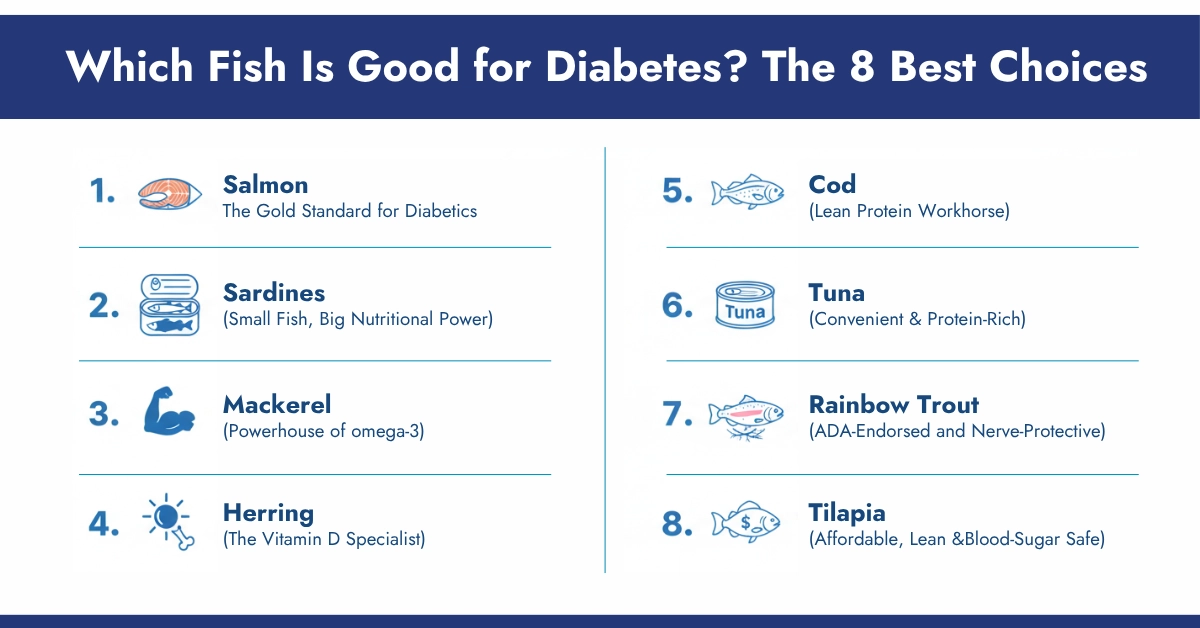
Which Fish Is Good for Diabetes? The 8 Best Choices
Here are the top eight seafood choices proven to support blood sugar control and overall health in people with diabetes:
1. Salmon: The Gold Standard for Diabetics
Salmon consistently ranks as the best fish for people with diabetes. A 3-ounce serving provides roughly 1,500-2,000 mg of omega-3 fatty acids (EPA and DHA), more than most other fish. It’s also high in vitamin D, potassium, and selenium.
Benefits:
- High omega-3.
- Improves insulin sensitivity.
- Lowers triglycerides and reduces cardiovascular risk.
- Supports brain health.
Best Types: Wild-caught salmon (Sockeye, chinook, and Atlantic salmon are all excellent varieties).
2. Sardines (Small Fish, Big Nutritional Power)
Sardines are nutritionally dense and among the lowest-mercury fish available. This makes them one of the safest options for frequent consumption, even daily.
Why sardines work well for diabetics:
- Rich in omega-3s.
- High in calcium & vitamin B12.
- Help reduce systemic inflammation linked to insulin resistance.
- Affordable and available year-round as canned fish.
Best Choice: Sardines in water or olive oil.
3. Mackerel (Powerhouse of omega-3)
Atlantic mackerel delivers one of the highest concentrations of omega-3 fatty acids of any fish. A single 3-ounce serving provides over 1,000 mg of combined DHA and EPA.
Benefits:
- Reduces inflammation.
- Contains iodine, which supports thyroid function.
- Rich in vitamins B2, B3, B6, and B12 for nerve and energy support
Note: Choose Atlantic mackerel (Not king mackerel).
4. Herring (The Vitamin D Specialist)
Herring is underrated and often overlooked, but it’s one of the best fish for diabetics, specifically because of its vitamin D content. Studies show that many people with type 2 diabetes have chronically low vitamin D, which directly impairs insulin secretion.
Benefits:
- High vitamin D (supports insulin function).
- Rich in omega-3s that lower cardiovascular risk.
- Contains phosphorus for kidney health.
5. Cod (Lean Protein Workhorse)
Cod is a lean white fish with minimal fat but strong protein. It’s easy to cook, widely available, and won’t complicate your meal planning. A 3-ounce serving provides around 19 grams of protein with virtually no carbohydrates.
Benefits:
- High protein with zero calories or fat.
- Contains niacin and phosphorus to support metabolic function.
- Very low glycemic impact.
- Versatile enough to bake, grill, steam, or poach.
Haddock, pollock, and black cod are closely related and offer similar nutritional benefits.
6. Tuna (Convenient & Protein-Rich)
Tuna is one of the most accessible fish for everyday diabetic meal planning. Fresh or canned, it delivers strong protein and solid omega-3 content alongside potassium, iron, and vitamin B12.
Tips:
- Always choose tuna canned in water, not oil, to control fat intake.
- Fresh yellowfin or albacore tuna is excellent grilled or seared.
- Limit to 2-3 servings per week due to moderate mercury content.
For Your Information:
A popular fast-food tuna sandwich contains up to 50 grams of carbohydrates from the bun and sauce alone. The fish is healthy, the extras are not. Build your tuna meal around lettuce wraps, salads, or whole-grain options instead.
7. Rainbow Trout (ADA-Endorsed and Nerve-Protective)
Rainbow trout is specifically endorsed by the American Diabetes Association for its omega-3 content and overall nutritional balance. It’s a freshwater fish that’s mild, easy to prepare, and rich in nutrients that directly target diabetic complications.
Advantages:
- High in magnesium, which improves insulin sensitivity.
- Rich in B12 for nerve protection.
- Contains tryptophan, which supports healthy sleep.
- Naturally lower in mercury.
8. Tilapia (Affordable, Lean &Blood-Sugar Safe)
Tilapia may not carry the omega-3 powerhouse status of salmon or mackerel, but it’s still an excellent lean protein choice that causes no blood sugar impact and fits easily into any budget.
Benefits:
- Very low in fat and calories.
- High in protein.
- Widely available as fresh or frozen fillets.
- Mild flavor that works well with herbs, lemon, and garlic.
Pair tilapia with steamed broccoli, cauliflower rice, or a fresh salad for a complete, low-glycemic meal.
How Much Fish Should a Diabetic Eat Each Week?
| Fish Type | Servings Per Week | Notes |
| Fatty fish (salmon, sardines, mackerel, herring) | 2+ servings | Core recommendation from ADA |
| Lean fish (cod, tilapia, trout) | 3-4 servings | Safe for daily consumption |
| Tuna (canned or fresh) | 2-3 servings max | Moderate mercury, rotate with other fish |
| High-mercury fish (king mackerel, shark, swordfish) | Avoid or very rarely | Mercury worsens nerve complications |
| Imitation crab (surimi) | Limit significantly | Contains added starch and sugar |
Variety is key. Rotating between fatty and lean fish across the week gives you the broadest nutritional benefit while keeping mercury exposure low.
Best Cooking Method for Diabetic-Friendly Fish?
Best cooking methods for diabetics:
- Grilling.
- Baking.
- Steaming.
- Poaching.
- Air frying.
Cooking methods to avoid or limit:
- Deep fried.
- Breaded fish
- High-sodium sauces.
- Sugar based marinades.
Tip: Pair fish with vegetables such as broccoli, spinach, or cauliflower rice for optimal blood sugar control.
If you use a CGM like FreeStyle Libre 3 Plus or Dexcom G7, you can check how your grilled salmon or tuna salad affects your glucose and adjust portions or sides.
Are There Any Fish or Seafood That Diabetics Should Avoid?
Yes. While most seafood is safe, a few specific choices and preparations deserve caution.
Fish to limit or avoid:
- King mackerel, shark, swordfish, and tilefish: Very high mercury; worsens neuropathy risk.
- Imitation crab (surimi): Made from starch-heavy processed fish paste with added sugar.
- Fried fish from restaurants or fast food: Batter adds 30-50g of carbohydrates per serving.
- Fish canned in heavy sauces: Often loaded with added sodium, sugar, or corn starch.
Shellfish considerations: Shrimp, oysters, clams, and mussels are generally safe for diabetics in moderate amounts. They’re low in carbs and rich in zinc, iron, and protein. Avoid shellfish fried or served in cream-based sauces.
Conclusion:
Fish is genuinely one of the best foods you can eat when managing diabetes. Salmon, sardines, mackerel, herring, cod, tuna, trout, and tilapia each deliver unique benefits, from omega-3 protection and heart health to lean protein that keeps blood sugar steady. The key is choosing quality varieties, preparing them the right way, and building your meals around low-glycemic sides like vegetables, legumes, and whole grains.
Add fish to your plate at least twice a week. Your blood sugar, your heart, and your long-term health will all benefit.
Follow CGM Monitors on Facebook and Instagram for daily tips, product updates, and diabetes guidelines.
Disclaimer:
This content is intended for informational purposes. It is not a substitute for medical advice. Everyone’s body responds differently to food, especially when living with diabetes. For personalized dietary recommendations, always consult your healthcare provider or a registered dietitian. Visuals used in this article are for illustration and understanding purposes only.
Frequently Asked Questions
Which fish is the single best choice for a diabetic?
Salmon is the top recommendation due to its high omega-3 content, vitamin D, and proven benefits for insulin sensitivity and heart health.
Can eating fish help reverse insulin resistance?
Fish alone won’t reverse insulin resistance, but omega-3 fatty acids combined with a balanced low-glycemic diet can significantly improve insulin sensitivity over time.
Is canned salmon as healthy as fresh salmon?
Yes. Canned salmon retains most of its omega-3 content and nutrients. Choose varieties with no added salt for the healthiest option.
How does fish compare to chicken or red meat for diabetics?
Fish is generally superior to red meat for diabetics because it contains heart-protective omega-3s, has no saturated fat (in most varieties), and carries no glycemic impact. It compares favorably to skinless chicken for similar reasons.
Can diabetics eat sushi?
The raw fish in sushi is safe for diabetics. The concern is sushi rice, which is seasoned with sugar and vinegar and can raise blood glucose quickly. Opt for sashimi (fish without rice) or low-rice options when possible.
Is shrimp safe for type 2 diabetes?
Yes. Shrimp is low in carbohydrates, high in protein, and contains beneficial minerals. Avoid deep-fried shrimp or shrimp in heavy sauces.





Write a comment
Your email address will not be published. All fields are required