
Table of content
- Can You Safely Use a CGM During Pregnancy?
- What Are the Recommended CGM Glucose Targets During Pregnancy?
- What Is the Best CGM for Gestational Diabetes in 2026?
- Does Insurance Cover CGM for Gestational Diabetes?
- How Does CGM Help Detect & Manage Low Blood Sugar In Pregnancy?
- Manage Blood Sugar During Pregnancy Without Medication
- How Do You Get a CGM During Pregnancy?
- Conclusion:
- Frequently Asked Questions
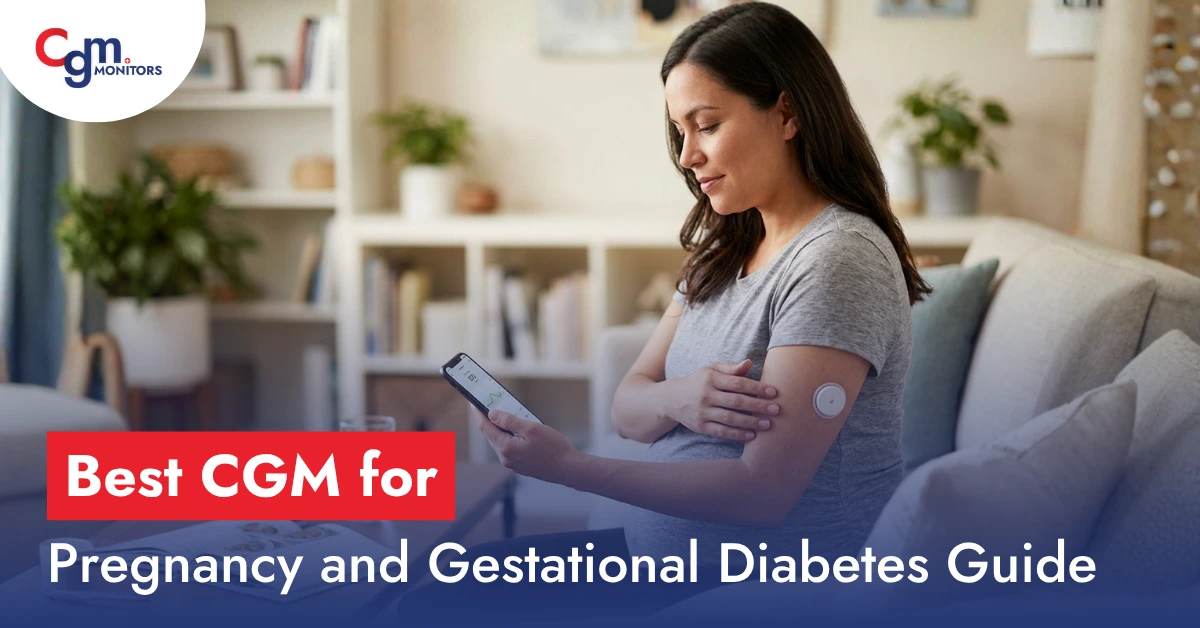
Managing blood sugar during pregnancy is not just important; it is critical for both you and your baby. Yet many expecting mothers discover their glucose monitor only catches problems after they happen. A continuous glucose monitor (CGM) changes that completely. It shows your blood sugar in real time every few minutes, without constant finger sticks.
If you have been diagnosed with gestational diabetes or have pre-existing type 1 or type 2 diabetes, this guide answers every question you have in 2026, including targets, safety, insurance, and how to get CGM within 24 hours.
Can You Safely Use a CGM During Pregnancy?
This is the first thing most women ask, and rightfully so. The short answer: yes, CGM is safe during pregnancy, and some devices now carry FDA-approved labeling for pregnant users.
The 2026 ADA Standards of Medical Care in Diabetes (Section 15) formally recommends real-time CGM for pregnant individuals with type 1 diabetes and supports its use for type 2 and gestational diabetes when standard monitoring falls short.
Several modern devices, including FreeStyle Libre 3 Plus and Dexcom G7, are used in pregnant patients and have clinical validation in this population.
Why this matters
Pregnancy changes your physiology:
- Increased insulin resistance (especially 2nd-3rd trimester).
- Faster glucose fluctuations after meals.
- Higher risk of overnight hypoglycemia.
CGM sensors measure glucose in interstitial fluid using a small filament under the skin, not a needle into blood vessels and multiple clinical studies show no evidence of harm to mother or baby.
What Are the Recommended CGM Glucose Targets During Pregnancy?
During pregnancy, your glucose goals are stricter than standard diabetes management. Here is what clinical guidelines recommend:
| CGM Metric | Target for Pregnancy |
| Fasting glucose | 70-95 mg/dL |
| 1-hour post-meal | < 140 mg/dL |
| 2-hour post-meal | < 120 mg/dL |
| Time in Range (TIR) | > 70% (63-140 mg/dL) |
| Time below range | < 4% (below 63 mg/dL) |
| Overnight lows | Avoid readings below 60 mg/dL |
Why this matters for you: The placenta produces hormones that naturally increase insulin resistance, especially in the second and third trimesters. A CGM catches overnight lows and post-meal spikes you would never feel or know about otherwise. This early detection is what protects your baby from macrosomia, preterm birth, and NICU admission.
Many pregnant users report confusion: My CGM shows GREEN, but my doctor says I’m not controlled. This happens because:
- CGM default range: 70-180 mg/dL.
- Pregnancy range: 63-140 mg/dL.
So your app may show “normal” while pregnancy control is actually too loose. You must manually adjust CGM settings in the Dexcom app, LibreView & Clarity reports. Otherwise, your “good report” may be misleading.
What Is the Best CGM for Gestational Diabetes in 2026?
Most pregnant women want one thing: a sensor that is accurate, comfortable to wear, and easy to use while already exhausted from pregnancy.
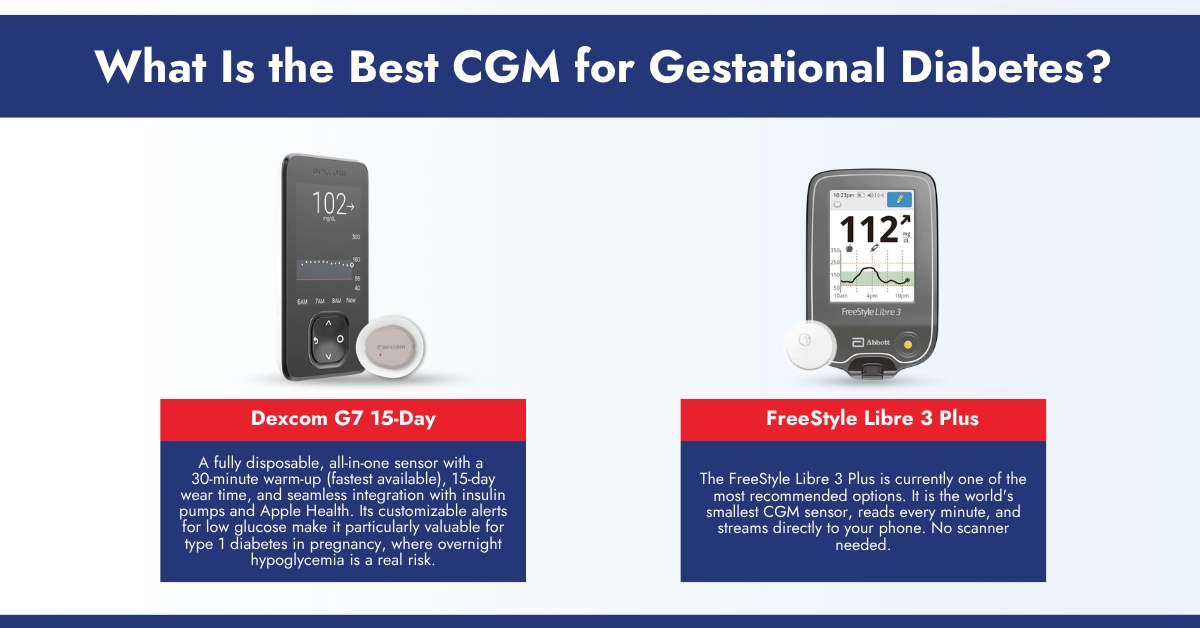
- FreeStyle Libre 3 Plus: The FreeStyle Libre 3 Plus is currently one of the most recommended options. It is the world’s smallest CGM sensor, reads every minute, and streams directly to your phone. No scanner needed.
- Dexcom G7 15-Day: A fully disposable, all-in-one sensor with a 30-minute warm-up (fastest available), 15-day wear time, and seamless integration with insulin pumps and Apple Health. Its customizable alerts for low glucose make it particularly valuable for type 1 diabetes in pregnancy, where overnight hypoglycemia is a real risk.
Sensor adhesion matters more during pregnancy. Your skin changes; it stretches, becomes more sensitive, and sweats more. Using medical-grade CGM adhesive patches from CGM Monitors helps your sensor stay in place safely. The Freestyle Libre 3 Plus Patches and Dexcom G7 Overlay Patches are hypoallergenic and skin-safe for pregnant users.
Does Insurance Cover CGM for Gestational Diabetes?
Yes, but coverage depends on your insurance type, your diagnosis, and how your provider documents your case.
Commercial insurance (BlueCross BlueShield, Aetna, United, etc.) typically covers CGM for pregnant women with type 1 or type 2 diabetes. Some plans also cover it for gestational diabetes when insulin is prescribed. CGM Monitors is in-network with major commercial plans including BlueCross BlueShield of Texas and handles the entire prior authorization process for you.
Medicaid: Coverage for CGM during gestational diabetes varies widely by state. CGM Monitors currently accepts Medicaid from 12 states including Arizona, Louisiana, Oregon, and Wisconsin. If your state is listed, you may qualify, especially if your provider prescribes insulin or documents hypoglycemia risk.
Don’t spend hours calling your insurance. Let our team verify your benefits, handle prior authorization, and ship your CGM directly to your door.
How Does CGM Help Detect & Manage Low Blood Sugar In Pregnancy?
Hypoglycemia during pregnancy is underreported and underestimated, especially in the first trimester, when nausea makes consistent eating nearly impossible.
A traditional finger-stick check gives you a single number at one moment in time. A CGM gives you a glucose reading every 1-5 minutes, 24 hours a day, with alarms that wake you, or your partner, before a low becomes an emergency.
The CONCEPTT trial, the landmark randomized controlled study of CGM in pregnancy with type 1 diabetes, found that CGM users had significantly fewer large-for-gestational-age births, shorter infant hospital stays, and reduced rates of severe neonatal hypoglycemia, without increasing maternal hypoglycemia. That last point is crucial: tighter control through CGM did not make lows worse.
For women managing type 2 diabetes in pregnancy on insulin, the same low-glucose risk applies. A CGM’s customizable low alert, typically set at 70 or 80 mg/dL for pregnancy, is a safety net that no amount of finger testing can replicate.
Manage Blood Sugar During Pregnancy Without Medication
Many women with gestational diabetes, especially mild cases, manage glucose through diet and lifestyle alone. CGM becomes a powerful tool here because it shows you exactly which foods spike your blood sugar.
Practical CGM-guided strategies:
- Eat smaller meals every 2–3 hours.
- Combine carbs with protein or fat.
- Walk 10–15 minutes after meals.
- Avoid sugary drinks and refined carbs.
- Use protein-based bedtime snacks to stabilize overnight glucose.
The glucose tolerance test (GTT) screens for gestational diabetes, but a CGM gives you a 24/7 picture long after your GTT is done. Knowing your body’s real-time patterns lets you and your care team make faster, smarter adjustments.
How Do You Get a CGM During Pregnancy?
Getting started is simpler than most people expect.
- Talk to your OB or endocrinologist to prescribe a CGM.
- Submit your insurance information.
- Receive your device at home within 2-3 days.
No prescription yet? Provide your doctor’s contact information, and CGM Monitors contacts them directly on your behalf.
Never run out of sensors during your pregnancy. Our monthly auto-refill subscription ships every 26 days, so your 28-day supply never runs out.
Conclusion:
A CGM during pregnancy is not a luxury for many women. It is a life-changing tool that catches dangerous lows overnight, shows exactly how your meals affect your baby’s environment, and gives you and your doctor the data to make real decisions fast.
CGM Monitors is a nationally accredited DME supplier serving over 50,000 patients. We carry FDA-approved sensors from Abbott and Dexcom, handle your insurance paperwork, and ship directly to your door with auto-refill options, so you never miss a day of monitoring during your pregnancy. Follow CGM Monitors on Facebook and Instagram for the latest diabetes management tips and product updates.
Disclaimer:
This guide is just to help you understand CGM in pregnancy a bit better, not to replace your doctor’s advice. Always check with your OB or healthcare provider before making any decisions about your health or treatment. Visuals are generated from AI tools, not real images.
Frequently Asked Questions
Can I wear a CGM sensor while pregnant?
Yes. CGM sensors use a tiny flexible filament placed just under the skin. They are safe to wear throughout all three trimesters and pose no known risk to the baby.
What glucose range should I stay in during pregnancy?
Most guidelines recommend staying between 63-140 mg/dL (Time in Range) for at least 70% of the day. Fasting should ideally be under 95 mg/dL.
Does gestational diabetes qualify me for a CGM through insurance?
It depends on your plan. If insulin is prescribed, most commercial insurers cover CGM. Medicaid coverage varies by state. CGM Monitors offers a free benefit check to confirm your eligibility in minutes.
Is the FreeStyle Libre 3 Plus better than Dexcom G7 for pregnancy?
Both are clinically effective. FreeStyle Libre 3 Plus is smaller and reads every minute. Dexcom G7 has a faster warm-up and integrates with more insulin pumps. Your provider’s recommendation and your insurance coverage often determine the best fit.
Can a CGM replace finger-stick testing entirely during pregnancy?
In many cases, yes, but your OB may still request occasional finger-stick calibration checks, especially if your CGM readings feel inconsistent. Follow your care team’s guidance.
Does Medicaid cover Dexcom for gestational diabetes?
In several states, yes, if insulin is part of your treatment plan and your provider submits proper documentation. CGM Monitors verifies your eligibility at no cost to you.
Is A1C still the best way to track glucose control in pregnancy?
The 2026 ADA guidelines now favor CGM-derived mean glucose over A1C during pregnancy, because physiological changes in red blood cell turnover can make A1C values misleadingly low or inaccurate. Discuss this shift with your provider.
Can I get a CGM for gestational diabetes without a prescription?
Not for the pregnancy-cleared devices (FreeStyle Libre 3 Plus, Dexcom G7). Over-the-counter CGMs exist but are not FDA-cleared for pregnancy use. A prescription from your OB or endocrinologist is the correct pathway, and it unlocks insurance coverage.

Write a comment
Your email address will not be published. All fields are required