

Table of content
- What Is Diabetic Neuropathy & Why Does It Go Unnoticed?
- What Does Early Nerve Damage Actually Feel Like?
- How Do Doctors Actually Diagnose Diabetic Neuropathy?
- Can Nerve Damage Be Reversed? The Honest Answer
- What Daily Habits Protect Your Nerves Most Effectively?
- Daily Foot Care: Two Minutes That Prevent Big Problems
- When to See Your Doctor Without Delay
- Conclusion:
That tingling in your feet you keep ignoring. You wake up in the middle of the night because of a burning sensation. The numb patch on your toe you noticed last week. These are not random; these are the signs of your nerves which are not working normally.
Diabetic neuropathy occurs in up to 50% of people with diabetes and significantly increases the risk of foot ulcers and serious infections. Most people only discover it after the damage is already done. Whether you were diagnosed last month or have managed diabetes for years, understanding neuropathy early is the single most protective decision you can make.
This guide changes that, covering what is actually happening in your nerves, how clinicians confirm it, what treatments work, and what you can do today to stop progression.
What Is Diabetic Neuropathy & Why Does It Go Unnoticed?
Diabetic neuropathy is nerve damage caused by high blood sugar. High glucose damages the tiny blood vessels which supply oxygen to your nerves. Starved of that supply, nerves deteriorate slowly and quietly.
Diabetic neuropathy may affect up to half of the people who have diabetes. But it often can be prevented, and people who already have it can take steps to keep it from getting worse.
Here is what makes it particularly dangerous: damage does not announce itself. It builds over months or years while glucose remains uncontrolled. By the time symptoms appear, significant deterioration has already occurred. Waiting for symptoms before acting is the wrong strategy.
What Does Early Nerve Damage Actually Feel Like?
Here is what those symptoms actually feel like in daily life, before the damage becomes obvious:
- A persistent “asleep” feeling in your toes that does not resolve after movement
- Burning feet that worsen at night, or serious discomfort from touch, for some people, even the weight of a bed sheet, feels painful.
- Weakness or clumsiness when walking, stumbling on flat ground.
- Cuts or blisters you did not feel from.
That final sign is the most dangerous. Losing sensation means you may not feel injuries, which can lead to infection and serious complications. Pain, uncomfortable as it is, actually signals that nerve function still exists. Losing pain sensation entirely is the more serious stage.
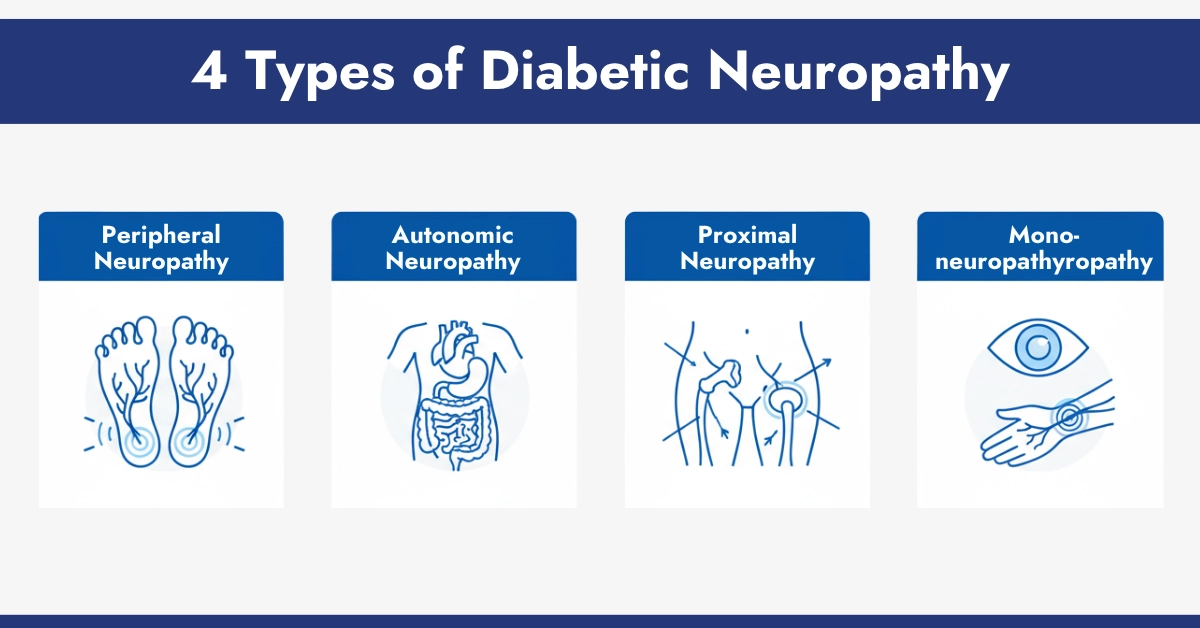
The 4 Types of Diabetic Neuropathy
- Peripheral neuropathy is the most common. It affects nerves in the feet, legs, hands, and arms, including serious complications like ulcers, infections, bone damage, and joint damage.
- Autonomic neuropathy is the most underrecognized. It damages nerves controlling internal organs, including your heart, digestive system, bladder, sex organs, blood pressure and hypoglycemia unawareness: the body stops sending warning signals when blood sugar drops dangerously low. You do not feel shaky or sweaty. This complication is life-threatening.
- Proximal neuropathy causes serious pain and weakness in the hips, thighs, or buttocks, usually on one side. It is more common in older adults with Type 2 diabetes, and most people improve at least partially within 6 to 12 months.
- Mononeuropathy affects a single specific nerve and often comes on suddenly, causing double vision, chest pain, or facial weakness. It typically resolves over time but warrants prompt medical review.
How Do Doctors Actually Diagnose Diabetic Neuropathy?
To confirm a diagnosis, your healthcare professional conducts a physical exam and reviews your symptoms and medical history. They typically assess your:
- Muscle strength and tone.
- Tendon reflexes.
- Sensitivity to touch, pain, temperature, and vibration.
Beyond the physical exam, clinicians may order specific tests, including:
- Monofilament testing where a soft nylon fiber is brushed over the skin to assess touch sensitivity.
- Sensory testing to evaluate nerve response to vibration and temperature.
- Nerve conduction testing measures how quickly electrical signals travel.
- Electromyography (EMG) measures electrical activity in muscles.
- Autonomic testing checks heart rate and blood pressure responses.
Screening Recommendations:
- Type 2 diabetes should be screened at diagnosis and annually thereafter.
- Type 1 diabetes; annual screenings should begin five years after diagnosis.
Do not wait for symptoms to ask your doctor about this.
Can Nerve Damage Be Reversed? The Honest Answer
Existing significant nerve damage cannot be fully reversed. Once nerves are substantially damaged, that damage is permanent. Progression can be slowed or stopped with consistent glucose control and proper care.
Treatment Goals:
- Slow disease progression.
- Relieve in pain.
- Manage linked health issues.
- Maintain nerve function.
For most adults, the American Diabetes Association recommends an A1C below 7.0%. If your blood sugar is above your target, consult with your healthcare provider.
What Daily Habits Protect Your Nerves Most Effectively?
Blood Sugar: A1C gives a 3-month average; it can appear acceptable while dangerous post-meal glucose spikes accumulate nerve damage daily. Someone can have a normal A1C while still experiencing repeated sharp rises after every meal.
A CGM closes this gap. It tracks glucose in real time, 24 hours a day, showing exactly when spikes occur and how high they reach. Real-time data is the most practical nerve-protection tool available today, and it is what A1C alone cannot provide. You must use Dexcom G7 and Freestyle libre 3 Plus it will be beneficial for you. You can get these two from CGM monitors and want to see more products explore the product page.
Lifestyle Habits:
- Working toward 150 minutes of moderate aerobic exercise per week.
- Keeping blood pressure controlled is equally important.
- Eat a balanced and nutrient-rich diet.
- Quit smoking because it narrows blood vessels and accelerates nerve deterioration faster.
- Limit alcohol directly toxic to nerves and independently worsens neuropathy.
Daily Foot Care: Two Minutes That Prevent Big Problems
With peripheral neuropathy, you may not feel a wound forming.
- Check your feet every day.
- Wash your feet gently and look for warning signs like cuts, blisters, redness, or swelling.
- Make sure shoes fit properly and give toes adequate space.
- If you walk on a hot pavement or go to the beach, wear shoes; heat injury to numb feet goes unfelted and unnoticed.
- Never walk barefoot if you have sensation.
When to See Your Doctor Without Delay
Contact your healthcare provider if you notice any of the following:
- A foot wound that has not healed within a few days.
- Sudden leg weakness or difficulty walking.
- Dizziness when standing.
- Persistent nausea or feeling full after very little food.
- New numbness or burning that spreads quickly.
Conclusion:
Diabetic neuropathy is serious but it is largely preventable and manageable when you act before symptoms force the decision. The most powerful step you can take is knowing your glucose levels in real time, every day.
Explore Freestyle Libre and Dexcom CGM devices at CGM Monitors, with free nationwide delivery, insurance support, and automatic monthly refills. Real-time glucose data is the most practical tool available for protecting your nerve health long-term.
Follow CGM Monitors on Facebook and Instagram for daily diabetes management insights.
Disclaimer:
This article is written for informational purposes only and has been reviewed for accuracy based on different guidelines like American Diabetes Association (ADA), Mayo Clinic, Cleveland Clinic, and the National Institute of Diabetes and Digestive and Kidney Diseases (NIDDK). It is not a substitute for professional medical advice, diagnosis, or treatment. Always consult a qualified healthcare provider before making any changes to your diabetes management plan. Visuals in this blog are created from AI tools just for illustrative purposes.





Write a comment
Your email address will not be published. All fields are required